
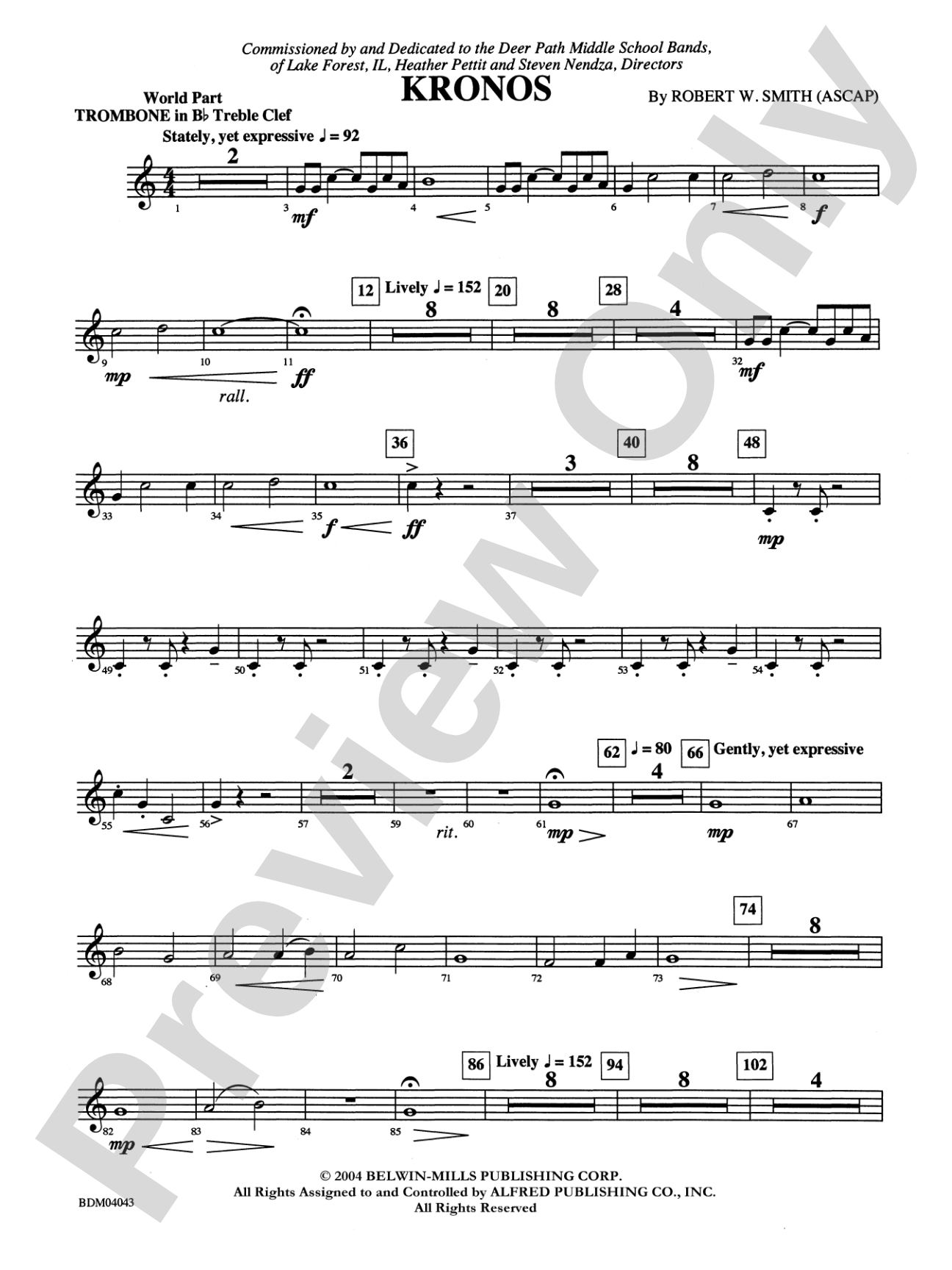
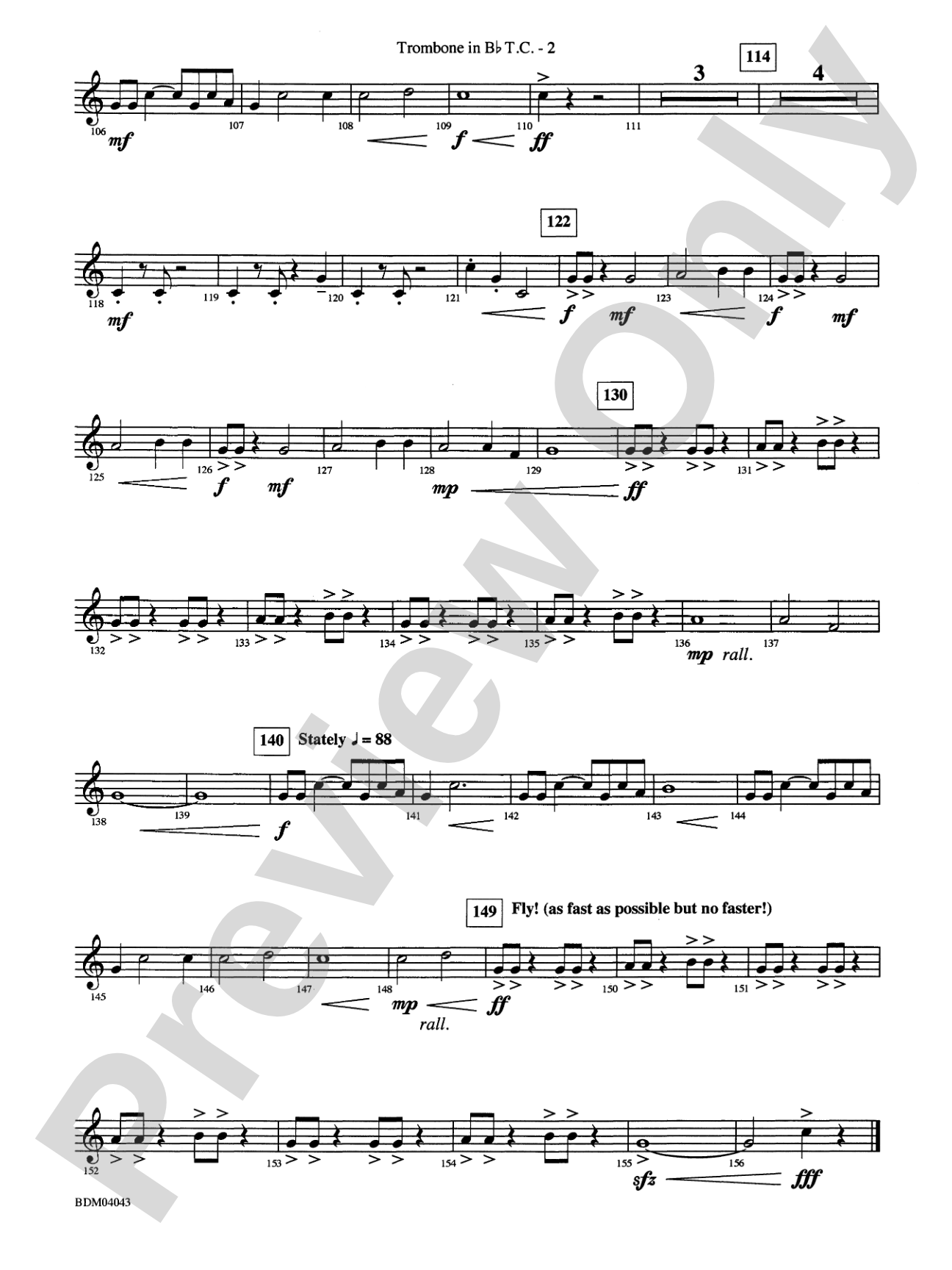

Kronos: (wp) 1st B-flat Trombone T.C.
By Robert W. Smith
Grade: 2 (Easy)
Item: 00-PC-0002196_wpTN1TC
$3.00
Pickup currently not available
Description
Here's a refreshing and energetic original work from Robert W. Smith inspired by the mythological keeper of time. Featuring a wide variety of textures and tone colors intertwined with characteristic driving rhythms that only sound difficult, this dynamic composition will fascinate listeners and performers alike. Another winner. (5:37)


Don't just read it, hear it, play along with it, and watch your students grow with it. In MakeMusic Cloud, Kronos: (wp) 1st B-flat Trombone T.C. comes alive with professional accompaniment, adjustable tempo, and built-in practice tools that turn solo practice into real progress.
Open in the Player
Jump straight in and assign it today.
Start Your Free Trial
Open this title and explore the full library in minutes.
Sample Audio
1
Audio File
--:--
0:00
0:00
Sample Video
No sample videos found.
Additional Details
Series:
Belwin Young Band
Publisher:
Alfred Music
Page Count:
322
SKU:
00-PC-0002196_wpTN1TC
More about this title
About the Composer: Robert W. Smith

Robert W. Smith stands among America's most prolific composers for concert band and orchestra, with over 400 published works distributed primarily through Alfred Music. He holds degrees from Troy State University (Alabama) and the University of Miami (Florida), and his original compositions have earned performances across North America, Europe, Australia, and Asia. His orchestral symphonies, including The Divine Comedy and The Odyssey, along with works like The Tempest for developing ensembles, have become foundational repertoire in the band world.
Beyond the concert hall, Smith's music has appeared in high-profile contexts ranging from Olympic broadcasts and Macy's Thanksgiving Day Parade telecasts to ceremonies honoring heads of state and opening day festivities at major sporting venues. His work as a conductor and clinician has taken him across the United States and to Japan, Australia, Italy, Austria, and the United Kingdom, where he has built deep connections with musicians and directors seeking accessible, musically rewarding literature.
Why we love this
Smith captures the mythology of Kronos without resorting to sonic excess. The piece delivers genuine dramatic impact at Grade 2, which means your developing band can execute the composer's vision without being buried in technical demands. The variety of textures and rhythmic drive create a concert-ready work that sounds far more sophisticated than its accessibility level.
What to expect
Kronos moves with kinetic energy and mythic weight. Listeners encounter shifting instrumental colors and persistent rhythmic drive that evoke time in motion, while the textures never feel overcomplicated or precious. The piece balances accessibility with genuine compositional craft.
Who it's for
This work engages Grade 2 concert bands that want repertoire with real character and storytelling depth. It suits ensembles ready to handle rhythmic coordination and tonal variety without advanced technical facility.
How to get the most out of it
- Balance the characterful rhythmic figures across sections. These patterns should feel propulsive and unified, not scattered. Have students lock onto the conductor's beat rather than playing mechanically.
- Explore dynamic contrast carefully. The programmatic nature of the work means that shifts in tone color and volume should reflect the narrative, not just hit dynamic markings. Sectional rehearsal can clarify these moments before full ensemble work.
- Give wind players breathing room for the driving figures without sacrificing rhythmic precision. Mark breath points thoughtfully so the momentum never stalls.
How to use it
Open a concert with Kronos to establish energy and engagement immediately, or use it mid-program as a contrasting piece between slower works. It also works well for festival and contest settings where Grade 2 bands benefit from repertoire that showcases musicianship and compositional quality.
Skills your students will build
- Reading and executing rhythmic figures with precision and consistency across multiple sections
- Responding to dynamic and textural changes that support programmatic content
- Balancing individual melodic lines within an ensemble while maintaining rhythmic integrity
- Sustaining focus through a multi-sectional form with varied instrumental combinations