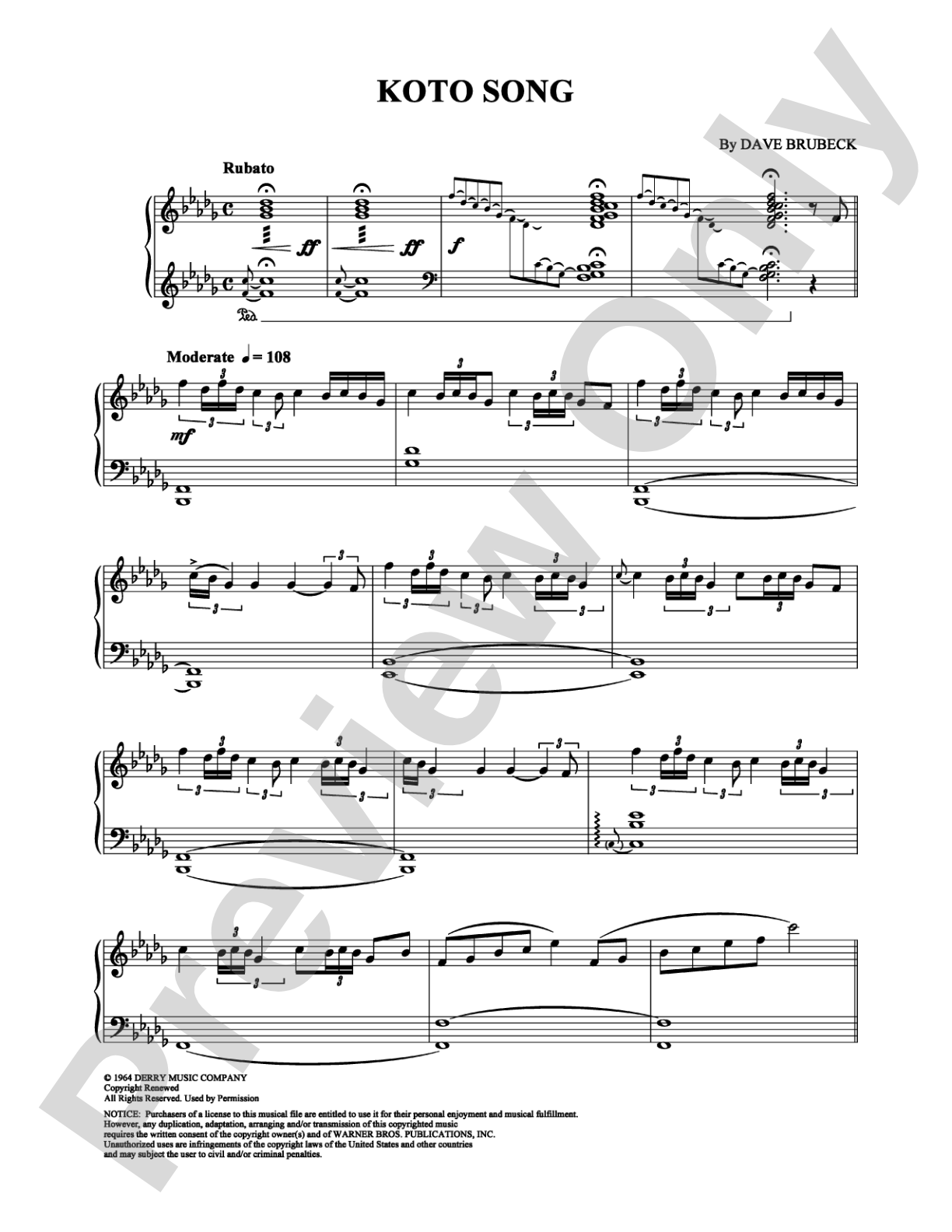
Koto Song: Piano Digital Sheet Music

Koto Song: Piano Digital Sheet Music

Dave Brubeck

Item: 00-PS-0001315

Digital Download
$3.99
Description

Koto Song: Piano Digital Sheet Music isn't in MakeMusic Cloud just yet...but it could be. Let us know you'd like to see it, and you'll help shape what comes next. In the meantime, start a free trial and dive into thousands of interactive titles your students can play along with today.

Sample Audio
No sample audio found.
Sample Video
Additional Details
SKU: 00-PS-0001315

More about this title

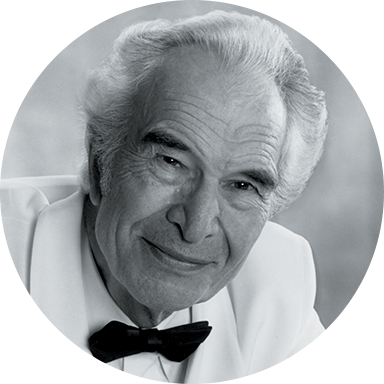
About the Artist: Dave Brubeck

Dave Brubeck

Dave Brubeck built his reputation as a jazz pianist with a gift for spontaneous invention, but his compositional reach extended far beyond the bandstand. He created works across nearly every medium: choral pieces, hymns, orchestral scores, chamber music, ballets, a string quartet, and large-scale works for chorus and orchestra. His landmark album Time Out became the first jazz record to sell over a million copies, and the composition "Take Five" remains one of jazz's most recognizable achievements.

Brubeck's influence extended into social history. He used his platform to challenge racial barriers during the mid-20th century and earned recognition from institutions worldwide, including a Grammy Lifetime Achievement Award, the Presidential Medal of the Arts, and induction into the American Classical Music Hall of Fame in 2003. His sacred works, including the mass To Hope!, have been performed and recorded by major orchestras and choral ensembles across Europe and North America.

Why we love this

Brubeck's piano compositions carry the sophistication of a trained classicist filtered through the harmonic language of jazz. A solo piece like this one rewards players who can navigate his characteristic rhythmic independence and angular melodic lines while maintaining the lyrical, introspective quality he brings to notated work.

What to expect

The piece carries the contemplative, gently probing quality suggested by its title. Brubeck's compositional voice brings structural clarity and harmonic sophistication to the form, creating moments of introspection alongside the rhythmic momentum jazz listeners expect.

Who it's for

Intermediate to advanced pianists drawn to jazz composition and those exploring the intersection of classical training and jazz language. This piece suits pianists interested in Brubeck's work beyond his famous standards and those building a solo repertoire that bridges multiple styles.

How to get the most out of it

  • Let the jazz harmonies inform your voicing choices. Brubeck often stacks intervals in ways that differ from traditional classical practice; honor the written notes as integral to the harmonic color he intended.
  • Balance precision with swing. Even in notated passages, the implied rhythmic flexibility of jazz style should shape your phrasing without compromising clarity.
  • Pay attention to dynamics and articulation markings as compositional statements. Brubeck's written scores leave little to chance; these marks define the piece's character.

How to use it

Program this as a solo recital centerpiece that demonstrates classical training applied to American jazz composition. It pairs naturally with other mid-century concert jazz works or as a bridge between traditional classical repertoire and contemporary jazz-influenced piano music.

Skills your students will build

  • Interpreting jazz harmony and voice leading in notated form
  • Balancing articulation and phrasing across syncopated rhythms
  • Reading and executing Brubeck's precise dynamic and tempo markings
  • Developing a personal voice in repertoire that blends classical and jazz languages

You May Also Like