Kokoleoko (arr. Victor Johnson) Sheet Music Preview

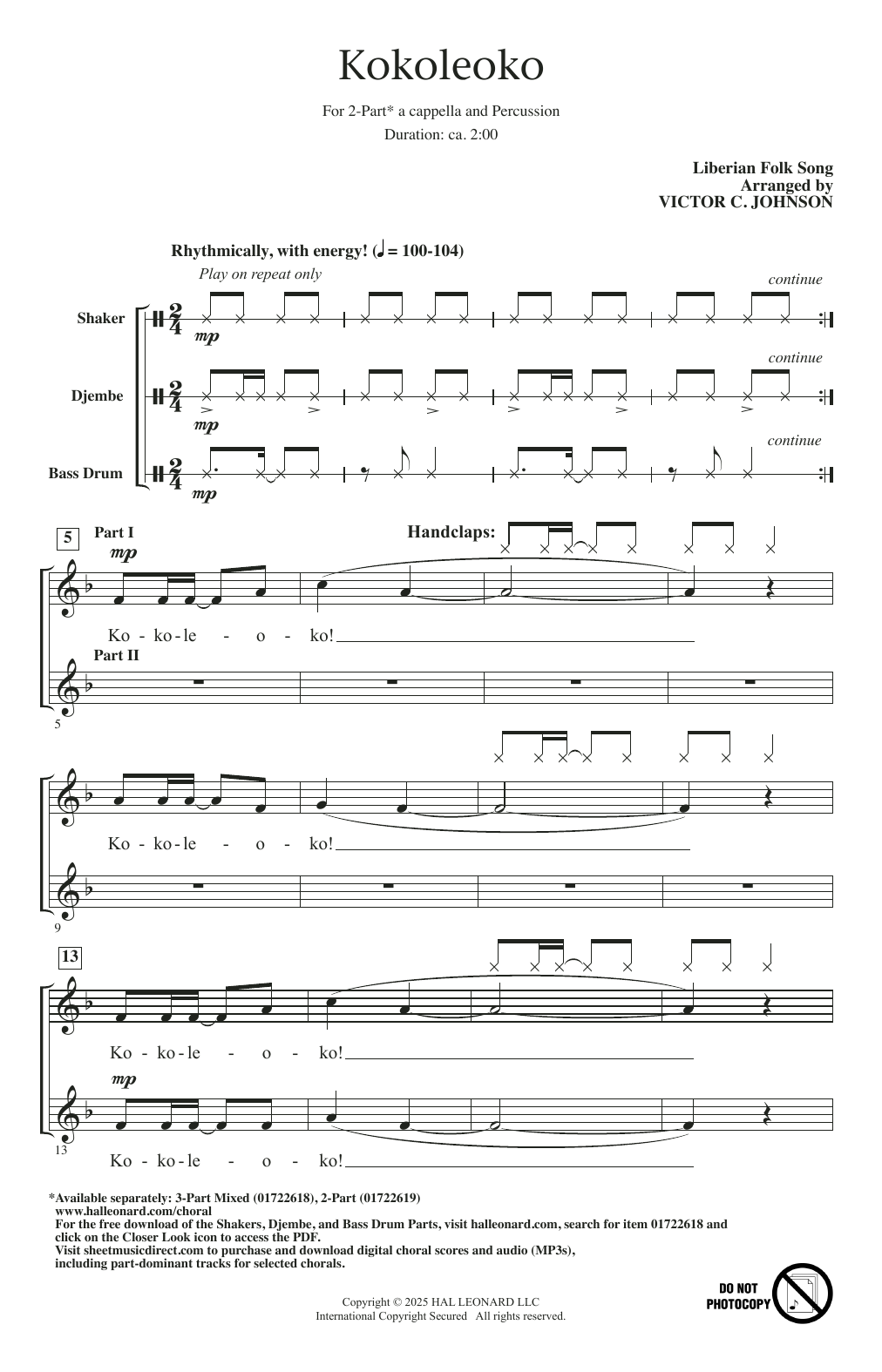
Kokoleoko (arr. Victor Johnson): 2-Part Choral Octavo

As performed by Liberian Folk Song / Arranged by Victor Johnson

Item: 35-DS01585367

Digital Download
$2.50
Description

Kokoleoko (arr. Victor Johnson): 2-Part Choral Octavo isn't in MakeMusic Cloud just yet...but it could be. Let us know you'd like to see it, and you'll help shape what comes next. In the meantime, start a free trial and dive into thousands of interactive titles your students can play along with today.

Sample Audio
No sample audio found.
Sample Video
Additional Details
Publisher: Hal Leonard
Page Count: 7
SKU: 35-DS01585367

More about this title

About the Artist: Liberian Folk Song

Liberian folk songs emerge from a rich tradition of West African music shaped by the country's diverse ethnic groups, each contributing distinct rhythmic patterns, call-and-response structures, and storytelling methods. These songs served essential functions in community life, from work songs that synchronized labor to celebratory pieces performed at gatherings, carrying forward cultural identity and historical memory through generations.

Why we love this

Victor Johnson's arrangement captures the infectious energy of this traditional piece without overwhelming young singers. The 2-part texture stays accessible while preserving the call-and-response character that makes the original so compelling, and the octavo length means you can teach it quickly without sacrificing musical substance.

What to expect

Kokoleoko pulses with the communal warmth of participatory music, where voices weave together in patterns that feel both ancient and immediately alive. The piece invites joy and presence rather than perfection, creating a space where singers connect to something larger than themselves.

Who it's for

This arrangement works for middle school through adult choirs seeking authentic world music that engages singers without excessive technical demands. It's also valuable for directors building culturally responsive programming and students encountering African musical traditions as more than a single unit of study.

How to get the most out of it

  • Establish a steady pulse before introducing the melody; the rhythmic drive of this piece depends on everyone feeling the beat together.
  • Highlight the call-and-response sections by having each part own their phrases with confidence rather than blending them away.
  • Consider minimal movement or simple hand gestures that echo the song's African roots without choreography that distracts from the singing.
  • Record a rehearsal and listen back to check clarity of the text; diction becomes the primary vehicle for character when accompaniment is absent.

How to use it

Pair this with other African or African diaspora repertoire to build a program that goes deeper than surface-level multicultural check boxes. It also serves as an excellent opener or closing number for concerts celebrating ensemble identity, since its participatory nature can include audiences in simpler sections if you choose.

Skills your students will build

  • Singing in call-and-response patterns
  • Maintaining independent lines in a 2-part texture
  • Rhythmic precision in syncopated phrases
  • Understanding and performing authentic diction in a non-English language
  • Building ensemble cohesion without instrumental support

You May Also Like