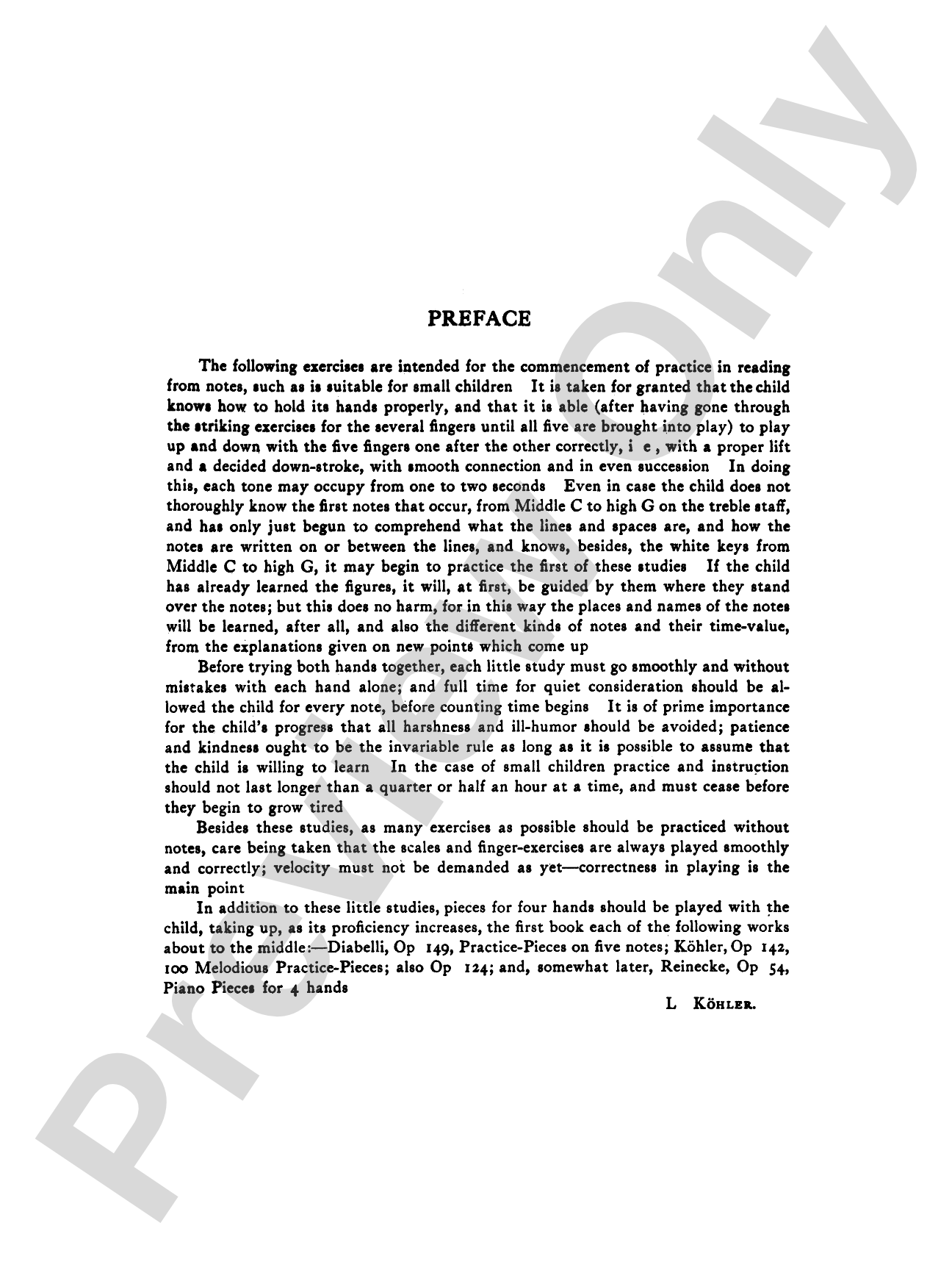
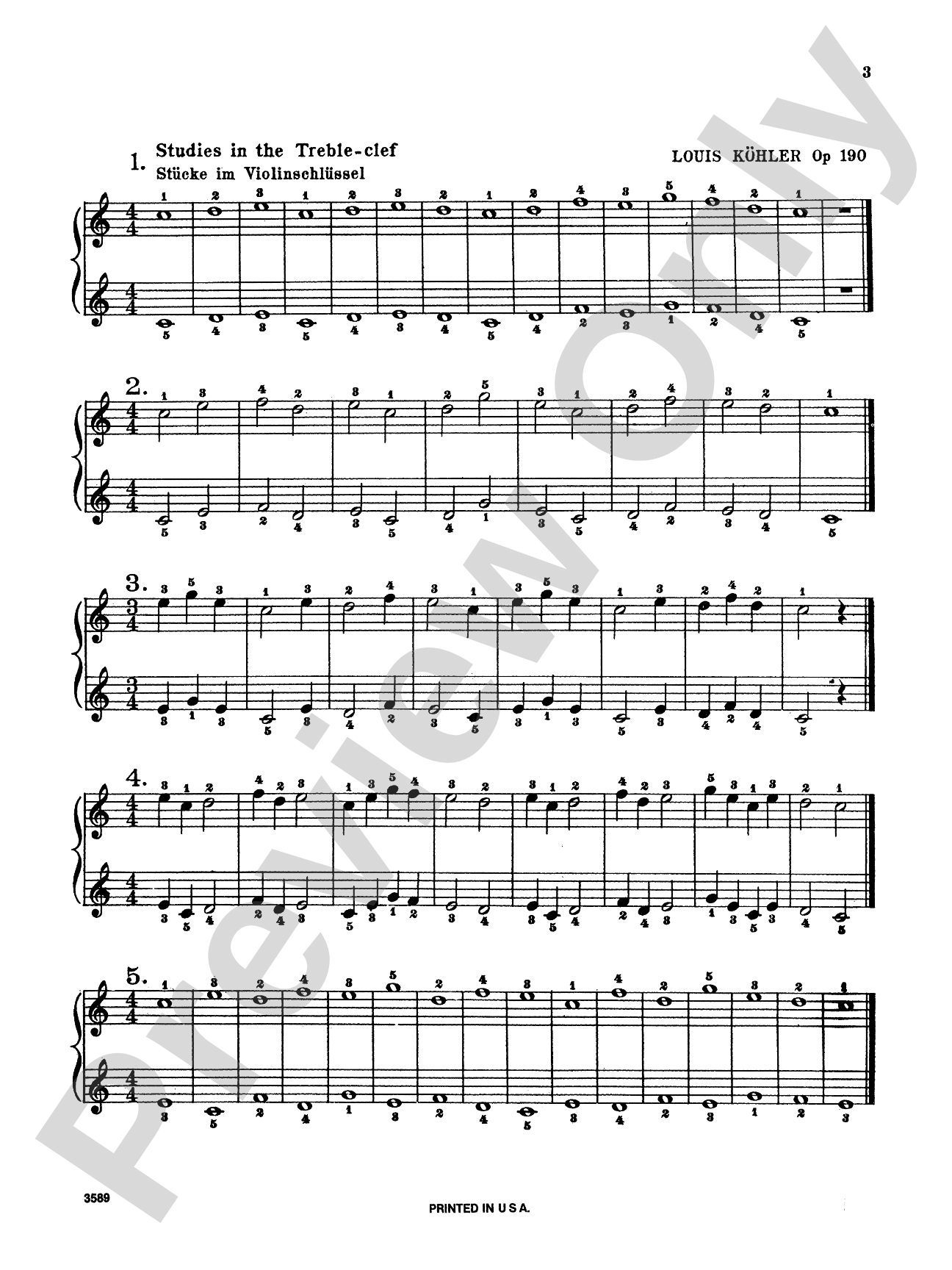
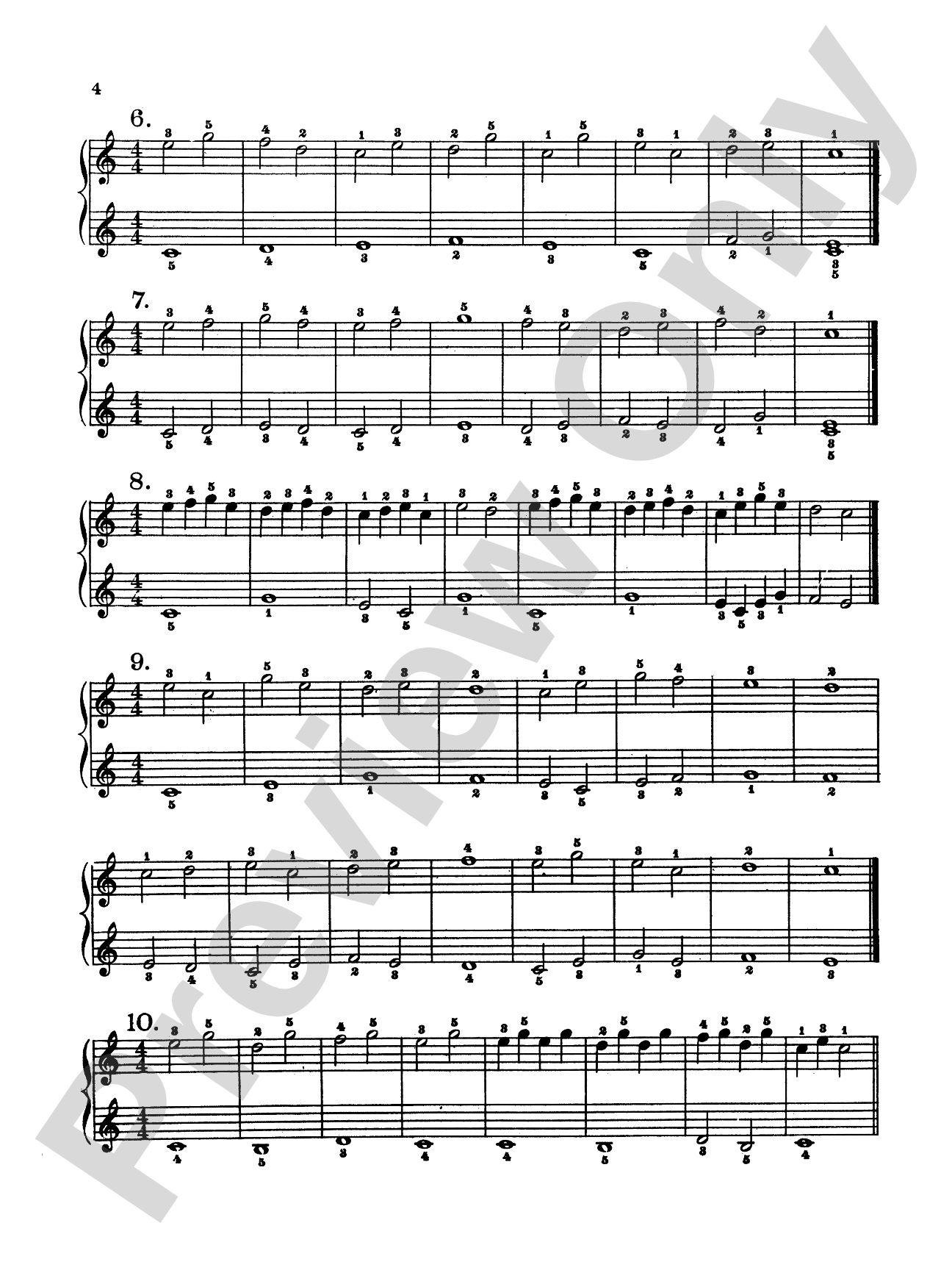
Köhler: The Very Easiest Studies, Op. 190 Sheet Music Preview

Köhler: The Very Easiest Studies, Op. 190

By Louis Köhler

Item: 00-PC-0008030

Digital Download
$8.99
Description
A collection of exercises, for Piano, composed by Louis Köhler.

Don't just read it, hear it, play along with it, and watch your students grow with it. In MakeMusic Cloud, Köhler: The Very Easiest Studies, Op. 190 comes alive with professional accompaniment, adjustable tempo, and built-in practice tools that turn solo practice into real progress.

Sample Audio
No sample audio found.
Sample Video
Additional Details
Series: Kalmus Edition
Publisher: Alfred Music
Page Count: 16
SKU: 00-PC-0008030

More about this title

About the Composer: Louis Köhler

Louis Köhler (1820-1886) was a German pianist and pedagogue whose prolific output shaped piano instruction across the nineteenth century. His studies and exercises remain foundational to early piano training, prized for their musicality and clarity of purpose.

Why we love this

Köhler understood what beginners actually need: short, focused exercises that sound musical rather than mechanical. These studies build technique without overwhelming young players, making them ideal for bridging the gap between method books and genuine repertoire.

What to expect

These studies occupy a comfortable middle ground between scales and pieces. They breathe a Romantic-era gentleness while maintaining the pedagogical clarity of earlier exercise traditions, making practice sessions feel purposeful rather than tedious.

Who it's for

Pianists in their first or second year of study will find these exercises accessible and rewarding. Teachers seeking supplementary material that develops finger independence without introducing unnecessary complexity will value their straightforward design.

How to get the most out of it

  • Maintain evenness of touch across the hand; these studies demand control over individual fingers but reward a relaxed wrist.
  • Keep a steady tempo throughout each exercise rather than accelerating as fingers become comfortable; consistency reveals technical gaps.
  • Listen for the melodic contour within each study, treating even the simplest passage with musical intention.

How to use it

Assign these as daily technical work alongside early repertoire, using them to isolate specific technical challenges your student encounters in pieces. The short length makes them ideal for warm-up material in group lessons or studio classes.

Skills your students will build

  • Five-finger position security and finger independence
  • Evenness and control in single-note passages
  • Hand position stability across different registers
  • Rhythmic precision and steady tempo maintenance
  • Basic phrase awareness within technical exercises

You May Also Like