
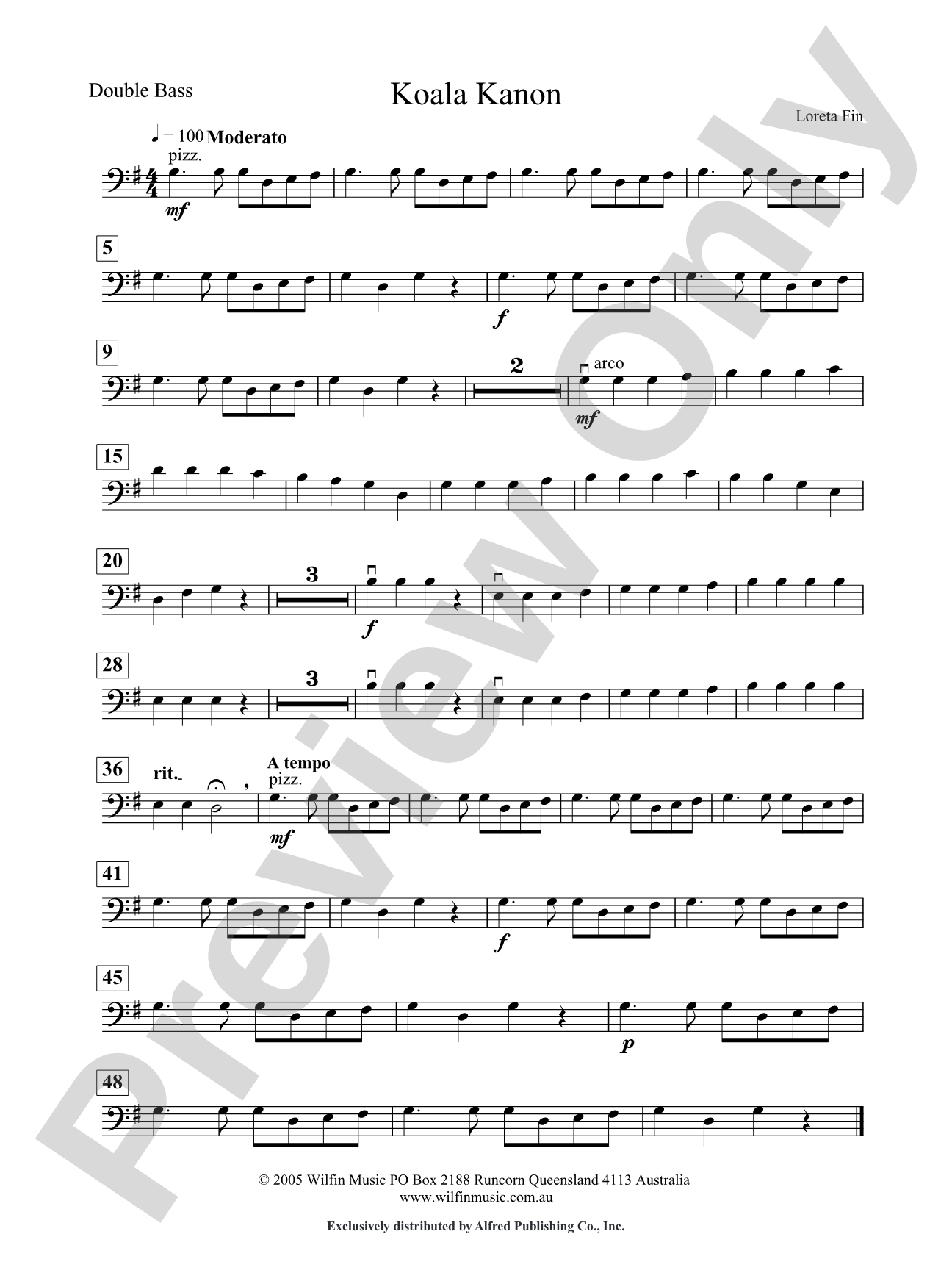

Koala Kanon: String Bass
By Loreta Fin
Grade: 1.5
Item: 76-PC-0000031_SB
$5.99
Pickup currently not available
Description
The rhythms used in this piece are repetitive, so will be easily learned and recognized in the future. The feel of a canon is utilized in each four-bar phrase and the melody is shared right around the orchestra. Encourage the use of whole bows for fortes and less for the lower end of the dynamic range. The piano part is not essential, but will fill any missing parts.


Koala Kanon: String Bass isn't in MakeMusic Cloud just yet...but it could be. Let us know you'd like to see it, and you'll help shape what comes next. In the meantime, start a free trial and dive into thousands of interactive titles your students can play along with today.
Request This Title
Tell us you want it.
Start Your Free Trial
Explore everything that's ready to play right now.
Sample Audio
No sample audio found.
Sample Video
No sample videos found.
Additional Details
Series:
Wilfin String Orchestra: Young String Ensemble Series
Publisher:
Wilfin Music
Page Count:
66
SKU:
76-PC-0000031_SB
More about this title
About the Composer: Loreta Fin

Loreta Fin began her musical training at the Sydney Conservatorium of Music and served as concertmaster of the Sydney Youth Orchestra before establishing herself as a chamber and orchestral performer. Her career spans more than four decades of playing principal viola with the Queensland Pops Orchestra alongside performances with internationally recognized artists, while simultaneously building one of Australia's most respected string education programs.
As Director of Strings at Somerville House School in Brisbane since 1993, Fin has shaped generations of young musicians and become a central figure in Australian music education. She has presented at national conferences in Australia and the United States, served multiple terms as State and National President of the Australian Strings Association, advised the Queensland Symphony Orchestra, and adjudicated major competitions throughout Australia. Her compositional output exceeds 100 published works for string orchestra distributed globally, with her Beginner String Ensemble Series launched in 2017. Fin was honored with the National Award for Services to Music and String Teaching in Australia and was nominated for an ARIA award recognizing excellence in music education.
Why we love this
A conductor who knows exactly what young string players need will write music that teaches and delights simultaneously. Fin's canon structure distributes the melodic material throughout the orchestra so every section gets a moment in the spotlight, building confidence while keeping everyone engaged. The repetitive rhythmic foundation makes this accessible for Grade 1.5 ensembles without sacrificing musicality.
What to expect
A bright, energetic piece with an Australian character that pulls the whole orchestra into conversation. The canon structure creates a playful sense of imitation and call-and-response, making young musicians feel part of something larger than their individual part.
Who it's for
Grade 1.5 string orchestras building confidence in rhythmic coordination and part independence. This works well for ensembles where students are still developing secure intonation and bow control but are ready to tackle material with overlapping phrases and shared responsibility for the melodic line.
How to get the most out of it
- Balance the canon entries by having each section play with equal security and tone quality; the shared melody is more effective when each section sounds equally prepared
- Shape the four-bar phrases as distinct musical units rather than playing straight through; this clarifies the canon's architecture and gives younger players clear structural landmarks
- Apply Fin's guidance about whole bows for forte passages and reserve shorter bows for softer dynamics, which naturally controls the volume and refines bow control at this level
- If your ensemble is under full strength, use the optional piano part strategically to reinforce missing instrumental lines without letting it overshadow the string writing
How to use it
Program this early in a concert where it can build audience enthusiasm and showcase the full orchestra's participation without the pressure of a major concerto. It also works well as a spring concert opener or as part of a multicultural program segment that celebrates world music traditions.
Skills your students will build
- Reading and executing four-bar rhythmic patterns consistently across multiple repetitions
- Balancing independent parts while listening to related canon entries in other sections
- Dynamic control and bow management across a range from soft to full-volume passages
- Ensemble alignment of phrase boundaries and sectional independence within a unified whole