
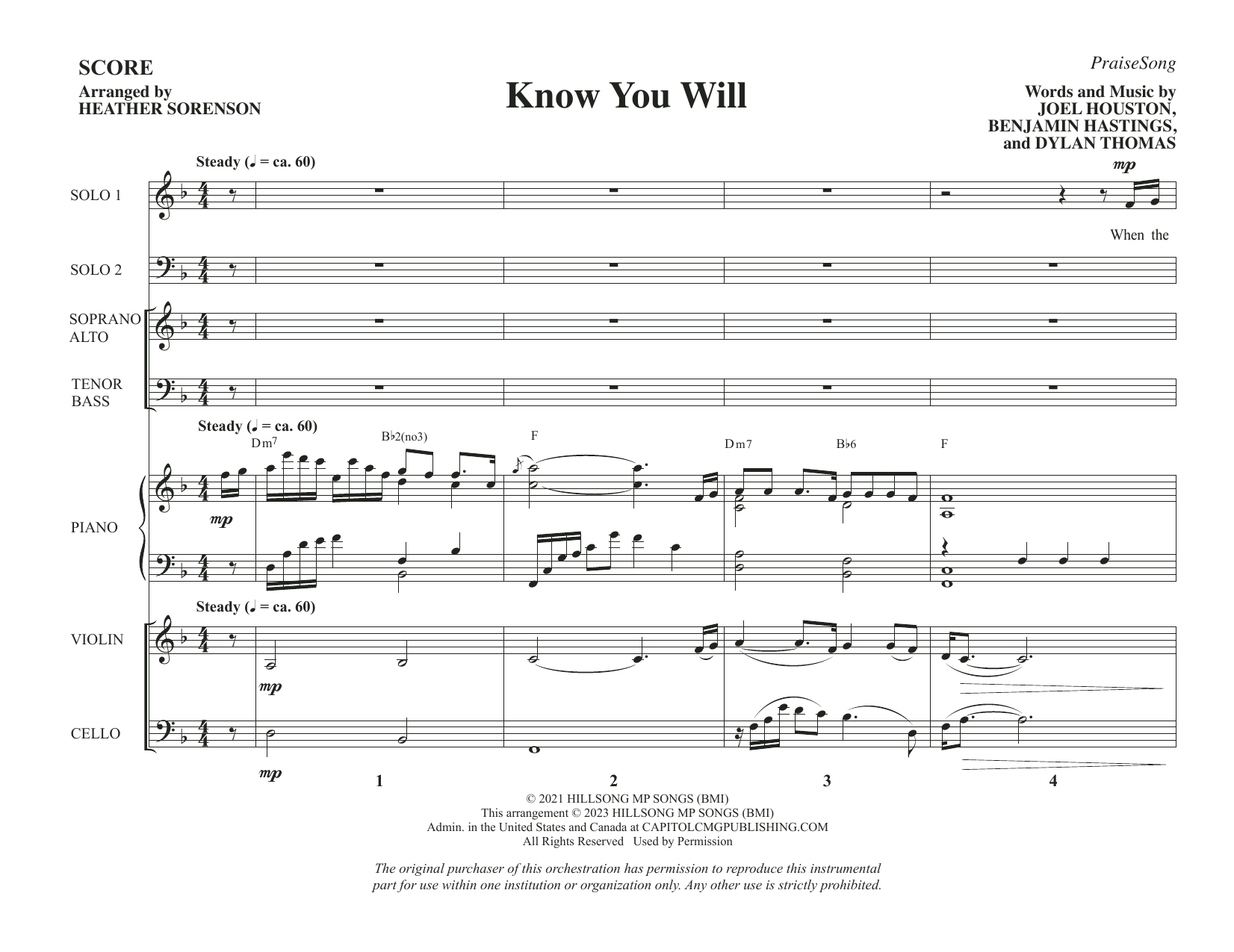

Know You Will (arr. Heather Sorenson): Choral Instrumental Pak
As performed by Hillsong United / Arranged by Heather Sorenson
Item: 35-PK01170784
$15.00
Pickup currently not available
Buy Extra Parts (Digital PDF Download)
Parts Added to Cart!
Description
Arranged for choral success, this modern worship song speaks of God's faithfulness. Expertly adapted for choir and two soloists, the anthem will work well with piano only or with the optional violin and cello parts. Score and Parts (vn, vc) available as a digital download.


Know You Will (arr. Heather Sorenson): Choral Instrumental Pak isn't in MakeMusic Cloud just yet...but it could be. Let us know you'd like to see it, and you'll help shape what comes next. In the meantime, start a free trial and dive into thousands of interactive titles your students can play along with today.
Request This Title
Tell us you want it.
Start Your Free Trial
Explore everything that's ready to play right now.
Sample Audio
No sample audio found.
Sample Video
No sample videos found.
Additional Details
Publisher:
Hal Leonard
SKU:
35-PK01170784
More about this title
About the Artist: Hillsong United
Hillsong United is the worship band and collective from Hillsong Church in Sydney, Australia. Since the 1980s, they have written and performed music that bridges contemporary worship sensibilities with accessible melodic writing, creating songs that resonate across denominational and geographical boundaries. Their output has become central to modern sacred music repertoire, performed in churches and concert halls worldwide.
For music educators, Hillsong United's catalog offers contemporary sacred material that engages students with current musical language while maintaining strong harmonic and melodic foundations. Their songs translate effectively across ensemble settings, from solo vocal performance to full orchestral arrangement, making them valuable resources for choirs seeking to connect with modern worship traditions.
Why we love this
Sorenson's arrangement respects the song's contemporary appeal while giving choirs the flexibility to build the piece incrementally. Starting with piano and voices, directors can add strings without disrupting the spiritual intimacy of the work, and the two-soloist structure creates natural leadership opportunities that engage singers differently than traditional unison or SAB voicing.
What to expect
Warm and grounded, with lyrics that affirm rather than exhort. The song creates space for reflection through its harmonic language while the optional strings add luminosity without overcomplicating the texture. Listeners encounter both contemporary instrumentation sensibilities and timeless spiritual themes.
Who it's for
Choirs of all levels seeking contemporary sacred repertoire that works in worship settings and concert programs alike. The arrangement scales from simple (choir and piano) to richer (with strings), so it suits both emerging and experienced ensembles.
How to get the most out of it
- Balance the two soloists so they function as storytellers rather than competitive voices; they should sound like they're singing to the congregation, not past each other
- Bring out the harmonic movement in the sustained choral sections by rotating weight among voice parts rather than keeping everything in the melody line
- If adding strings, introduce them gradually through sections rather than all at once; let the choir anchor the texture before instrumental color enters
- Maintain rhythmic precision in syncopated passages without losing the reflective quality; these moments need lift but not urgency
How to use it
Pair this with other contemporary sacred works to build a concert segment that demonstrates how modern worship writing functions in choral contexts, or use it as a standalone moment that provides textural and stylistic contrast to traditional anthem repertoire. It works equally well as a worship service anthem or concert closer, depending on your programming goals and ensemble makeup.
Skills your students will build
- Balancing solo and ensemble roles within a single piece
- Performing sustained harmonic support while maintaining musical shape
- Coordinating with optional instrumental parts and making textural choices about when to include them
- Interpreting contemporary harmonic language and syncopated rhythmic figures