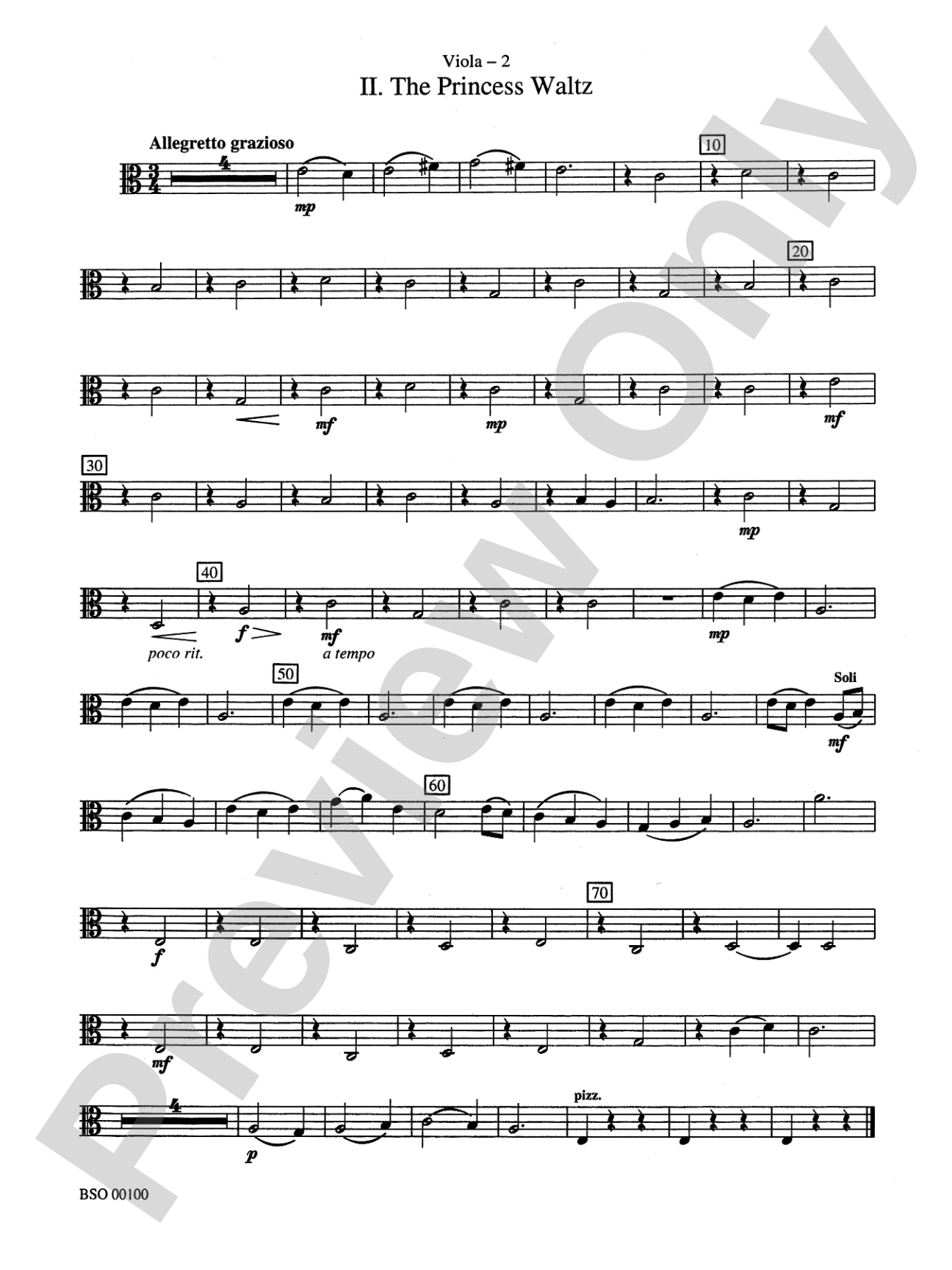
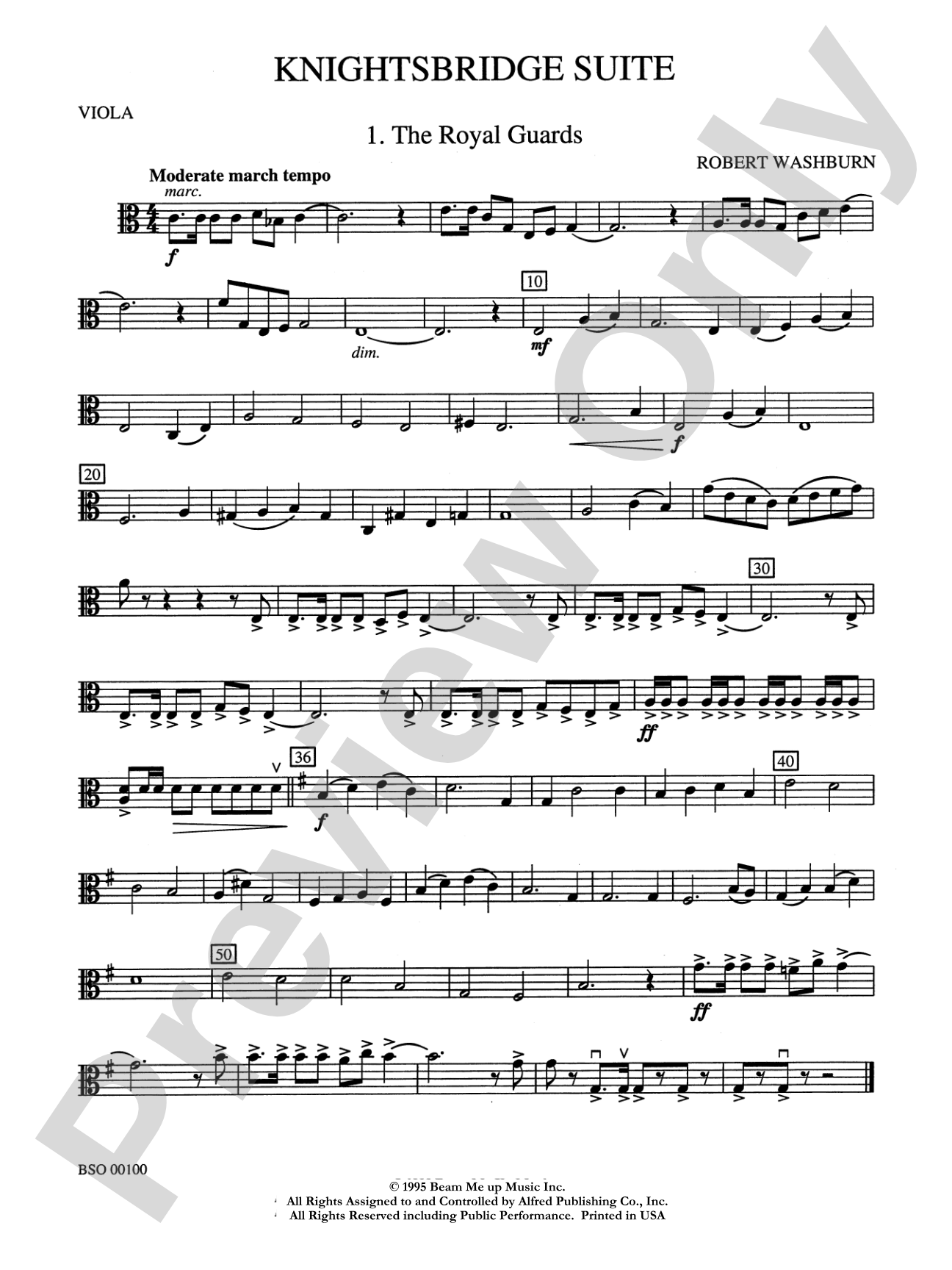
Knightsbridge Suite: Viola Sheet Music Preview

Knightsbridge Suite: Viola

By Robert Washburn

Grade: 3.5

Item: 00-PC-0002246_VA1

Digital Download
$5.99
Description
This suite has four movements: March, Waltz, Ballad, and Allegro. This is typical Washburn, and the contrast of the movements of the suite provides interest for performer and audience alike. Appealing but not difficult.

Don't just read it, hear it, play along with it, and watch your students grow with it. In MakeMusic Cloud, Knightsbridge Suite: Viola comes alive with professional accompaniment, adjustable tempo, and built-in practice tools that turn solo practice into real progress.

Sample Audio
No sample audio found.
Sample Video
Additional Details
Series: Belwin Intermediate String Orchestra
Publisher: Alfred Music
Page Count: 268
SKU: 00-PC-0002246_VA1

More about this title

About the Composer: Robert Washburn

Robert Washburn is a prolific composer whose works appear regularly on festival and contest programs across North America. His writing for strings balances musical substance with accessibility, making his pieces staples for intermediate ensembles seeking repertoire that challenges students without overwhelming them.

Washburn's approach to orchestration and form reflects his deep understanding of what student musicians can achieve. His suites, in particular, demonstrate how varied movements can build ensemble cohesion while keeping performers engaged throughout a multi-section work.

Why we love this

Washburn nails the four-movement suite formula without resorting to tired contrasts. The progression from March through Waltz, Ballad, and Allegro feels inevitable rather than formulaic, and each section gives you something distinct to rehearse and shape. Your students will hear how different musical characters live in the same piece, and your audience will stay engaged because the variety feels earned.

What to expect

The suite moves from ceremonial march through elegant dance, introspection, and spirited closure. Each movement inhabits its own character convincingly while maintaining a coherent voice throughout. The result is a work that feels complete and considered rather than loosely assembled.

Who it's for

Intermediate string orchestras ready to program a complete suite without tackling advanced technical demands. This works well for groups at the 3.5 level who want to explore contrasting musical characters within a single rehearsal arc.

How to get the most out of it

  • Treat the March as your ensemble's foundation. Lock the rhythm section early and establish the tempo firmly; everything that follows depends on this movement's clarity.
  • Shape the Waltz with lift rather than weight. The three-beat pulse should feel graceful, not heavy, which means watching for the tendency to drag on beat three.
  • Let the Ballad breathe. This is where your string sound matters most. Encourage longer phrases and discourage excessive vibrato unless the texture calls for it.
  • The Allegro finale needs energy without rushing. A steady conductor's hand and careful attention to your fastest section will keep the ensemble together.

How to use it

Build a concert around this suite as your centerpiece, flanking it with shorter selections that complement each movement's character. It also reads well as the capstone of a rehearsal cycle where students apply technique developed across the year, making it ideal for spring festival season or year-end concerts.

Skills your students will build

  • Executing multi-movement structure with musical coherence
  • Phrasing across contrasting tempos and characters (march, waltz, ballad, allegro)
  • Balance and blend in string voicing across four distinct textures
  • Ensemble communication without relying on verbal cues between movements
  • Style awareness in dance forms (waltz) and dramatic genres (march, ballad)

You May Also Like