
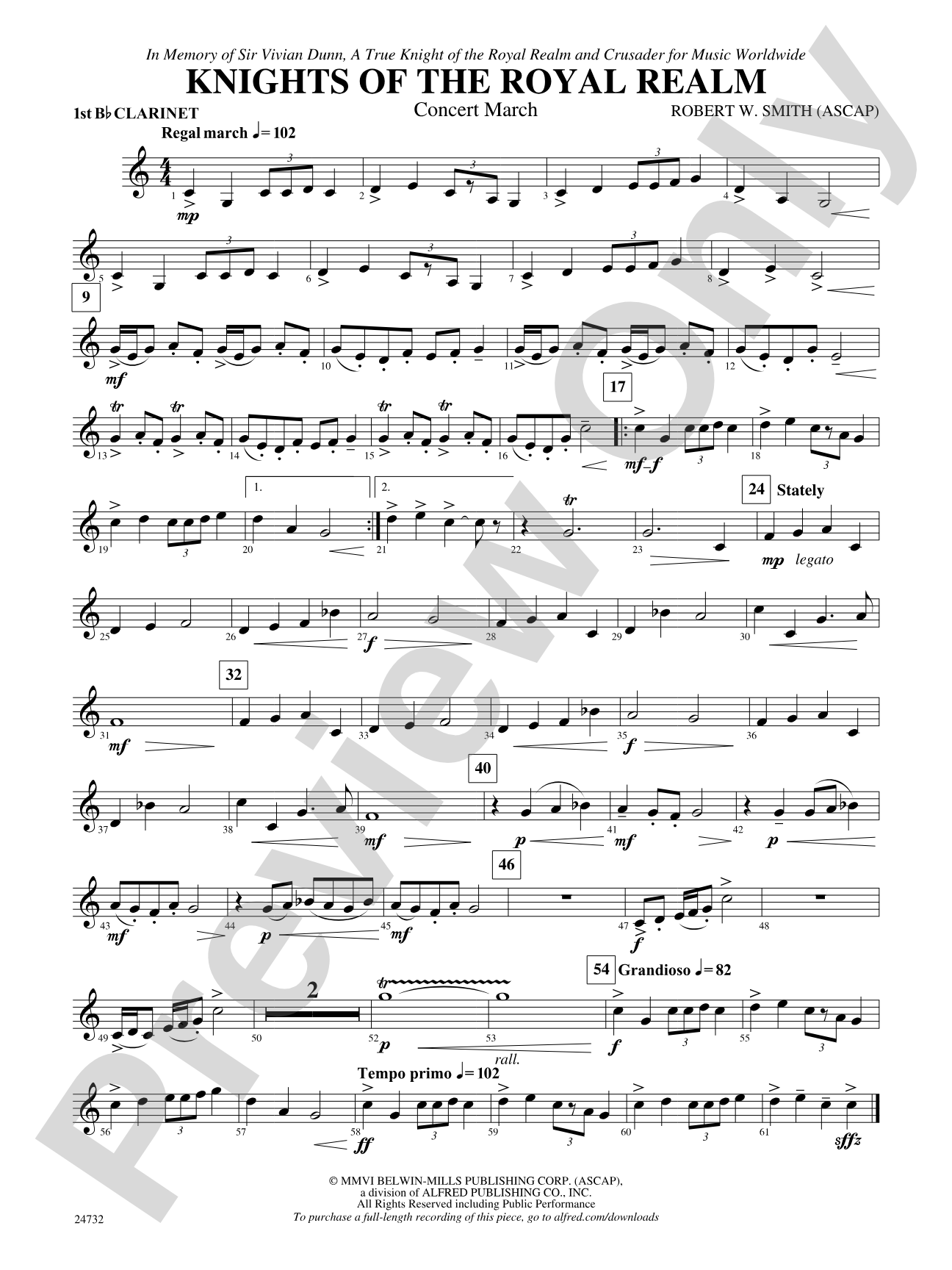

Knights of the Royal Realm (Concert March): 1st B-flat Clarinet
By Robert W. Smith
Grade: 2 (Easy)
Item: 00-PC-0000883_C1
$3.00
Pickup currently not available
Description
With a British flair and grandiose-style, this original march incorporates two distinct themes. Robert W. Smith explains that "Knights of the Royal Realm" was inspired by the musical life and talents of Sir Vivian Dunn, a British conductor of international acclaim. Sir Vivian's stately manner and warm personality left a lasting impression on him as a young composer. Mr. Smith pays tribute to those lasting memories and Sir Vivian's impact on the American band movement through this charming march for the concert band.


Don't just read it, hear it, play along with it, and watch your students grow with it. In MakeMusic Cloud, Knights of the Royal Realm (Concert March): 1st B-flat Clarinet comes alive with professional accompaniment, adjustable tempo, and built-in practice tools that turn solo practice into real progress.
Open in the Player
Jump straight in and assign it today.
Start Your Free Trial
Open this title and explore the full library in minutes.
Sample Audio
1
Audio File
--:--
0:00
0:00
Sample Video
No sample videos found.
Additional Details
Series:
Belwin Young Band
Publisher:
Alfred Music
Page Count:
126
SKU:
00-PC-0000883_C1
More about this title
About the Composer: Robert W. Smith

Robert W. Smith stands among America's most recorded and performed composers for wind and orchestral ensembles. With more than 400 published works distributed primarily through Alfred Music, his output spans original compositions, arrangements, and educational pieces that have been performed across North America, Europe, Australia, and Asia. He holds degrees from Troy State University (AL) and the University of Miami (FL), and his symphonic works including The Divine Comedy and The Odyssey have established themselves as repertoire staples.
Beyond the concert hall, Smith's music has reached audiences through major television broadcasts, from presidential ceremonies in Japan to the Macy's Thanksgiving Day Parade and the Olympic Games. His work as a conductor and clinician has taken him to festivals and workshops throughout the United States, Canada, Japan, Australia, and Europe, making him a visible presence in the international band community.
Why we love this
Smith crafts this march with the grace of a seasoned professional while keeping the technical demands accessible for developing ensembles. The two distinct themes give your band genuine material to shape and balance, avoiding the repetitive structures that plague many grade 2 marches. A concert march that respects both the genre's traditions and your students' abilities to make real musical choices.
What to expect
Knights of the Royal Realm unfolds with pageantry and warmth, evoking the dignity of a formal procession without stuffiness. The melodies are singable and memorable; the harmonic language is clear and purposeful, allowing young musicians to hear how their individual lines contribute to something grander than themselves.
Who it's for
Concert bands at the developing level, particularly those working to expand beyond simple march forms while maintaining repertoire that remains playable in a single season. This suite works equally well for bands preparing for concert festivals or those building a balanced concert program that includes ceremonial works.
How to get the most out of it
- Shape each theme distinctly through articulation and dynamic control. The contrasting characters will emerge more vividly when sections commit to their own phrasing rather than blending everything together.
- Balance the march's ceremonial quality by keeping eighth-note figures crisp without rushing; the British stateliness depends on deliberate articulation that feels unhurried.
- Support young brass players by ensuring the tuba and low brass establish a solid harmonic foundation; Smith's voicing will sound fuller when the bass line is secure and confident.
How to use it
Position this march as an opening number on a concert program where it can establish an elegant tone, or pair it with lighter fare to demonstrate your band's stylistic range. It functions particularly well when programming young band concerts that celebrate musicianship at the intermediate level without asking for advanced technical facility.
Skills your students will build
- Shaping contrasting thematic material with appropriate dynamic and articulative choices
- Maintaining steady march tempo and rhythmic integrity across full ensemble textures
- Balancing melodic and harmonic lines to support overall musical direction
- Reading concert band score formats and part extraction from conductor materials