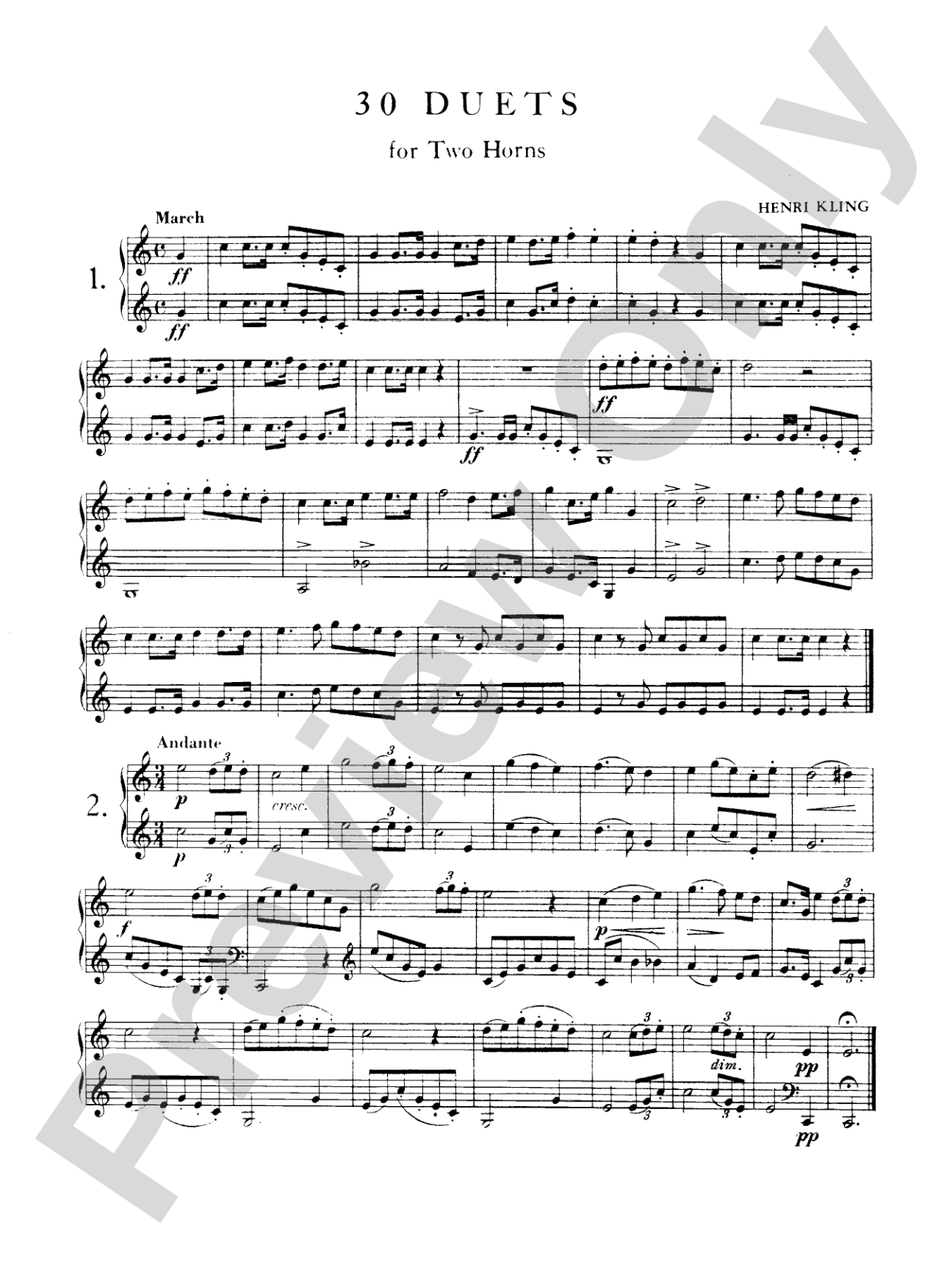
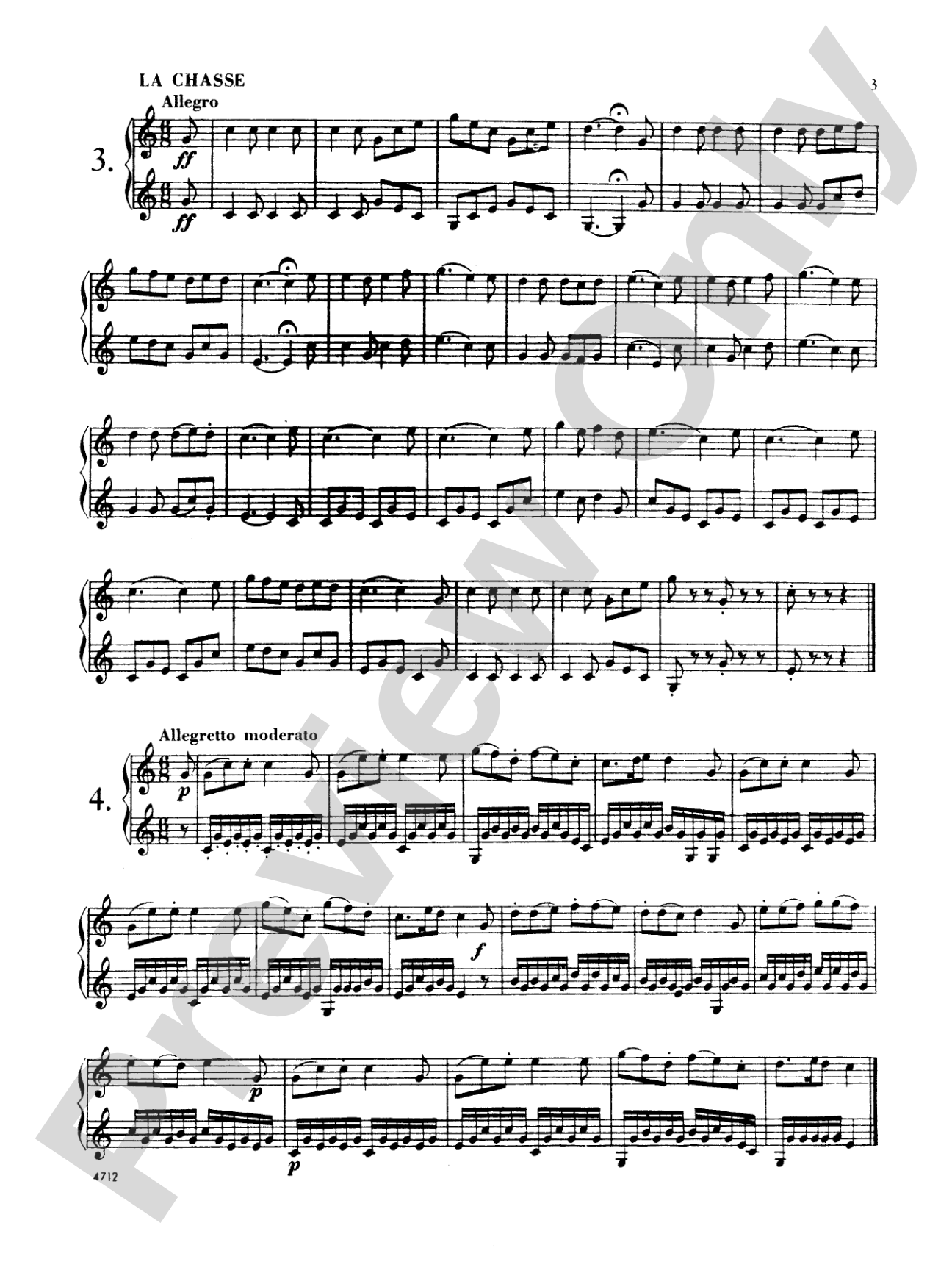
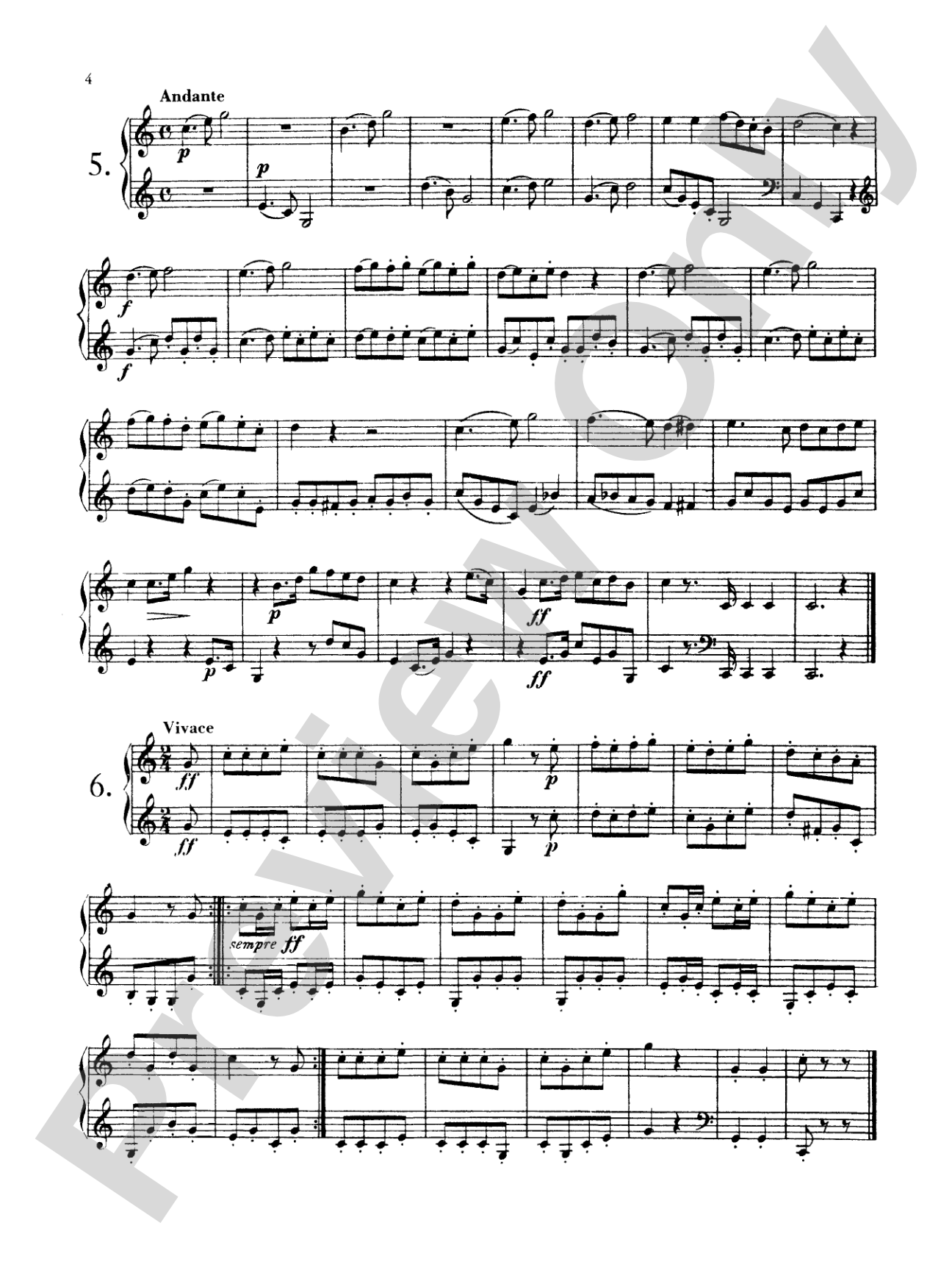
Kling: Thirty Duets Sheet Music Preview

Kling: Thirty Duets

By Henri Kling

Item: 00-PC-0011022

Digital Download
$8.99
Description
A collection of duets, for French Horn, composed by Henri Kling.

Don't just read it, hear it, play along with it, and watch your students grow with it. In MakeMusic Cloud, Kling: Thirty Duets comes alive with professional accompaniment, adjustable tempo, and built-in practice tools that turn solo practice into real progress.

Sample Audio
No sample audio found.
Sample Video
Additional Details
Series: Kalmus Edition
Publisher: Alfred Music
Page Count: 20
SKU: 00-PC-0011022

More about this title

About the Composer: Henri Kling

Henri Kling (1842-1918) was a French composer and hornist who wrote extensively for brass instruments during the late 19th and early 20th centuries. His duets and pedagogical works became standard repertoire in conservatories across Europe, valued for their musical substance and technical clarity.

Why we love this

Kling's thirty duets sit at that sweet spot where musical interest meets genuine pedagogical purpose. The writing is idiomatic and rewarding for horn players at the intermediate level, with enough variety across the collection to keep rehearsals fresh while building core ensemble skills.

What to expect

Kling's language is direct and purposeful, balancing lyrical passages with spirited, technically engaging sections. The collection has the character of elegant salon music, intimate and conversational, inviting two players to find dialogue and warmth in their shared sound.

Who it's for

These duets serve intermediate to advanced horn players preparing for contests, festivals, or recital programs. They work equally well for students building ensemble musicianship in a studio setting or hornists looking for substantive two-part repertoire that doesn't require a full band or orchestra.

How to get the most out of it

  • Balance tone production between both players so neither horn dominates; Kling writes for true partnership, not soloist and accompanist.
  • Practice passages separately at a slow tempo before combining, especially where parts move in similar rhythmic motion.
  • Attend to phrase shape and breathing together; communicate visually when one player holds longer values to maintain ensemble cohesion.
  • Approach the duets as short recital pieces rather than exercises, bringing musical intention to phrasing and dynamics even in the simpler numbers.

How to use it

Select individual duets for student recitals or festival performances; the variety in the collection means you can match duets to specific technical strengths or performance themes. The contest designation makes these particularly valuable when preparing students for adjudicated events.

Skills your students will build

  • Ensemble listening and balance in two-part textures
  • Phrasing and musical shaping across phrase boundaries
  • Stylistic interpretation of 19th-century brass repertoire
  • Technical accuracy in articulation and rapid scalar passages
  • Collaborative performance and communication between equal parts

You May Also Like