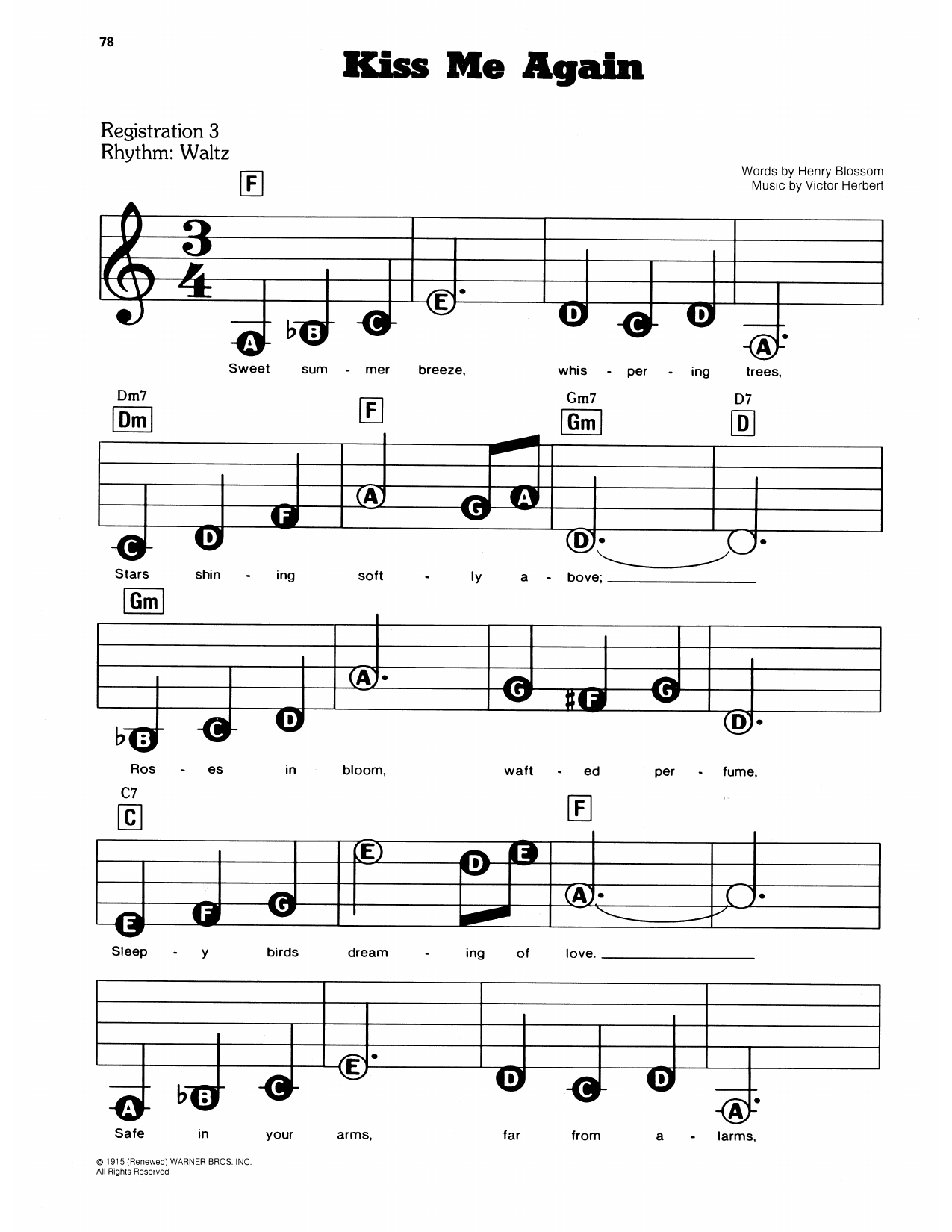
Kiss Me Again (from Mlle. Modiste) Sheet Music Preview

Kiss Me Again (from Mlle. Modiste): E-Z Play Today

As performed by Henry Blossom

Item: 35-DS01914980

Digital Download
$4.99
Description

Kiss Me Again (from Mlle. Modiste): E-Z Play Today isn't in MakeMusic Cloud just yet...but it could be. Let us know you'd like to see it, and you'll help shape what comes next. In the meantime, start a free trial and dive into thousands of interactive titles your students can play along with today.

Sample Audio
No sample audio found.
Sample Video
Additional Details
Publisher: Hal Leonard
Page Count: 2
SKU: 35-DS01914980

More about this title

About the Artist: Henry Blossom

Henry Blossom (1861-1919) was an American librettist and lyricist who shaped the operetta landscape of the early twentieth century. His collaboration with composer Victor Herbert produced some of the era's most enduring musical theater works, including Mlle. Modiste, which premiered in 1905 and became one of the most successful operettas of its time.

Why we love this

This arrangement captures the charm and melodic directness of early American operetta without demanding virtuosic technique. The piece sits comfortably under the hand and allows pianists to focus on phrasing and period style rather than wrestling with the page.

What to expect

Romantic and wistful, with the gentle lilt characteristic of Edwardian operetta. The piece evokes intimate drawing room performance, where charm and expressiveness matter more than spectacle.

Who it's for

Students building familiarity with American musical theater repertoire and pianists seeking accessible arrangements of period classics. This works particularly well for intermediate players exploring the transition from classical forms to theatrical music.

How to get the most out of it

  • Shape the melodic line with gentle rubato; the waltz character benefits from subtle breathing rather than metronomic precision.
  • Balance the accompaniment texture so the right-hand melody emerges naturally without forcing.
  • Observe the character of early twentieth-century salon music; aim for elegance over brilliance.

How to use it

Include this in a recital devoted to early American musical theater or pair it with other salon pieces from the same era. It also serves as a bridge for students transitioning from classical piano repertoire into music theater styles.

Skills your students will build

  • Phrasing period operetta melodies with historical sensitivity
  • Balancing melody and accompaniment in smaller ensemble textures
  • Developing rubato in a waltz context
  • Reading and interpreting early twentieth-century musical theater notation

You May Also Like