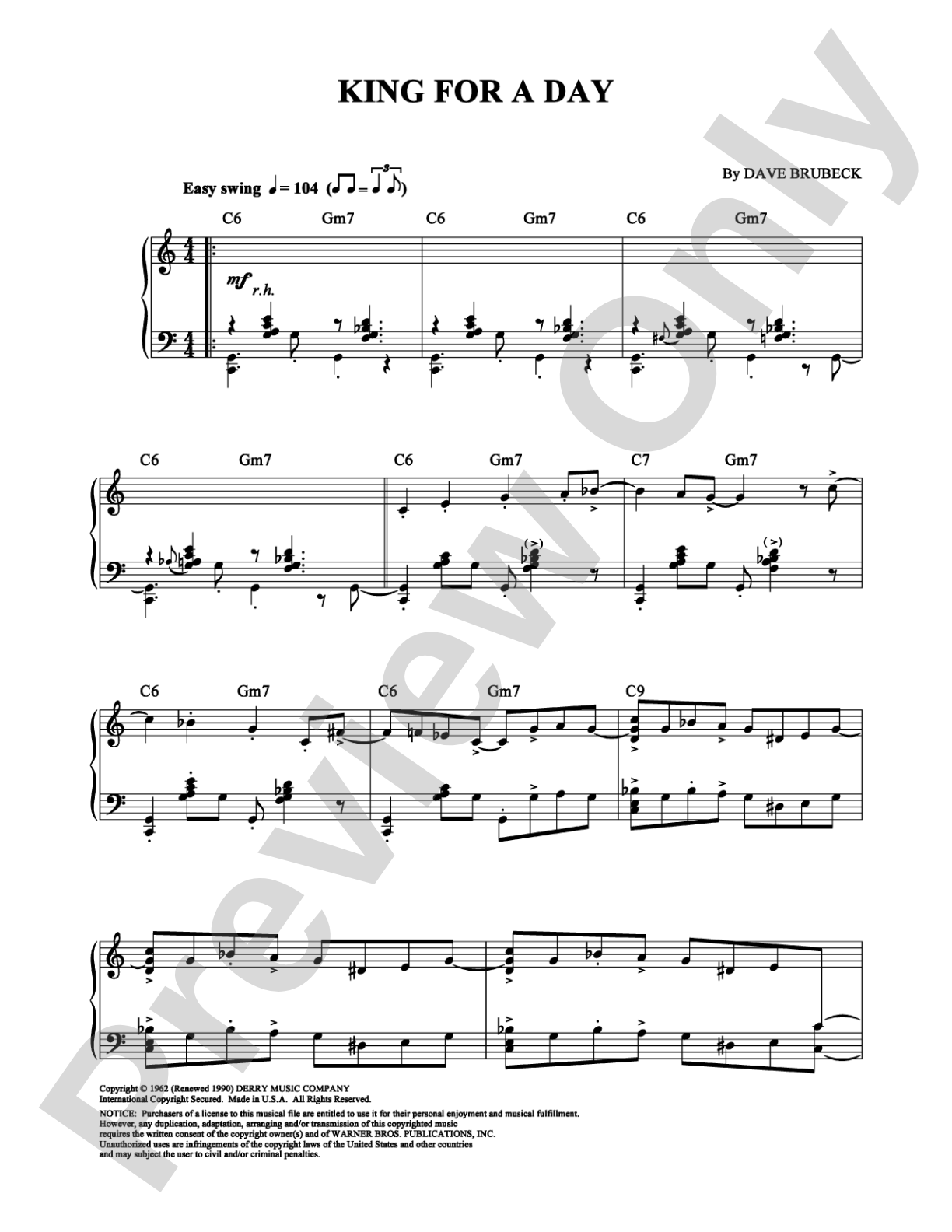
King for a Day: Piano Digital Sheet Music

King for a Day: Piano Digital Sheet Music

Dave Brubeck

Item: 00-PS-0000978

Digital Download
$3.99
Description

King for a Day: Piano Digital Sheet Music isn't in MakeMusic Cloud just yet...but it could be. Let us know you'd like to see it, and you'll help shape what comes next. In the meantime, start a free trial and dive into thousands of interactive titles your students can play along with today.

Sample Audio
No sample audio found.
Sample Video
Additional Details
SKU: 00-PS-0000978

More about this title

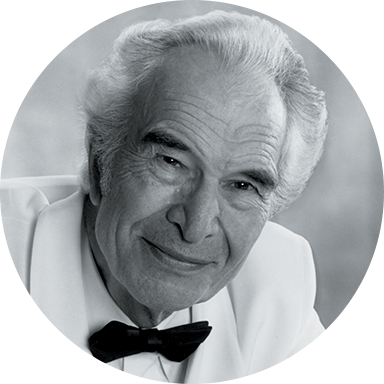
About the Artist: Dave Brubeck

Dave Brubeck

Dave Brubeck shaped modern jazz through his distinctive voice as both pianist and composer. His improvisational command was matched by his gift for structured composition: he wrote choral works, orchestral pieces, chamber music, ballets, and large-scale vocal works alongside his jazz recordings. His 1959 album "Time Out" became the first jazz record to sell over a million copies, and "Take Five" remains one of jazz's most enduring standards. Beyond music, Brubeck was a pioneering figure in breaking racial barriers in mid-20th-century America.

His classical training under Darius Milhaud at Mills College in 1946 gave him permission to fuse jazz language with European concert forms, a synthesis that defined his artistic legacy. Works like his mass "To Hope!" and oratorios "The Voice of the Holy Spirit" and "Beloved Son" have been performed by the London Symphony Orchestra and recorded in cathedrals worldwide. In 2003 he was inducted into the American Classical Music Hall of Fame; the London Symphony Orchestra honored him with a lifetime achievement award in 2007.

Why we love this

Brubeck's ability to write music that swings hard while remaining intellectually rigorous comes through in every piece he composed for solo piano. "King for a Day" gives pianists access to his harmonic language and rhythmic sensibility without requiring the ensemble coordination a big band needs, making it ideal for recitals, competitions, or students who want to understand how a jazz master thought about melody and chord progression.

What to expect

The piece carries the sophisticated, unhurried elegance that defines Brubeck's approach to composition. His harmonic sophistication and melodic grace combine with a swinging, conversational quality that feels both modern and timeless.

Who it's for

Solo pianists preparing recital repertoire, jazz piano students exploring composed works by jazz masters, and pianists comfortable with jazz harmony who want an authentic entry point into Brubeck's harmonic language. Intermediate to advanced players will find the most musical reward.

How to get the most out of it

  • Listen closely to recordings of Brubeck's trio and quartet work to absorb his approach to time feel and phrasing; the notation captures what he wrote, but his particular way of sitting slightly behind or ahead of the beat is learned by ear.
  • Shape the harmonic progression with subtle dynamic shaping and voicing choices rather than tempo manipulation; Brubeck's compositions reward textural clarity over showiness.
  • Allow space for the melody to breathe, especially in lyrical passages; rushing through chord changes undermines the compositional architecture he built into the piece.
  • Explore the interplay between written sections and improvisation opportunities if the score indicates them; Brubeck always expected performers to find their own voice within his harmonic framework.

How to use it

Program this alongside classical piano repertoire to create a concert that bridges jazz and concert music, or feature it in a jazz recital that emphasizes composition over flashiness. It also works well as an encore that showcases jazz literacy without requiring rhythm section accompaniment.

Skills your students will build

  • Reading jazz harmony and chord substitutions in notated form
  • Interpreting swing feel and phrasing in composed jazz music
  • Voicing chords across the keyboard with independence between hands
  • Balancing melodic line projection with harmonic complexity

You May Also Like