King Cotton March Sheet Music Preview

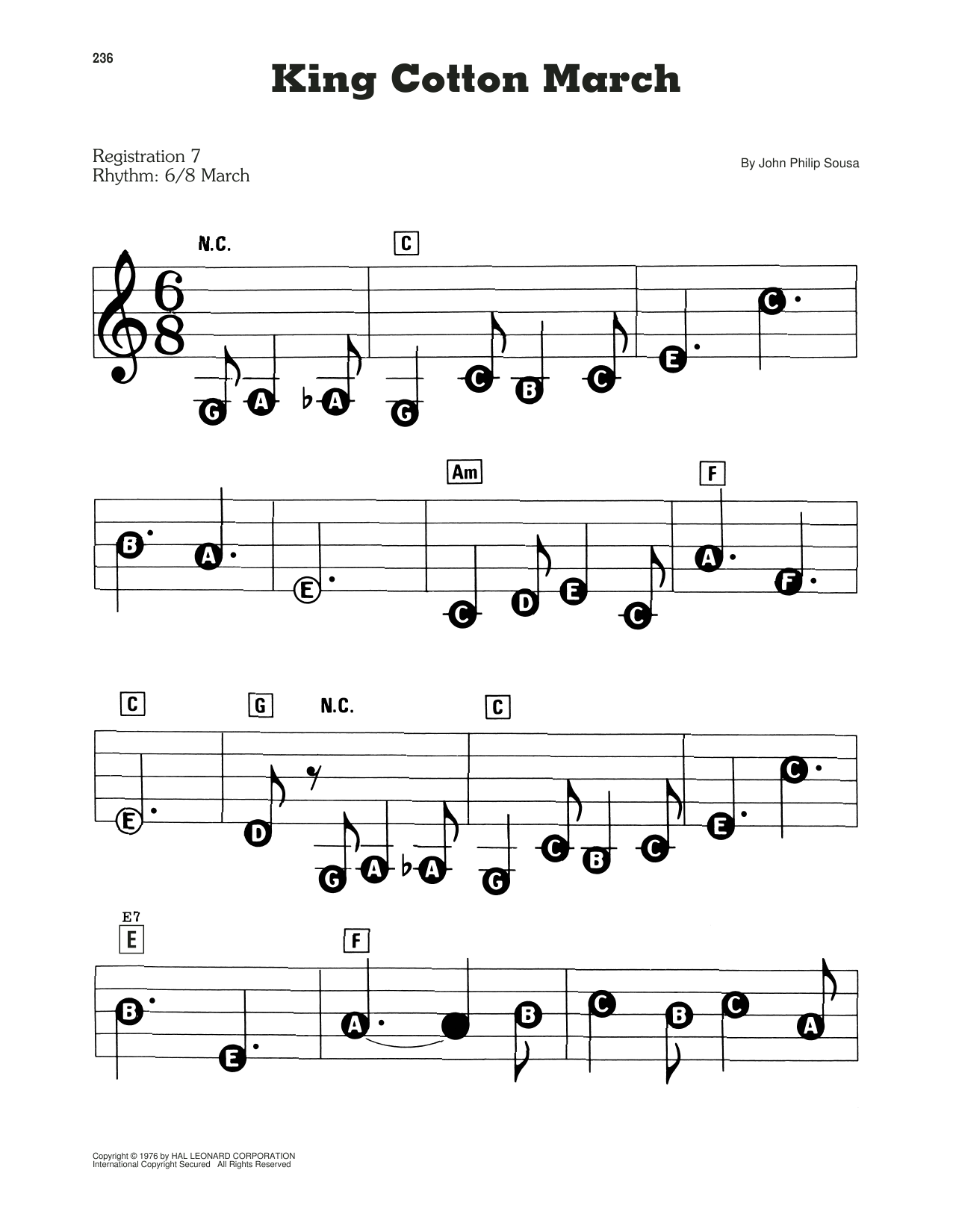
King Cotton March: E-Z Play Today

As performed by John Philip Sousa

Item: 35-DS01827500

Digital Download
$4.99
Description

King Cotton March: E-Z Play Today isn't in MakeMusic Cloud just yet...but it could be. Let us know you'd like to see it, and you'll help shape what comes next. In the meantime, start a free trial and dive into thousands of interactive titles your students can play along with today.

Sample Audio
No sample audio found.
Sample Video
Additional Details
Publisher: Hal Leonard
Page Count: 2
SKU: 35-DS01827500

More about this title

About the Artist: John Philip Sousa

John Philip Sousa (1854–1932) shaped American concert music as both a composer and conductor. His marches defined the genre and remain central to band and wind ensemble repertoire; his ability to craft memorable melodies with sophisticated harmonic underpinnings influenced generations of composers. Beyond the concert hall, Sousa was a fierce advocate for music education and performers' rights, using his platform to champion live music in schools and communities.

King Cotton March stands among his most performed works, showcasing the structural clarity and infectious energy that made Sousa the most recorded composer of his era. For pianists and teachers, it offers direct access to the compositional techniques that made his marches educational masterpieces: clear phrase architecture, singable themes, and the rhythmic propulsion that defines American march tradition.

Why we love this

King Cotton delivers everything that makes Sousa's marches so rewarding to teach and perform: a first-strain theme that students recognize instantly, manageable technical demands that don't overshadow musicality, and the kind of forward momentum that keeps an audience engaged. The E-Z Play arrangement maintains the character of the original while keeping the focus on phrasing and interpretation rather than virtuosity.

What to expect

King Cotton exudes confidence and buoyancy. There's an almost conversational quality to how the melody unfolds, with phrases that feel inevitable and satisfying. The harmonic language is direct and warm, never demanding but never simple either, creating the sense that you're playing something substantial that also happens to be genuinely fun.

Who it's for

This arrangement serves pianists in their early-to-intermediate years who want to experience an authentic march without technical barriers. It works equally well for piano students discovering American music history and for teachers seeking accessible repertoire that teaches form and phrasing through listening and playing.

How to get the most out of it

  • Shape the first strain with subtle dynamic swells; resist the urge to play it straight and metronomic. Let the melody breathe within the march pulse.
  • Pay attention to the bass line during the trio. It often carries harmonic color that can get buried if the left hand isn't balanced carefully against the melody.
  • Treat repeats as opportunities to add articulation variety. A second playing of a section can lighten the touch or lean into the rhythm more deliberately.
  • Keep the tempo steady but alive. Marches need forward momentum, but rushing diminishes the structural clarity that makes Sousa's writing effective.

How to use it

Pair this with other American marches or patriotic works for a concert exploring the national character of concert music. It also works well as a recital opener or closer, particularly when you want to establish energy and accessibility without sacrificing musical depth. Teachers can use it to introduce form, orchestration concepts, and the march as a functional genre.

Skills your students will build

  • Recognizing and performing march form with clear sectional structure
  • Balancing melody and harmonic accompaniment across both hands
  • Maintaining steady pulse while shaping phrasing within a metrical framework
  • Understanding articulation and touch as tools for musical character

You May Also Like