
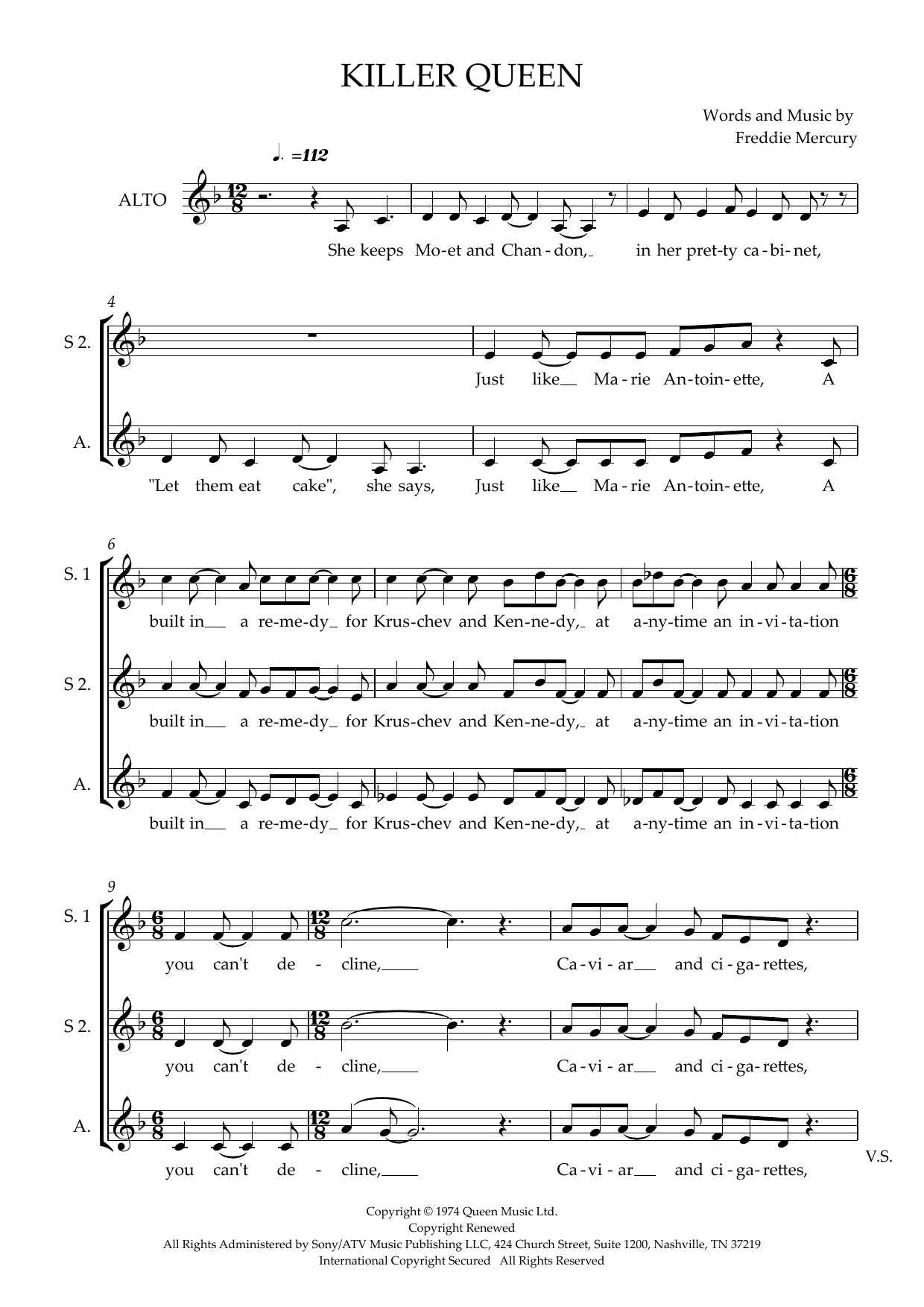

Killer Queen (arr. Craig McLeish): Choral Instrumental Pak
As performed by Queen / Arranged by Craig McLeish
Item: 35-PK00482237
$1.99
Pickup currently not available
Buy Extra Parts (Digital PDF Download)
| Product | Price | Quantity |
|---|---|---|
| Killer Queen (arr. Craig McLeish) - Choral Score: Choral Instrumental Pak | $1.99 | |
| Killer Queen (arr. Craig McLeish) - Full Score: Choral Instrumental Pak | $1.99 |
Parts Added to Cart!
Description
SSA


Killer Queen (arr. Craig McLeish): Choral Instrumental Pak isn't in MakeMusic Cloud just yet...but it could be. Let us know you'd like to see it, and you'll help shape what comes next. In the meantime, start a free trial and dive into thousands of interactive titles your students can play along with today.
Request This Title
Tell us you want it.
Start Your Free Trial
Explore everything that's ready to play right now.
Sample Audio
No sample audio found.
Sample Video
No sample videos found.
Additional Details
Publisher:
Hal Leonard
SKU:
35-PK00482237
More about this title
About the Artist: Queen
Queen emerged from the London rock scene in the early 1970s as a band of classically trained musicians who refused to stay confined by genre. Freddie Mercury's theatrical sensibility, Brian May's intricate guitar work, Roger Taylor's polyrhythmic drumming, and John Deacon's solid bass lines created a sound that bridged opera, hard rock, and pop with equal conviction. Their influence on contemporary music remains immense, and their catalog offers rich material for choral and instrumental arrangements that challenge singers to navigate both rhythmic complexity and emotional nuance.
Why we love this
Craig McLeish's arrangement captures the swagger and vocal texture that made this song unforgettable while building parts that sit comfortably in the SSA voicing. The arrangement refuses to oversimplify the original's production richness, giving your singers real harmonic and rhythmic meat to sink their teeth into without sacrificing singability. Programming this opens doors to conversations about rock as a legitimate choral idiom and lets you build programming around contemporary artists your singers genuinely care about.
What to expect
Confident and percussive, with the kind of melodic hooks that stick immediately in your singers' heads. The arrangement balances playfulness with genuine harmonic sophistication, creating moments of real musical substance within a package that feels accessible and fun to perform.
Who it's for
Directors working with developing choirs (middle school through early high school) who want to program music that resonates with singers' actual listening lives. This works equally well for programs that specialize in pop and rock repertoire or for traditional choirs seeking one strong contemporary piece to anchor a concert. Singers in this voicing range will find parts that challenge their intonation and rhythmic independence without requiring advanced vocal maturity.
How to get the most out of it
- Lock in the groove with your rhythm section first; this arrangement lives or dies on pocket and swing feel, not on perfect metronomic precision.
- Emphasize the distinction between the verses and the pre-chorus; McLeish has likely built contrast there, and letting that breathe makes the payoff land harder.
- Shape the dynamics of the vocal layers so the arrangement doesn't collapse into a wall of sound; individual parts need air and definition.
- Pay attention to articulation markings on your accompaniment parts, particularly the staccatos and accents that define the song's rhythmic character.
How to use it
Slot this into a pop or rock concert set where it can anchor the contemporary section and draw energy from strong rhythm section players. It also works as a strategic closer or encore that leaves audiences smiling, or as a centerpiece in a show exploring how classical training and rock sensibility can coexist. Save it for the part of your year when your singers are confident enough to handle the rhythmic demands without sacrificing intonation.
Skills your students will build
- Navigating syncopated rhythms and off-beat entrances
- Maintaining intonation against dissonant harmonic intervals
- Coordinating with a rhythm section and following independent accompaniment layers
- Building interpretive choices around swing feel and groove-based phrasing
- Reading parts written for contemporary pop/rock styles