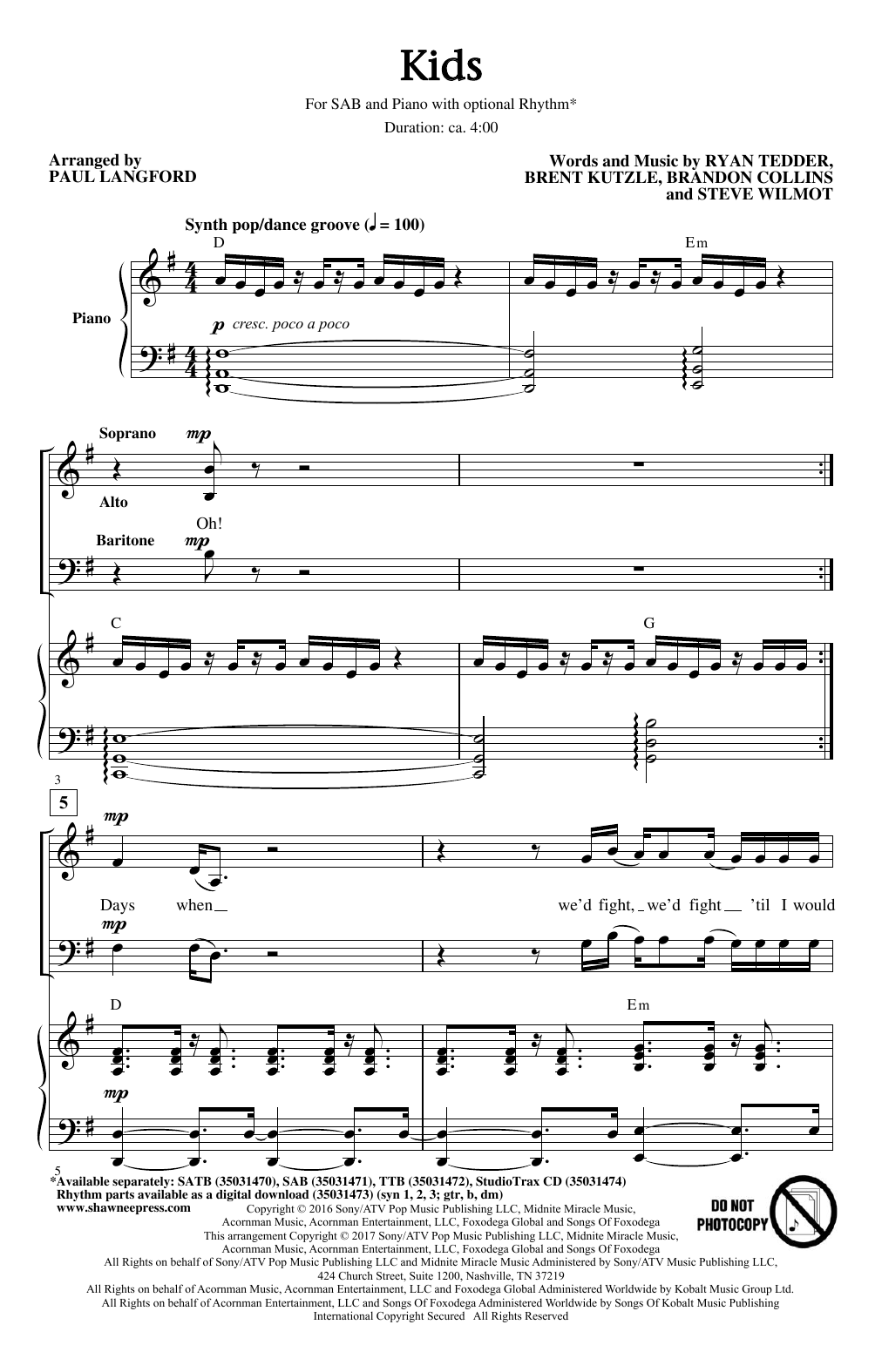
Kids (arr. Paul Langford) Sheet Music Preview

Kids (arr. Paul Langford): SAB Choral Octavo

As performed by OneRepublic / Arranged by Paul Langford

Item: 35-DS00372340

Digital Download
$2.99
Description

Kids (arr. Paul Langford): SAB Choral Octavo isn't in MakeMusic Cloud just yet...but it could be. Let us know you'd like to see it, and you'll help shape what comes next. In the meantime, start a free trial and dive into thousands of interactive titles your students can play along with today.

Sample Audio
No sample audio found.
Sample Video
Additional Details
Publisher: Hal Leonard
Page Count: 15
SKU: 35-DS00372340

More about this title

About the Artist: OneRepublic

OneRepublic emerged from the Las Vegas music scene in the mid-2000s and quickly became one of pop's most consistent hit makers. Led by Ryan Tedder, the band built their reputation on crafting emotionally direct songs with memorable melodies and production that walks the line between intimate and anthemic. Their output spans from introspective ballads to soaring pop singles, making them a reliable source for contemporary repertoire that resonates with student singers.

Tedder's songwriting approach emphasizes clarity and emotional accessibility without sacrificing sophistication. This sensibility translates well to educational settings, where arrangements of their material tend to preserve what makes the original compelling while serving the needs of developing ensembles.

Why we love this

Paul Langford's arrangement captures the song's gentle warmth while keeping the technical demands manageable for mid-level choirs. The three-part texture allows you to distribute the melody intelligently across your ensemble, making it accessible to groups that might not yet have the flexibility for more complex voicings. Students will recognize the song immediately, which typically translates to genuine investment in the performance.

What to expect

Sincere and unhurried, the arrangement opens emotional space without sentimentality. The three-part texture creates a kind of intimate transparency, where individual voices matter but work toward something larger than themselves. This is music that invites rather than demands.

Who it's for

Middle and high school choirs working with contemporary pop repertoire, particularly groups seeking material that connects with student singers without oversimplifying the arrangement. Directors building a concert program that bridges classical and popular music idioms will find this a natural addition to almost any lineup.

How to get the most out of it

  • Let the dynamic arc build gradually across the piece rather than hitting your target volume early. Choirs often front-load their energy here; save something for the final section.
  • Shape each phrase as if you're singing text, even during wordless moments or sustained notes. This prevents the arrangement from feeling static.
  • Balance the part writing so the melody sits clearly without the supporting voices disappearing. In SAB texture, this often means being intentional about which voices carry the primary weight in each section.
  • Nail the rhythmic precision during syncopated passages. Contemporary pop arrangements expose rhythmic sloppiness immediately, so lock the groove early in rehearsal.

How to use it

Position this as a moment of contrast in a concert, particularly if you're programming heavier classical or jazz material elsewhere on the setlist. The song's accessibility makes it effective in mixed-repertoire concerts or family-friendly events where you want the audience to experience your ensemble's range. It also works well as a confidence builder midway through the rehearsal season, giving students an early win with material they genuinely enjoy singing.

Skills your students will build

  • Maintaining independence within a three-part texture while blending as an ensemble
  • Phrasing and dynamic shaping in contemporary music idioms
  • Rhythmic precision in syncopated passages
  • Balancing mixed voicings so melody and supporting lines are equally clear
  • Interpreting dynamic contrast and emotional nuance in pop repertoire

You May Also Like