
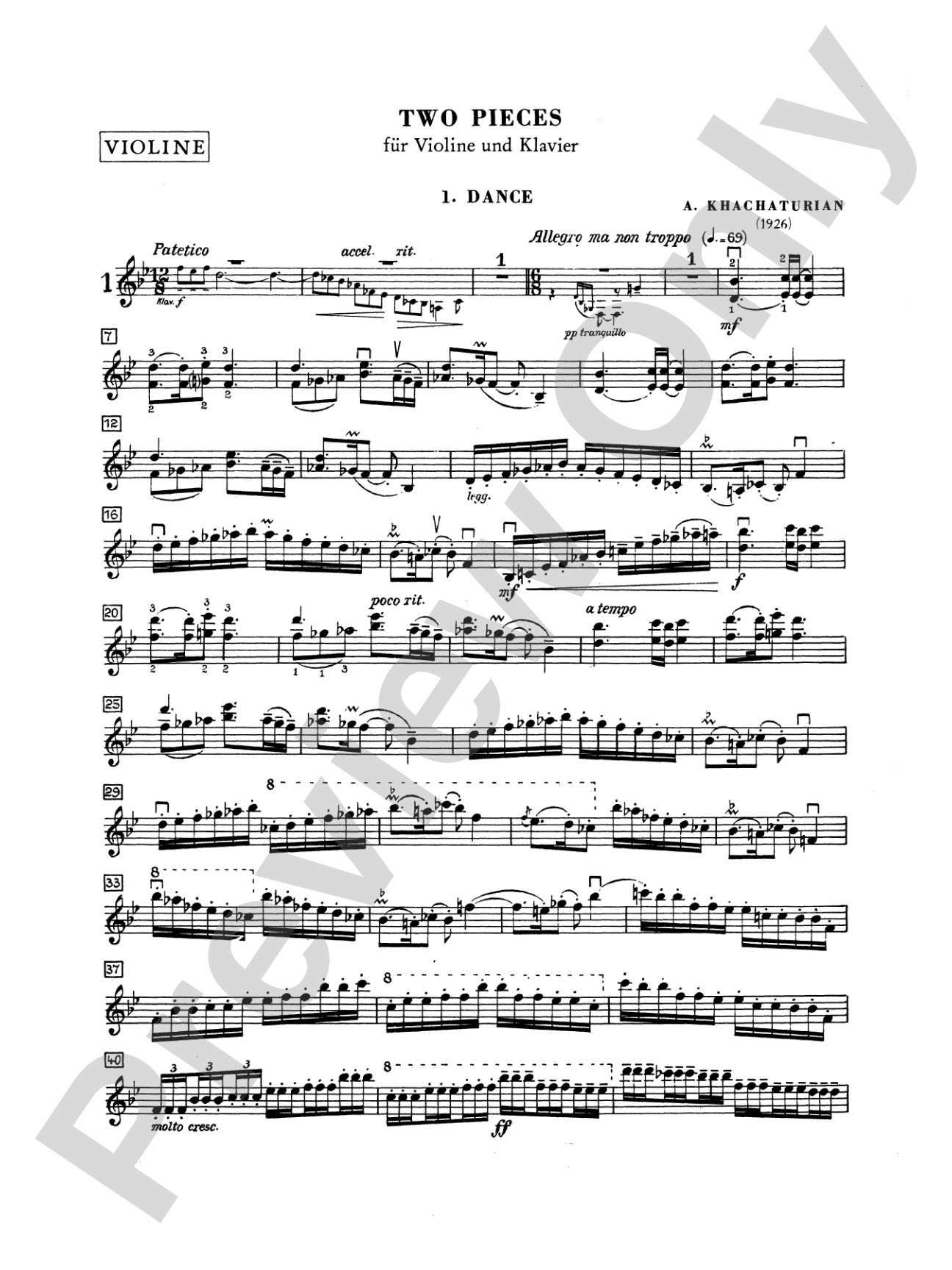
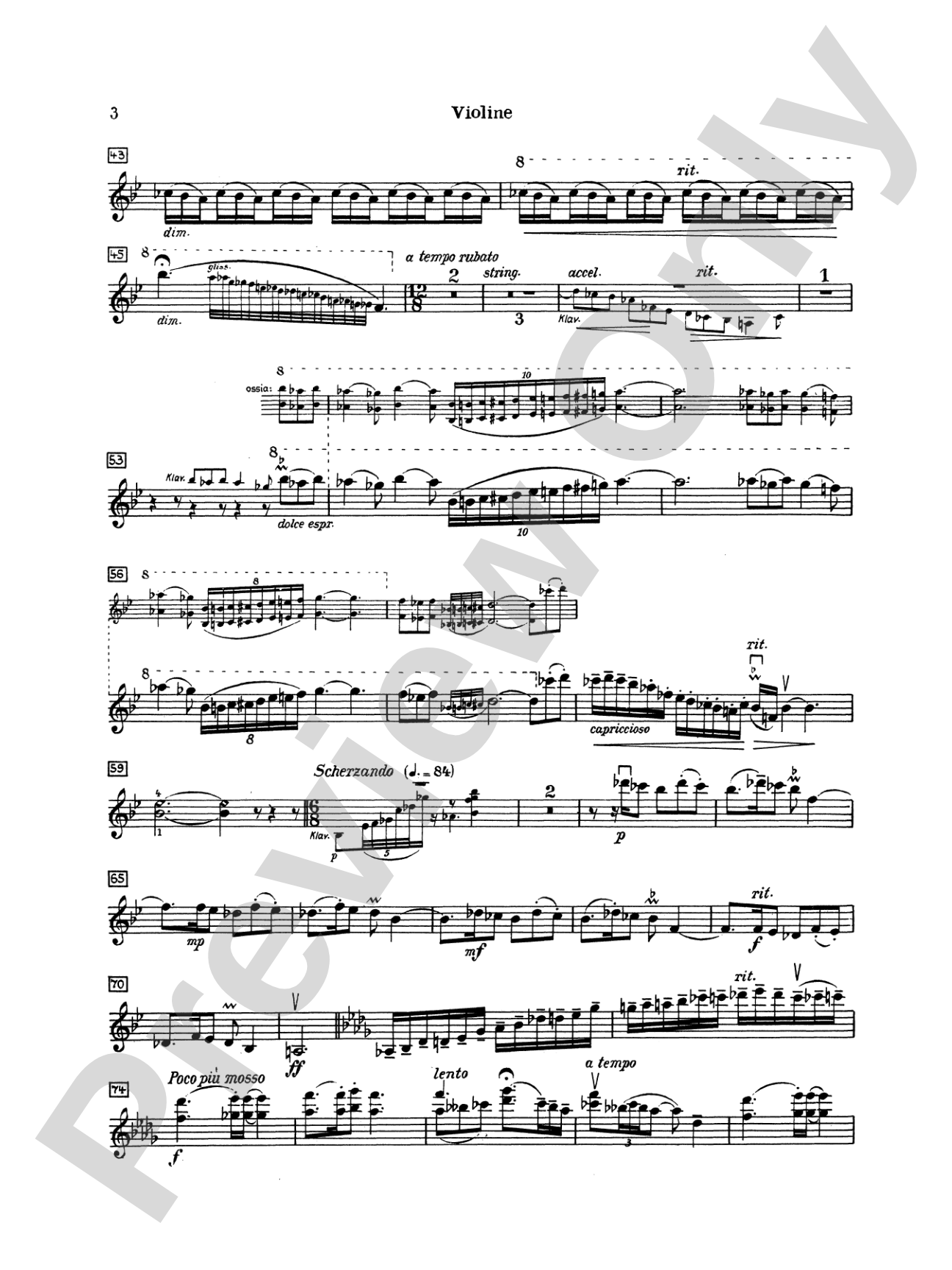
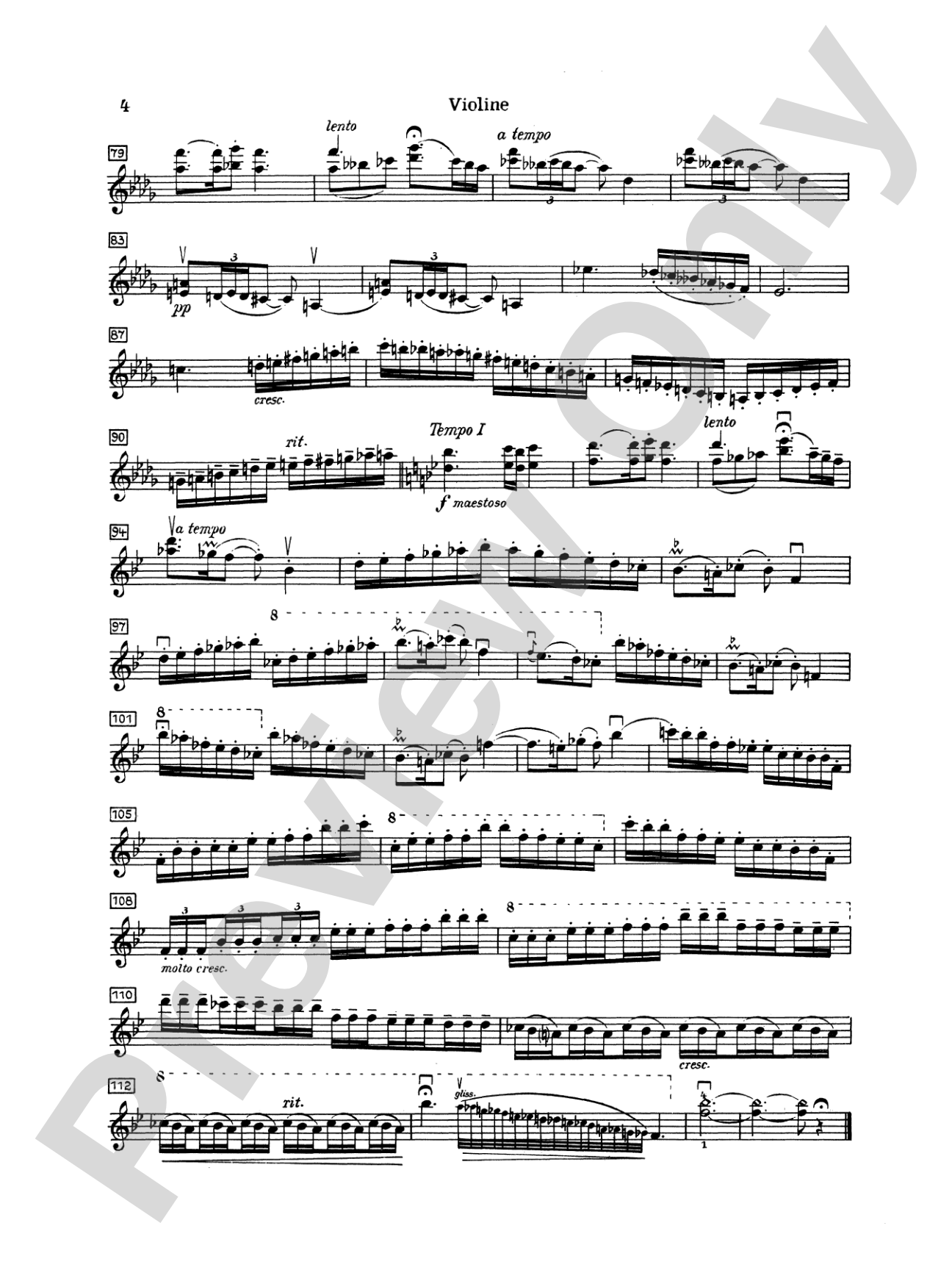

Khachaturian: Two Pieces: Violin Book
By Aram Khachaturian
Item: 00-PK-0003496

$9.99
Pickup currently not available
Buy Extra Parts (Digital PDF Download)
| Product | Price | Quantity |
|---|---|---|
| Khachaturian: Two Pieces | $1.99 | |
| Khachaturian: Two Pieces | $1.99 | |
| Khachaturian: Two Pieces | $1.99 | |
| Khachaturian: Two Pieces | $1.99 |
Parts Added to Cart!
Related Items
Two Pieces: Violin Book |
$9.95
|
View |
Description
A Violin solo with Piano Accompaniment composed by Aram Khachaturian.


Don't just read it, hear it, play along with it, and watch your students grow with it. In MakeMusic Cloud, Khachaturian: Two Pieces: Violin Book comes alive with professional accompaniment, adjustable tempo, and built-in practice tools that turn solo practice into real progress.
Open in the Player
Jump straight in and assign it today.
Start Your Free Trial
Open this title and explore the full library in minutes.
Sample Audio
No sample audio found.
Sample Video
No sample videos found.
Additional Details
Series:
Kalmus Edition
Publisher:
Alfred Music
Page Count:
8
SKU:
00-PK-0003496
More about this title
About the Composer: Aram Khachaturian
Aram Khachaturian (1903-1978) was an Armenian composer whose work bridged Soviet modernism and folk-inflected lyricism. His music drew deeply from Armenian and Caucasian musical traditions, creating a distinctive sound that combined orchestral ambition with melodic warmth. Though best known for his ballets and concertos, Khachaturian's chamber works reveal a composer equally skilled at intimate, focused writing.
His compositions earned him international recognition during a prolific career spanning five decades. Khachaturian's harmonic language and rhythmic vitality made him one of the most performed Soviet composers in the West, and his music remains central to the string repertoire.
Why we love this
These two pieces showcase Khachaturian's gift for memorable melodic writing and sophisticated harmonic color within a compact format. They sit at an accessible level for advancing violinists while remaining musically substantial; the piano part is genuinely compositional rather than perfunctory, making this rewarding for both players. The 20th-century idiom and Armenian musical influences expose students to a sound world beyond the standard Romantic repertoire.
What to expect
Khachaturian's voice emerges immediately through lyrical melodies set against rich, modern harmonic language. The pieces feel both introspective and energetic by turns, drawing on folk idioms that feel familiar yet distinctly non-Western. Color and elegance dominate over virtuosic display.
Who it's for
Intermediate to early-advanced violinists seeking substantial yet accessible 20th-century repertoire. This works equally well for recital preparation, studio portfolio building, or as part of a chamber program that branches beyond standard canonical offerings.
How to get the most out of it
- Sing the opening phrase before you play it. Khachaturian's melodies are vocal in character; connect each phrase as though you were singing long lines rather than playing individual notes.
- Work with your pianist early on phrasing and balance. The accompaniment is not subsidiary; the composer frequently shares thematic material between parts, and clarity depends on ensemble cohesion.
- Pay attention to rubato within the written meter. Khachaturian's harmonic progressions often suggest slight give-and-take at phrase boundaries, particularly in cadential moments.
- Shape the dynamic contours carefully. These pieces use dynamic detail as a compositional tool, not merely as surface expression.
How to use it
These pieces fit naturally into a recital exploring 20th-century string writing or as a standalone chamber concert offering alongside works by other Soviet and Eastern European composers. They also work well when you want to showcase a student's musicality and phrasing rather than technical facility alone.
Skills your students will build
- Phrasing in modern harmonic contexts (non-functional harmony)
- Ensemble balance and coordination in chamber settings
- Interpretation of folk-influenced melodic gestures
- Dynamic shaping and control across longer musical phrases
- Collaborating with a pianist on stylistically unfamiliar material