
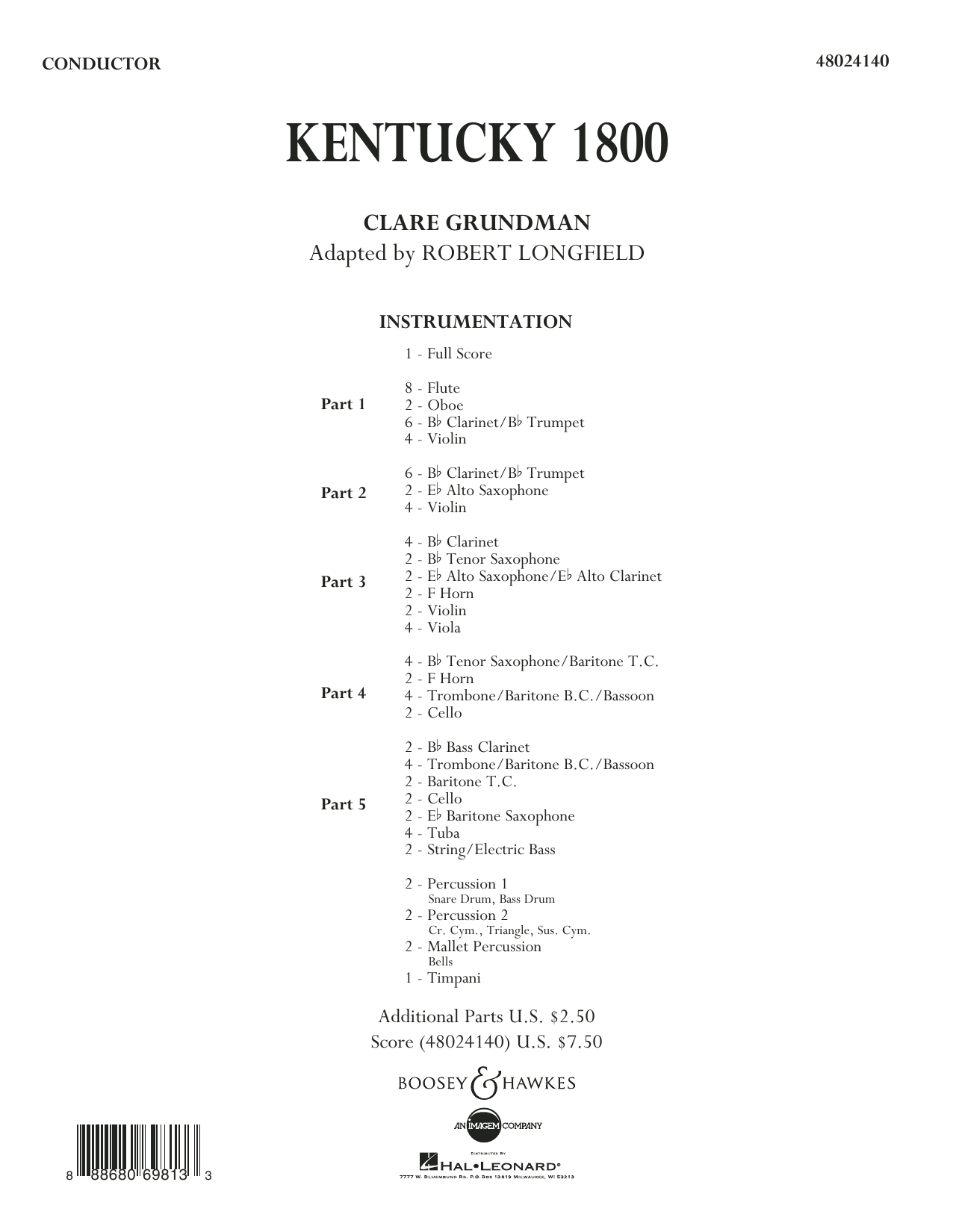

Kentucky 1800: Flex Ensemble Conductor Score & Parts
As performed by Clare Grundman / Arranged by Robert Longfield
Grade: 2-3
Item: 35-PK00388109
$65.00
Pickup currently not available
Buy Extra Parts (Digital PDF Download)
Parts Added to Cart!
Description
Originally published in 1955, Clare Grundman's masterful setting of early American folk tunes remains a young band staple for contest and festival. Skillfully adapted here for flexible instrumentation, this classic work is now playable by a wide variety of mixed and smaller ensembles. Dur: 3:30


Kentucky 1800: Flex Ensemble Conductor Score & Parts isn't in MakeMusic Cloud just yet...but it could be. Let us know you'd like to see it, and you'll help shape what comes next. In the meantime, start a free trial and dive into thousands of interactive titles your students can play along with today.
Request This Title
Tell us you want it.
Start Your Free Trial
Explore everything that's ready to play right now.
Sample Audio
No sample audio found.
Sample Video
No sample videos found.
Additional Details
Publisher:
Hal Leonard
SKU:
35-PK00388109
More about this title
About the Artist: Clare Grundman
Clare Grundman (1911-2002) was a prolific composer and arranger whose output shaped the young band repertoire for generations. His gift for orchestration and his instinct for what works on the concert stage made his pieces essential teaching tools across thousands of American school music programs.
Grundman understood that accessibility need not mean simplicity. His arrangements preserve the melodic integrity and harmonic sophistication of their sources while remaining playable by student musicians. Kentucky 1800 exemplifies this philosophy, presenting early American folk material with clarity and musicianship.
Why we love this
This arrangement captures what makes Grundman's work indispensable: it sounds bigger and more sophisticated than its difficulty level suggests. The flexible instrumentation means you can use the players you actually have on the day of the performance, removing the pressure to find missing trumpet sections or oboes. It's the kind of piece that teaches ensemble balance and musical phrasing while sounding completely at home in any concert program.
What to expect
There's a quiet pride in the melodic material here, the kind of authenticity that comes from genuine folk sources rather than composed imitations. The music feels rooted and honest, never condescending to either the material or the ensemble playing it. It's inviting enough to engage young musicians but substantive enough to respect their growing musicianship.
Who it's for
Directors working with groups that lack full instrumentation will find this adaptation genuinely useful rather than frustratingly compromised. It's equally at home in a smaller high school band, a middle school ensemble, or a community group piecing together musicians from whatever is available.
How to get the most out of it
- Emphasize the folk melody even when it moves between voices. Students often get caught up in their own lines and forget that the tune is the point.
- The 3:30 duration is compact, which means pacing matters. Resist the urge to linger on phrases; let the music breathe but keep it moving forward.
- Use the flexible instrumentation to solve balance problems, not create them. If you're doubling the melody line, make sure that voice isn't burying the supporting harmonies.
- Early American folk music benefits from a straight tone and clear articulation. Avoid excessive vibrato or rubato, which will obscure the directness of the material.
How to use it
This works beautifully as an opener, establishing a warm and accessible tone while still demonstrating your ensemble's musicianship. It pairs well with more contemporary works on the same concert, offering contrast without requiring a complete shift in mood or style. Consider placing it early enough in the program that the audience settles in with something familiar and approachable.
Skills your students will build
- Balance and blend across flexible instrumentation
- Melodic awareness and phrase shaping in folk material
- Reading part assignments when players can cover multiple line positions
- Ensemble intonation in traditional harmonic settings
- Clear articulation and straight tone production