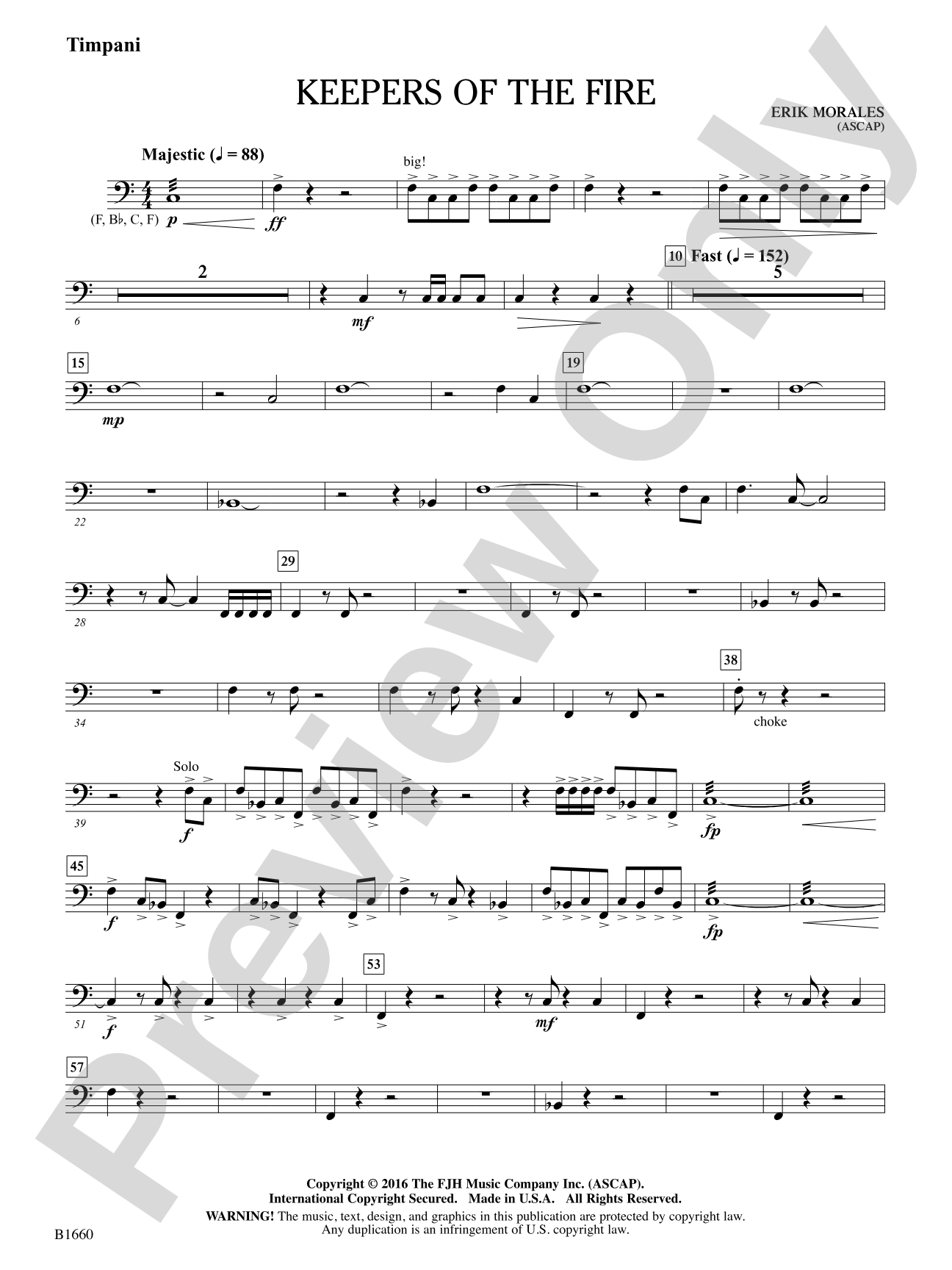
Based on pentatonic scales and descending melodies (both common to Native American folk music), the music juxtaposes simple melodic lines with a creative rhythmic matrix that supports all other musical components. Harmonically engaging and brilliantly orchestrated, this is sure to be a popular selection!
Discover MakeMusic Cloud: thousands of interactive titles your students can play along with today.
Erik Morales has built a prolific career bridging the worlds of art music and education. Born in New York City in 1966, he studied composition at Florida International University and completed his undergraduate degree at the University of Louisiana, Lafayette. His arranging work began in 1985 when a high school band director commissioned him, launching a trajectory that would eventually lead to over 150 published works across wind, orchestral, jazz, and chamber settings.
Trumpet is Morales's primary instrument, and his output reflects deep knowledge of brass writing. His trumpet ensembles have earned first-place honors at the National Trumpet Competitions (2006, 2008), and his Concerto for Trumpet in C and Piano premiered at the 2009 International Trumpet Guild conference. In 2016, he was inducted into the Louisiana Association for Jazz Education's Hall of Fame. Throughout his career, Morales has maintained a deliberate focus on balancing artistic substance with pedagogical value, earning him commissions from schools and organizations across the country.
Why we love this
Morales knows how to write for young ensembles without sacrificing musical integrity. The pentatonic language and descending melodic gestures feel authentic to their folk sources, while the rhythmic architecture underneath is what sets this apart, creative enough to keep your advanced players engaged but transparent enough that ensemble cohesion comes naturally. For a Grade 3 piece, the orchestration choices are uncommonly smart.
What to expect
The music draws from Native American folk tradition with a modern compositional sensibility. Simple pentatonic melodies unfold against a rhythmic architecture that's more complex than it first appears, creating layers of texture without ever feeling cluttered. There's a meditative quality underneath the activity, grounded in the composer's orchestral instincts.
Who it's for
Directors programming Grade 3 bands who want a piece with genuine musical substance and a cultural reference point. It's accessible enough for developing ensembles yet sophisticated in its construction, making it ideal for schools building toward contest or festival performance with serious intent.
How to get the most out of it
Let the pentatonic material breathe with natural phrasing rather than strict metronomic accuracy; the folk character depends on a slight flexibility in air and line.
The rhythmic matrix is the glue, lock the percussion section first, then build the woodwind and brass parts around that foundation.
Balance the simple melodic lines so they remain lyrical even when layered with the supporting rhythmic figures; avoid letting accompaniment textures overwhelm the tune.
Attend to the harmonic movement carefully; Morales's orchestration carries the harmonic language, so clear voicing across sections will reveal the compositional craft.
How to use it
Schedule this on a concert or festival program where you want a piece that stands on its own artistically rather than serving as filler. It pairs well with contemporary works that engage cultural material thoughtfully. The Grade 3 difficulty also makes it achievable within a full rehearsal calendar without monopolizing sectional time.
Skills your students will build
Phrasing and expression within pentatonic melodic frameworks
Rhythmic independence while maintaining ensemble cohesion
Balancing melodic clarity with harmonic accompaniment textures
Reading and executing layered rhythmic patterns across sections
Understanding how folk material can be extended through compositional development
You May Also Like
Scan to Complete Your Purchase
Use your phone's camera to scan the code below
You'll log in on your phone and the order will be added to your account