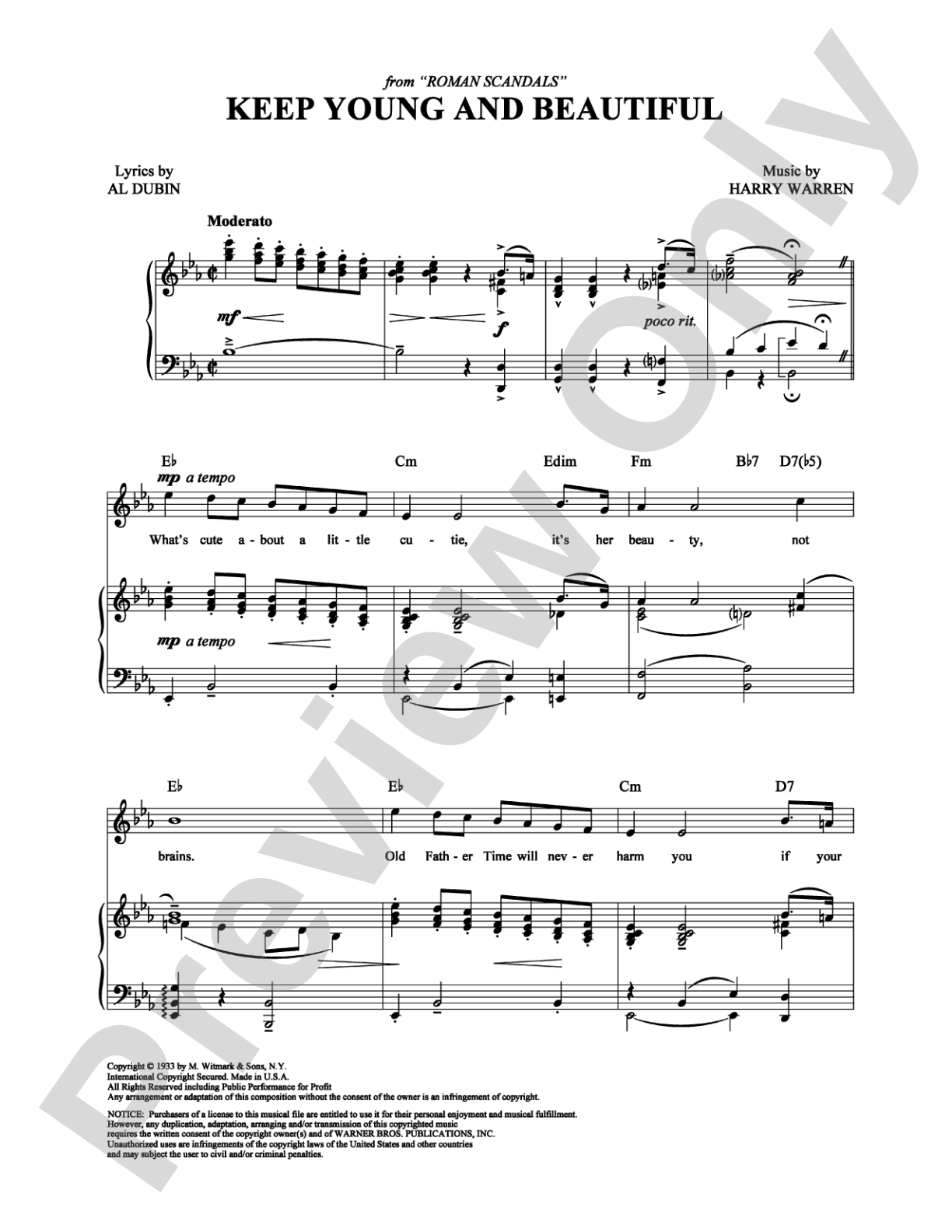
Keep Young and Beautiful: Piano/Vocal/Chords Digital Sheet Music

Keep Young and Beautiful: Piano/Vocal/Chords Digital Sheet Music

Harry Warren, Eddie Cantor

Item: 00-PS-0002071

Digital Download
$3.99
Description

Keep Young and Beautiful: Piano/Vocal/Chords Digital Sheet Music isn't in MakeMusic Cloud just yet...but it could be. Let us know you'd like to see it, and you'll help shape what comes next. In the meantime, start a free trial and dive into thousands of interactive titles your students can play along with today.

Sample Audio
No sample audio found.
Sample Video
Additional Details
SKU: 00-PS-0002071

More about this title

About the Artist: Eddie Cantor

Eddie Cantor (1892-1964) was a vaudeville and Broadway star whose high-energy performances and distinctive voice made him one of the most popular entertainers of the early 20th century. His recording and broadcasting career brought Tin Pan Alley standards into American homes, and his influence on vocal performance style, particularly his use of dynamics and comedic timing, shaped popular music pedagogy for generations.

Why we love this

This arrangement captures the infectious charm of a classic vaudeville number, complete with chord symbols for flexibility in accompaniment. It's an excellent choice for exploring vocal performance across different eras and teaching singers how to approach comedic material with genuine musicality.

What to expect

Spirited and lighthearted, with the kind of infectious energy that defined vaudeville performance. The melody sits comfortably in the voice while remaining memorable and playful.

Who it's for

Vocalists exploring American musical theater standards and early popular song will find this an accessible entry into the vaudeville repertoire. Piano accompanists can use the lead sheet format to develop skills in realizing chord changes and supporting a singer's interpretation.

How to get the most out of it

  • Study the rhythmic phrasing in the vocal line; the placement of notes relative to the beat creates much of the song's buoyant character.
  • Use the chord symbols to explore different accompaniment styles, from stride piano to more contemporary jazz comping, depending on the performance context.
  • Pay attention to the vowel shapes and articulation needed to deliver the comedic text clearly without sacrificing vocal tone.

How to use it

Program this alongside other early 20th-century American songs to build a concert around the history of vocal entertainment, or use it in a pops or cabaret concert where variety and audience engagement are priorities.

Skills your students will build

  • Interpreting comedic text with genuine vocal expression
  • Reading and realizing lead sheet chord symbols
  • Adapting accompaniment based on performance context
  • Connecting historical vocal performance style to modern interpretation

You May Also Like