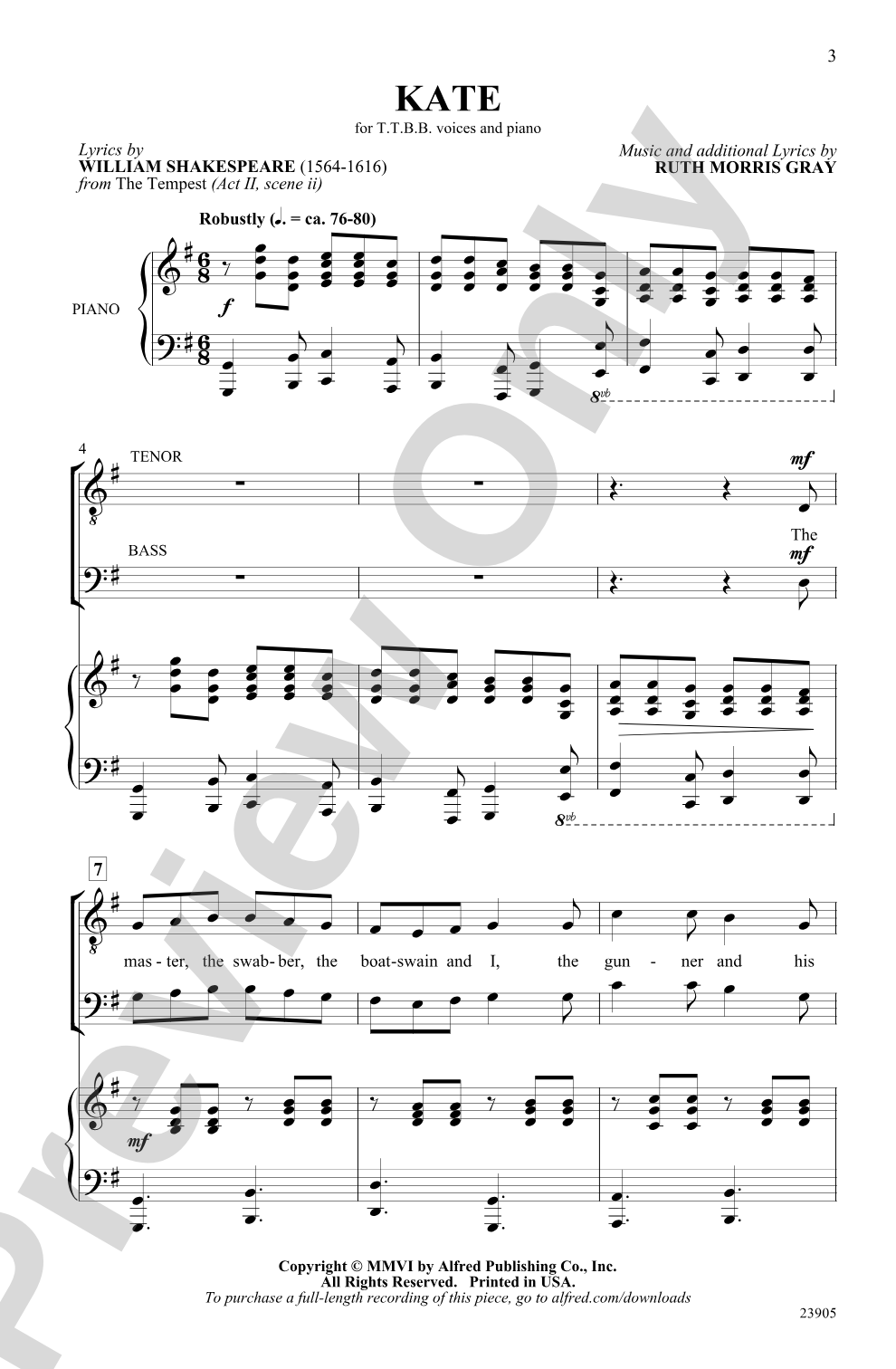
Kate Sheet Music Preview

Kate: TTBB Choral Octavo

Text by William Shakespeare, music and additional lyrics by Ruth Morris Gray

Item: 00-PO-0000018

Digital Download
$1.65

Minimum order quantity: 20 copies

Description
Hardy singing for manly men. This contemporary composition with sea chantey flair is a boisterous blockbuster for men's choirs who aspire to glee-club sound. A swash-buckling Shakespeare text: "The master, the swabber, the bos'n, and Iànone of us cared for Kate." Robust.

Kate: TTBB Choral Octavo isn't in MakeMusic Cloud just yet...but it could be. Let us know you'd like to see it, and you'll help shape what comes next. In the meantime, start a free trial and dive into thousands of interactive titles your students can play along with today.


Sample Audio
0:00
0:00
Sample Video
Additional Details
Series: Alfred Choral Designs
Publisher: Alfred Music
Page Count: 12
SKU: 00-PO-0000018

More about this title

About the Composer: Ruth Morris Gray

Ruth Morris Gray

Ruth Morris Gray brings classroom experience and compositional depth to her work as Director of Choirs at Rosemead High School in California, where she has led the choral program since 2004. Her training spans piano performance and composition at Biola University, advanced study in composition at UC Santa Barbara, and formal music credentialing through California State University, Northridge. With over 100 published choral works to her name, Gray writes from direct knowledge of what singers need and what audiences want to hear.

Beyond the rehearsal room, Gray is an active performer and lifelong learner who finds creative fuel in travel, reading, and outdoor pursuits. Her compositions reflect a composer who understands both the technical demands of choral singing and the joy of making music together.

Why we love this

Gray nails the energy and spirit men's choirs crave without sacrificing musical substance. The Shakespeare text gives this piece theatrical weight, while the sea chantey idiom keeps the writing accessible and fun for singers who want to sound like they're having a blast. It's the rare contemporary work that feels both authentically modern and immediately singable.

What to expect

Boisterous and alive, with the salt-spray energy of a sea chantey filtered through contemporary compositional craft. The piece swaggers across its 12 pages with theatrical confidence, grounded in solid four-part harmony that lets each voice part feel both supported and featured. It's robust without being heavy, fun without being silly.

Who it's for

Men's choirs seeking contemporary repertoire with personality and edge. This work appeals to singers who enjoy theatrical text, glee club aesthetics, and the satisfaction of delivering a piece that audiences remember. Strong singers at the high school and early college level will find the writing engaging and achievable.

How to get the most out of it

  • Lean into the text's swagger and narrative clarity. The Shakespeare excerpt works best when each voice part commits to its rhythmic energy and articulation stays crisp throughout.
  • Balance the boisterous character with blend in the harmonic moments. The piece thrives on contrast between full-throttle passages and more grounded sections.
  • Let the sea chantey idiom breathe through your phrasing. Resist the urge to over-smooth; a touch of roughness in the ensemble sound serves the composer's intent.

How to use it

Build a glee club themed concert around this piece, or program it as a crowd-pleasing showstopper in a mixed choral festival appearance. The contemporary idiom and literary text also make it a strong choice for high school choral contests where judges reward both musicianship and personality.

Skills your students will build

  • Reading and performing contemporary choral idioms with theatrical text
  • Rhythmic precision and articulation in fast-paced, energetic passages
  • Balancing ensemble blend with individual voice part definition
  • Understanding literary text through musical characterization and phrasing
  • Building group energy and collective confidence in performance contexts

You May Also Like