
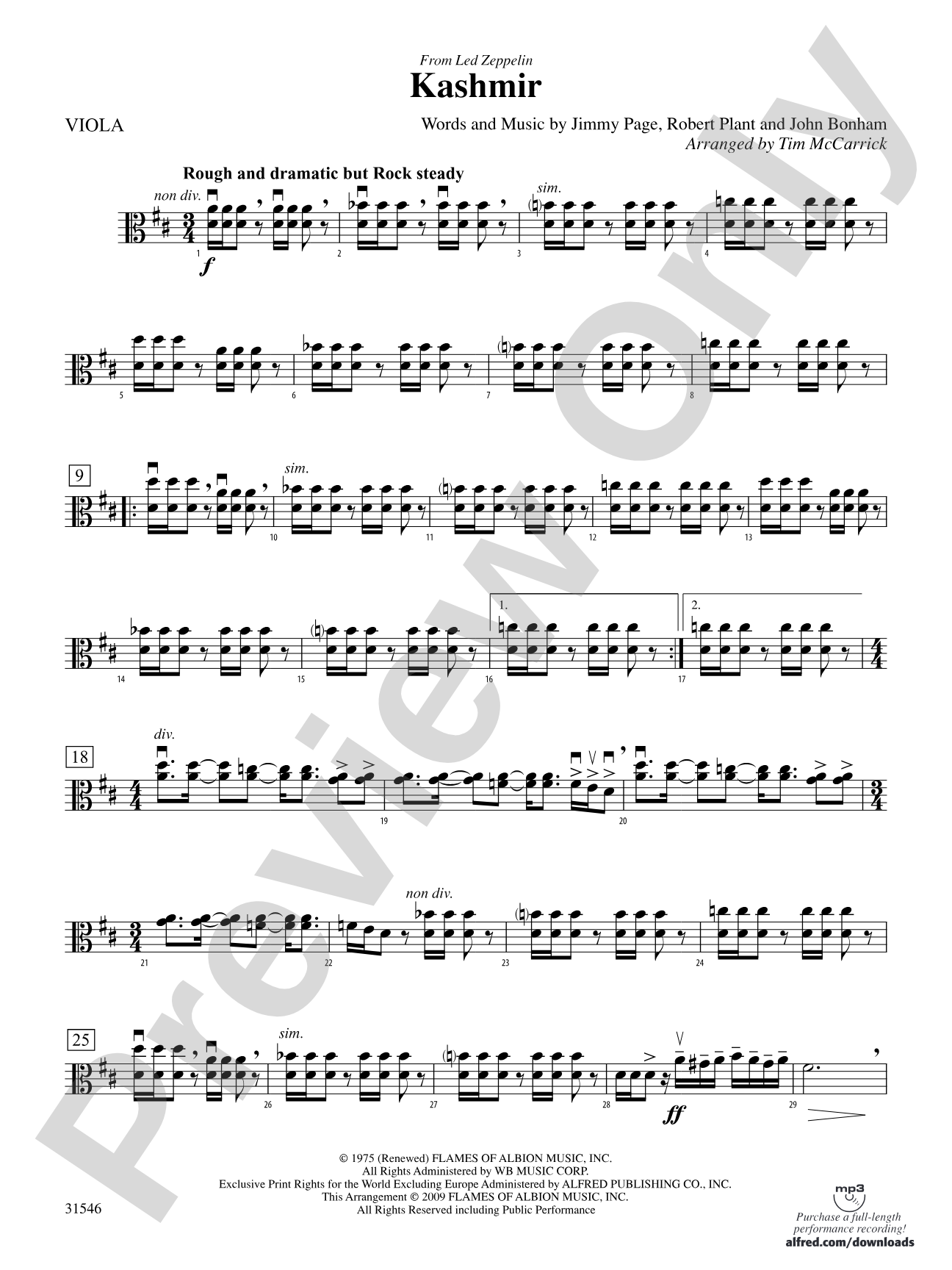

Kashmir: Viola
As Performed by Led Zeppelin
Words and music by Jimmy Page, Robert Plant, and John Bonham / arr. Tim McCarrick
Grade: 3
Item: 00-PC-0001734_VA1
$5.99
Pickup currently not available
Description
Why look for a rock tune arranged for strings when this classic rock hit was written for strings! Released in 1975, the original included an orchestra of middle-eastern string players that created an unforgettable sound! "Kashmir" took everyone by surprise and elevated Led Zeppelin to the status of rock icons. Transcribed from the original, this piece includes all the classic riffs. Great as an opener or encore! (5:04)


Don't just read it, hear it, play along with it, and watch your students grow with it. In MakeMusic Cloud, Kashmir: Viola comes alive with professional accompaniment, adjustable tempo, and built-in practice tools that turn solo practice into real progress.
Open in the Player
Jump straight in and assign it today.
Start Your Free Trial
Open this title and explore the full library in minutes.
Sample Audio
1
Audio File
--:--
0:00
0:00
Sample Video
Additional Details
Series:
Pop Intermediate String Orchestra
Publisher:
Alfred Music
Page Count:
152
SKU:
00-PC-0001734_VA1
More about this title
About the Composer: John Bonham
John Bonham was Led Zeppelin's legendary drummer and a primary composer on many of the band's most iconic recordings. His work on "Kashmir" demonstrates his sophisticated understanding of orchestration and rhythmic architecture, crafting a piece that bridges the gap between rock and classical sensibilities in ways that few rock musicians have achieved. Bonham's contributions to rock music extended far beyond percussion; his compositional voice shaped the sound of one of the most influential bands in history.
Why we love this
This transcription captures the sheer power of the original without requiring your ensemble to approximate drums and electric instruments. Tim McCarrick has preserved the driving, hypnotic riff that made "Kashmir" unforgettable while distributing the musical weight across your full string section, allowing students to experience the sophisticated harmonic language Bonham and Jimmy Page created. It's a rare opportunity to engage intermediate students with genuine rock architecture on instruments they can actually play.
What to expect
Hypnotic and propulsive, built on a grinding ostinato that pulls the listener forward with inexorable momentum. The piece combines the dark, mysterious quality of the original with the clarity and brightness strings bring, creating something both familiar and freshly orchestrated. There's an undeniable excitement in the way the various string sections interlock around that iconic riff.
Who it's for
String orchestra directors seeking repertoire that engages intermediate students without talking down to them; ensembles ready to tackle material with real rhythmic complexity and contemporary edge; programs that need a showstopper that appeals to audiences beyond traditional concert music fans.
How to get the most out of it
- Lock the pulse around the main riff; the rhythmic precision of this material is what creates the hypnotic power. Small tempo fluctuations will undermine the piece's forward momentum.
- Shape the dynamic arch carefully across phrases rather than playing at a single level throughout. The original builds intensity gradually, and your rendition should too.
- Balance the melodic material between sections so the ear can follow both the primary theme and the countermelodies that weave underneath. Conduct with clear articulation of phrase direction.
- Invest in clean string attacks at faster passages. Ragged entrances will obscure the precision that makes this arrangement effective.
How to use it
This works brilliantly as a concert opener that immediately captures attention, or as a high-energy encore that leaves audiences on their feet. Consider programming it alongside other contemporary or film music to build a thematic concert around modern composition and orchestration, or use it as the anchor for a "rock meets classical" program that expands student and audience perspectives on what orchestral music can be.
Skills your students will build
- Maintaining steady rhythmic pulse in repetitive, driving material
- Balancing melodic prominence with accompaniment figures across distributed orchestration
- Ensemble precision at varied tempos and dynamic levels
- Reading and executing the harmonic language of contemporary rock composition
- Understanding how familiar music translates across instrumental families and ensemble configurations