Kansas City Sheet Music Preview

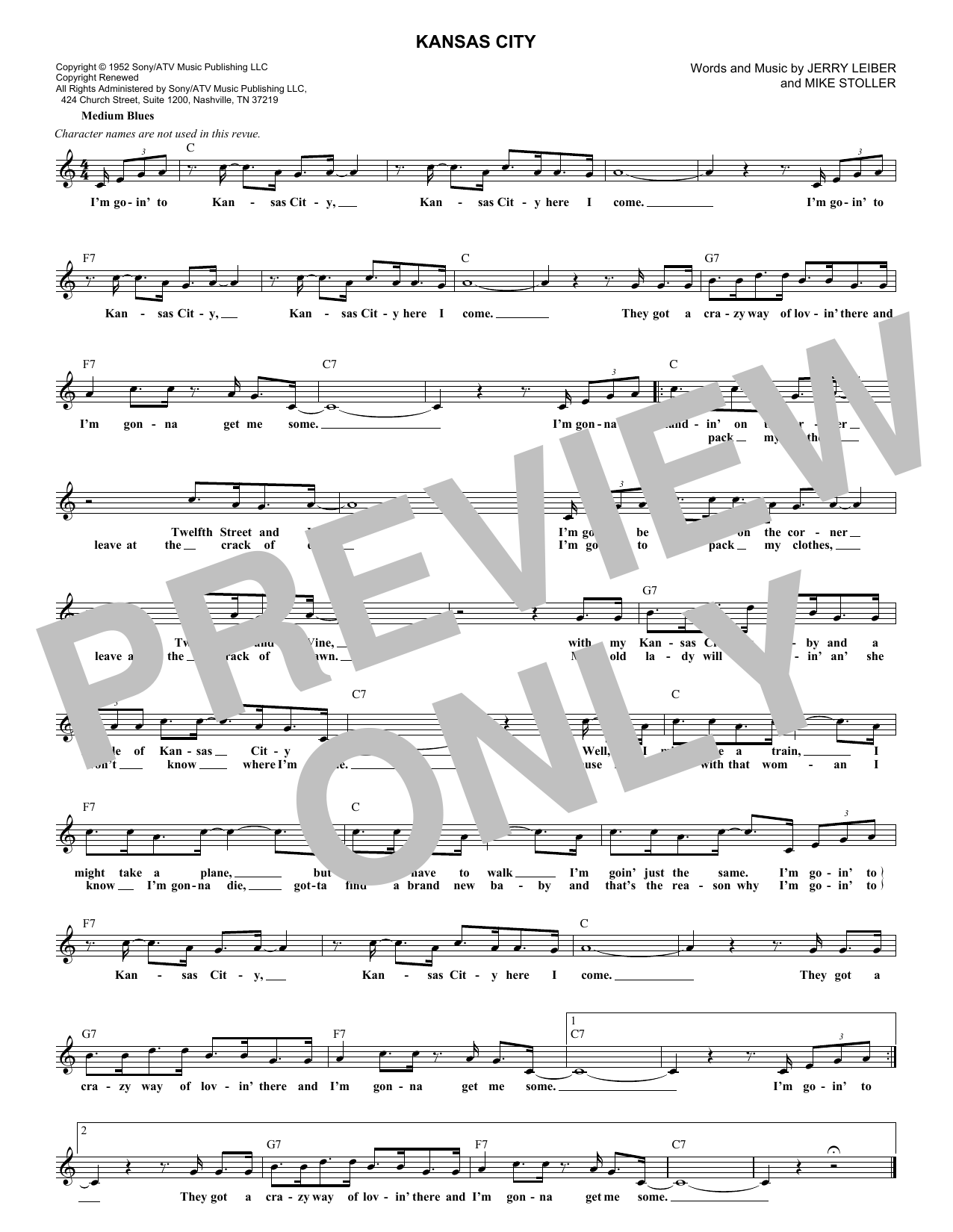
Kansas City: Lead Sheet / Fake Book

As performed by Wilbert Harrison

Item: 35-DS00411546

Digital Download
$3.99
Description

Kansas City: Lead Sheet / Fake Book isn't in MakeMusic Cloud just yet...but it could be. Let us know you'd like to see it, and you'll help shape what comes next. In the meantime, start a free trial and dive into thousands of interactive titles your students can play along with today.

Sample Audio
No sample audio found.
Sample Video
Additional Details
Publisher: Hal Leonard
Page Count: 1
SKU: 35-DS00411546

More about this title

About the Artist: Wilbert Harrison

Wilbert Harrison (1929–1994) was an American R&B and rock and roll musician whose career spanned from the late 1940s through the 1980s. He achieved his greatest commercial success with "Kansas City," a blues standard that became a crossover hit in 1959 and introduced the song to audiences well beyond its original audience. Harrison's version drew on earlier recordings of the tune and became the definitive popular recording, cementing the song's place in the American songbook.

Why we love this

This lead sheet captures one of the most enduring 12-bar blues standards, and Harrison's version remains the most recognizable recording for singers and pianists alike. The straightforward chord progression and melody make it accessible for students while the groove and phrasing demand genuine musicality. It's a reliable choice for teaching blues form, swing feel, and the blues tradition's influence on American popular song.

What to expect

Warm, conversational, and deeply grounded in blues tradition. The melody sits naturally in the voice and invites laid-back phrasing and personality. Despite its simplicity on the page, the song rewards attention to groove, dynamics, and the space between notes.

Who it's for

Pianists, keyboardists, and singers building a jazz and standards repertoire. Students learning 12-bar blues form and its place in American music history. Educators programming oldies or classic rock concerts looking for material with historical weight and student appeal.

How to get the most out of it

  • Establish a comfortable shuffle or swing feel from the downbeat; the groove carries the song more than strict tempo precision.
  • Shape the melody with bent notes and slight rhythmic pushes where Harrison's recording lags behind the beat for character.
  • Keep accompaniment behind the vocal line spacious enough to hear the singer's interpretation without crowding the lyric.
  • Emphasize the turnaround at the 12-bar mark to signal the return to the top and maintain forward momentum.

How to use it

Feature this in a "Standards Through the Decades" concert or as part of a blues history unit that traces the form from early recordings through mid-century rock and roll. Pair it with other 12-bar blues examples to show how the form adapts across genres and eras. Solo singers or pianists can use it as a showcase for tasteful interpretation and conversational accompaniment.

Skills your students will build

  • 12-bar blues form recognition and navigation
  • Swing eighth-note feel and shuffle groove
  • Blues scale usage and expressive phrasing
  • Comping in a blues context
  • Lyrical interpretation and vocal phrasing over familiar changes

You May Also Like