Kanono Sheet Music Preview

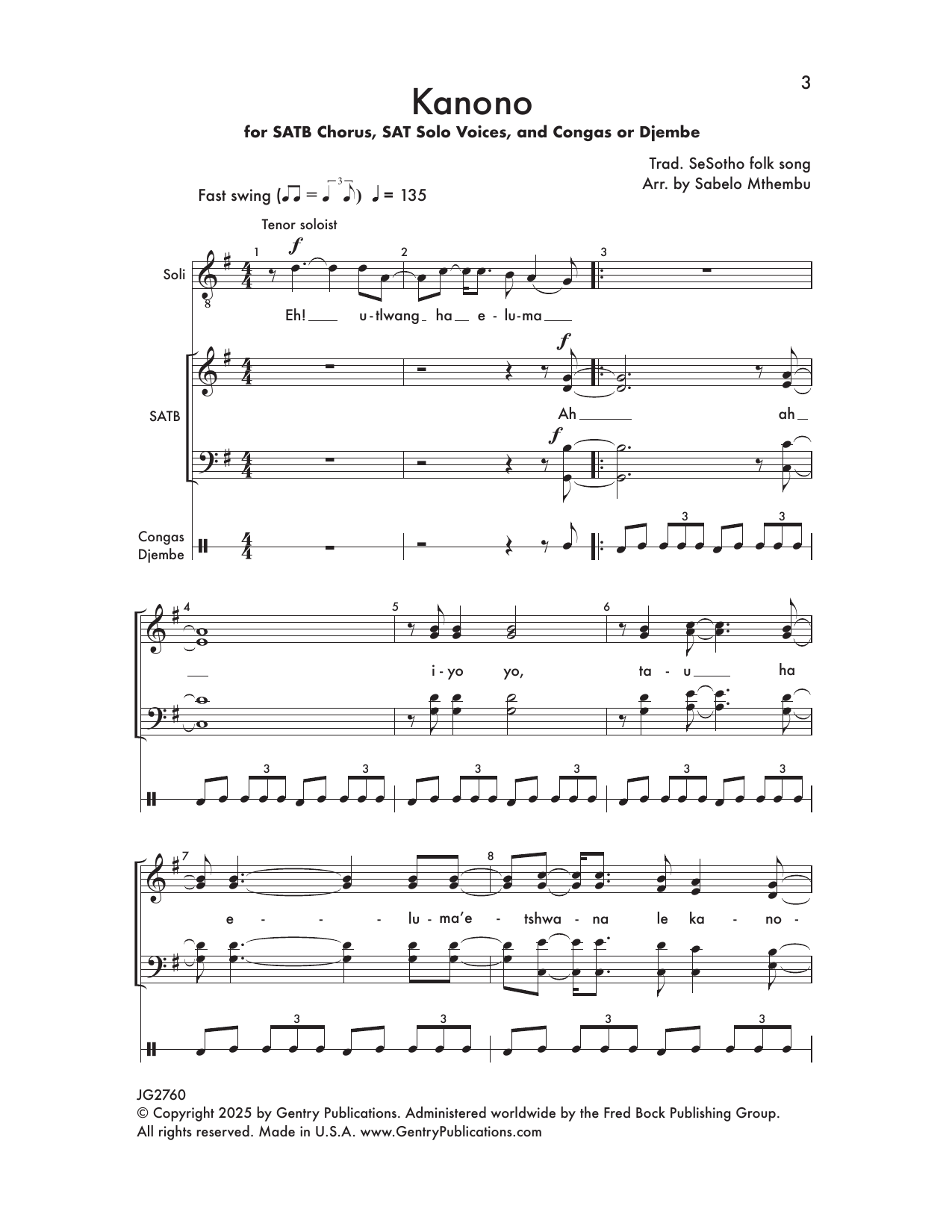
Kanono: SATB Choral Octavo

By Sabelo Mthembu

Item: 35-DS01880474

Digital Download
$3.35
Description

Kanono: SATB Choral Octavo isn't in MakeMusic Cloud just yet...but it could be. Let us know you'd like to see it, and you'll help shape what comes next. In the meantime, start a free trial and dive into thousands of interactive titles your students can play along with today.

Sample Audio
No sample audio found.
Sample Video
Additional Details
Publisher: Hal Leonard
Page Count: 11
SKU: 35-DS01880474

More about this title

About the Composer: Sabelo Mthembu

Sabelo Mthembu is a South African composer whose work draws deeply from indigenous musical traditions and the rich harmonic language of his homeland. His compositions bridge contemporary choral writing with the spiritual and communal roots of African music, creating works that resonate with both cultural authenticity and universal emotional impact.

Why we love this

Kanono offers your choir a genuine entry point into South African choral tradition without compromising musical sophistication. The piece balances accessible SATB writing with the harmonic warmth and rhythmic vitality that makes multicultural repertoire so energizing for singers and audiences alike.

What to expect

Kanono invites singers into a world of warm harmonies, rhythmic vitality, and communal spirit. The piece carries the feeling of gathering and voices interweaving, with moments of brightness and depth that reflect the emotional landscape of South African musical expression.

Who it's for

This octavo works beautifully for choirs of all levels seeking repertoire that expands their cultural horizons. It fits equally well in a concert setting focused on world music, a festival program celebrating diversity, or a curriculum designed to deepen students' understanding of non-Western choral traditions.

How to get the most out of it

  • Lean into the natural swing and lift of the rhythmic figures rather than conducting them mechanically; these patterns should feel conversational and organic.
  • Pay attention to vowel consistency across the four parts, especially in sustained passages where blend becomes the primary vehicle for the piece's harmonic color.
  • Encourage singers to listen across parts for the interlocking melodic lines; understanding how voices support and answer one another deepens both intonation and musicality.
  • Let the text and cultural context inform your interpretation. Research the meaning and cultural significance to bring informed emotion to the performance.

How to use it

Pair this with other African or diaspora choral works to create a thematic concert section, or feature it as a contrasting centerpiece in a program mixing styles and traditions. Its 11 pages make it substantial enough to anchor a program segment while remaining efficient to rehearse.

Skills your students will build

  • Singing in African harmonic language and tonal systems
  • Navigating interlocking melodic lines across four parts
  • Rhythmic precision in syncopated and polyrhythmic figures
  • Blended vowel production across sustained harmonies
  • Cultural literacy in South African musical traditions

You May Also Like