
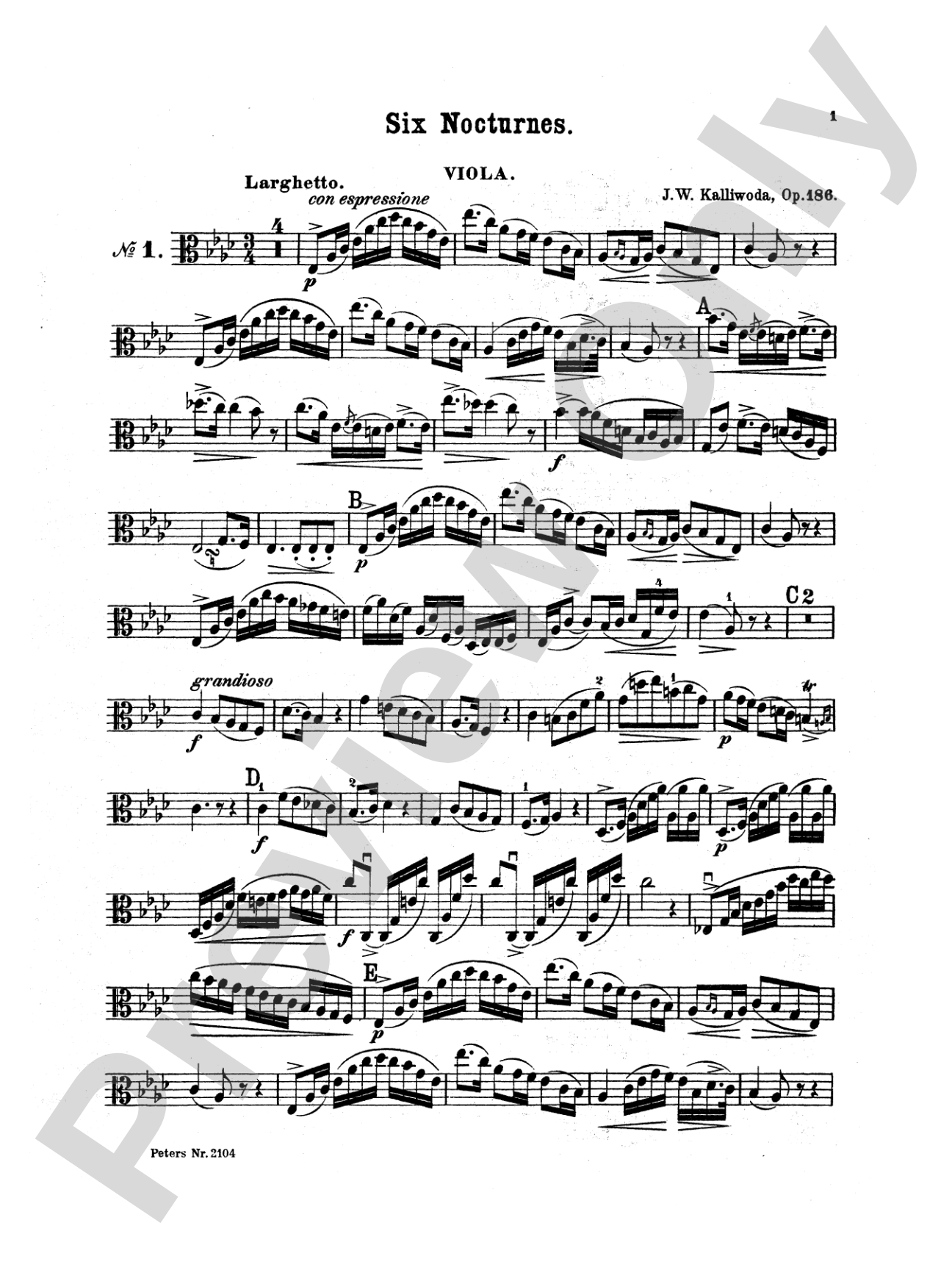
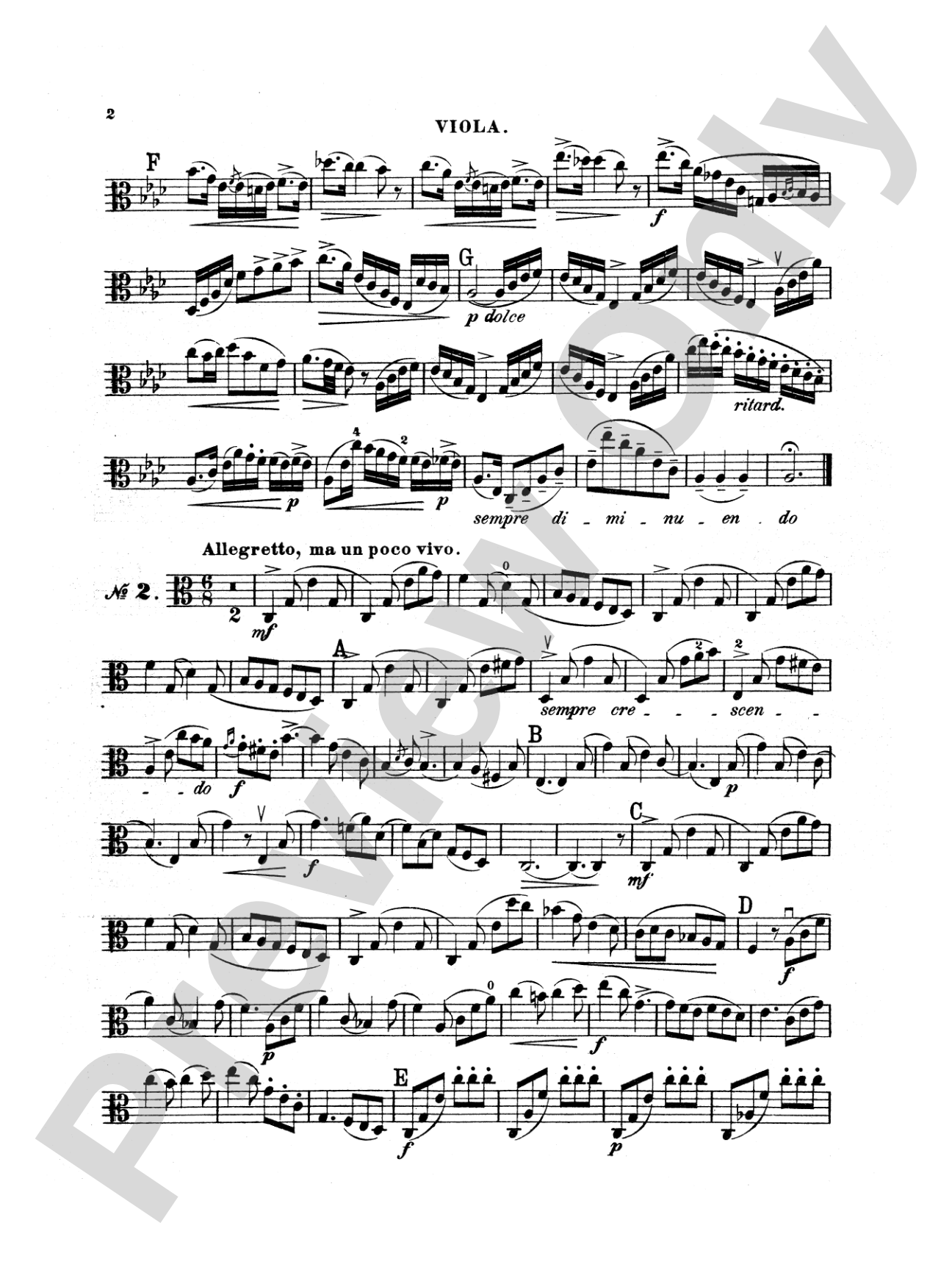

Kalliwoda: Six Nocturnes, Op. 186: Viola Book
By Johann W. Kalliwoda
Item: 00-PK-0003472

$9.99
Pickup currently not available
Buy Extra Parts (Digital PDF Download)
| Product | Price | Quantity |
|---|---|---|
| Kalliwoda: Six Nocturnes, Op. 186 | $0.99 | |
| Kalliwoda: Six Nocturnes, Op. 186 | $0.99 | |
| Kalliwoda: Six Nocturnes, Op. 186 | $0.99 | |
| Kalliwoda: Six Nocturnes, Op. 186 | $0.99 | |
| Kalliwoda: Six Nocturnes, Op. 186 | $0.99 | |
| Kalliwoda: Six Nocturnes, Op. 186 | $0.99 | |
| Kalliwoda: Six Nocturnes, Op. 186 | $0.99 | |
| Kalliwoda: Six Nocturnes, Op. 186 | $0.99 | |
| Kalliwoda: Six Nocturnes, Op. 186 | $0.99 | |
| Kalliwoda: Six Nocturnes, Op. 186 | $0.99 | |
| Kalliwoda: Six Nocturnes, Op. 186 | $0.99 | |
| Kalliwoda: Six Nocturnes, Op. 186 | $0.99 |
Parts Added to Cart!
Related Items
Six Nocturnes, Opus 186: Viola Book |
$9.95
|
View |
Description
A solo, for Viola with Piano Accompaniment, composed by Johann W. Kalliwoda.


Don't just read it, hear it, play along with it, and watch your students grow with it. In MakeMusic Cloud, Kalliwoda: Six Nocturnes, Op. 186: Viola Book comes alive with professional accompaniment, adjustable tempo, and built-in practice tools that turn solo practice into real progress.
Open in the Player
Jump straight in and assign it today.
Start Your Free Trial
Open this title and explore the full library in minutes.
Sample Audio
No sample audio found.
Sample Video
No sample videos found.
Additional Details
Series:
Kalmus Edition
Publisher:
Alfred Music
Page Count:
8
SKU:
00-PK-0003472
More about this title
About the Composer: Johann W. Kalliwoda
Johann Wenzel Kalliwoda (1801-1866) was a Bohemian composer and violinist who spent much of his career in the service of German courts, eventually becoming Kapellmeister at Weimar. He wrote prolifically across nearly every genre: symphonies, concertos, chamber music, and vocal works that earned him respect throughout Europe during the Romantic era, though his music fell into relative obscurity after his death.
Kalliwoda's gift for lyrical melody and orchestration made him a natural voice for Romantic instrumental literature. His nocturnes and similar character pieces reveal a composer deeply attuned to the expressive capabilities of string instruments, and his works remain valuable for musicians seeking repertoire that balances technical interest with genuine musical substance.
Why we love this
Kalliwoda's nocturnes belong to an underexplored corner of the Romantic viola repertoire, offering sustained singing passages and emotional depth without virtuosic showmanship. These pieces reward the violist who can shape a long line with control and warmth, making them ideal for recitals or chamber settings where introspection matters as much as display.
What to expect
Kalliwoda's nocturnes evoke a quiet, introspective mood that sits comfortably in the Romantic tradition of character pieces for solo instrument and piano. The viola's natural warmth is the instrument of choice here, allowing the music to unfold with an intimate, contemplative quality that invites the listener into a personal emotional space.
Who it's for
This collection suits intermediate to advanced violists who have developed secure intonation and the ability to sustain a singing tone. Solo violists preparing recital material will find these pieces rewarding, and they also work well for musicians exploring the string chamber music tradition of the nineteenth century.
How to get the most out of it
- Shape the melodic line through subtle dynamic changes rather than dramatic swells; Romantic songfulness lives in refinement, not exaggeration
- Work with the pianist to establish a unified sense of tempo and breathing, especially across phrase transitions where the accompaniment provides harmonic support
- Explore vibrato as a means of coloring sustained tones and adding emotional nuance to the quieter passages that anchor these nocturnes
How to use it
These nocturnes fit naturally into a recital devoted to Romantic string music, either as a set or programmed individually to provide contrast with more dramatic or virtuosic works. They also serve as excellent material for chamber music partnerships that highlight the viola in a leading role.
Skills your students will build
- Sustained legato playing and long-line phrasing
- Dynamic control and expressive vibrato at varied intensities
- Collaboration with piano accompaniment and ensemble listening
- Interpretation of Romantic melodic writing and textural nuance