
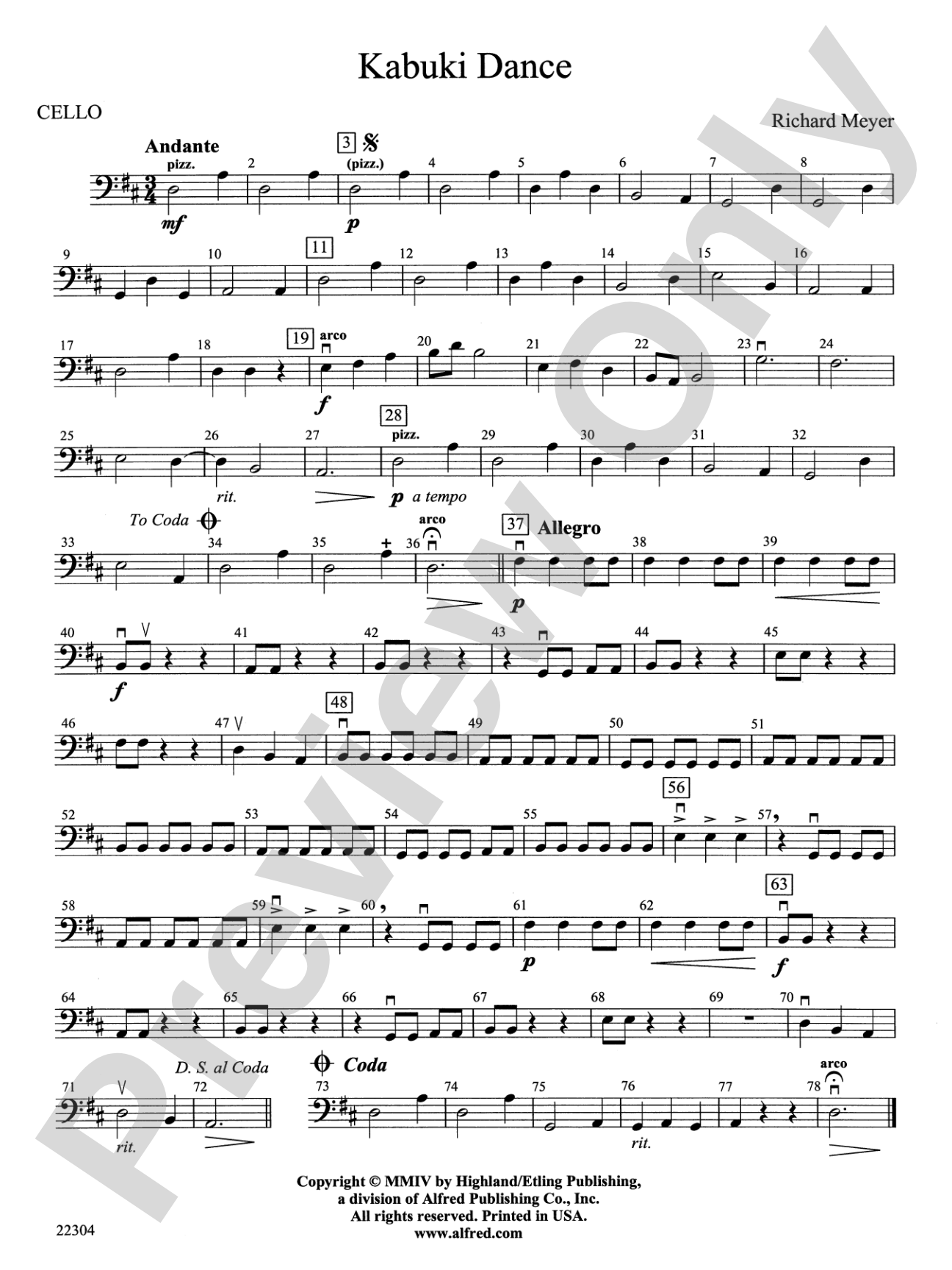

Kabuki Dance: Cello
By Richard Meyer
Grade: 1
Item: 00-PC-0000553_VC1
$5.99
Pickup currently not available
Description
This original piece features colors and tonalities seldom found in pieces for young orchestras. Written in ABA form, and very simple note-wise, this piece offers outstanding opportunities for improvement in rhythmic reading, dynamics, and pizzicato tone production. This piece was written for the training-level orchestra, but its sophisticated sound will make it appealing to second- and even third-year ensembles. Includes a third violin (viola treble clef) and piano accompaniment part.


Don't just read it, hear it, play along with it, and watch your students grow with it. In MakeMusic Cloud, Kabuki Dance: Cello comes alive with professional accompaniment, adjustable tempo, and built-in practice tools that turn solo practice into real progress.
Open in the Player
Jump straight in and assign it today.
Start Your Free Trial
Open this title and explore the full library in minutes.
Sample Audio
1
Audio File
--:--
0:00
0:00
Sample Video
Additional Details
Series:
Highland/Etling String Orchestra
Publisher:
Alfred Music
Page Count:
72
SKU:
00-PC-0000553_VC1
More about this title
About the Composer: Richard Meyer

Richard Meyer brings three decades of string teaching experience to his composition work, having directed orchestras at every level from elementary through high school in California's public schools. At Oak Avenue Intermediate School, he grew a program from 29 students to 200 over 22 years and spearheaded the district's elementary string initiative. Beyond the classroom, Meyer served as music director of the Pasadena Youth Symphony Orchestra for 16 years, leading ensembles in performances across North America, Europe, and Australia.
Meyer's contributions to music education extend across multiple roles. He worked as string editor for Alfred Publishing Company and co-authored the String Explorer Series and Sight-read It for Strings. In 2009, he created the "Giving Bach" program at his school, an interactive concert model that has gained national recognition for bringing music to special needs and underserved student populations throughout Southern California. A prolific composer with nearly 200 published works, Meyer regularly appears as a guest conductor and clinician at major conferences and honor orchestras nationwide.
Why we love this
This piece delivers polished, engaging sound from a training-level orchestra without requiring advanced technical facility. Meyer's orchestration and harmonic language feel far more sophisticated than the simple note-reading demands suggest, giving young musicians the confidence of sounding mature while they build fundamental skills.
What to expect
The piece captures the stylized movement and theatrical color of kabuki without relying on extensive pizzicato pyrotechnics or extreme ranges. It alternates between sections with distinct character and energy, creating a sense of dramatic narrative that feels authentic and engaging rather than cartoonish or oversimplified.
Who it's for
First-year orchestras benefit most from this piece, though Meyer designed it with growth potential for ensembles in their second and third years. It works well for student musicians who read comfortably at grade 1 level but need exposure to multicultural sounds and rhythmic variety without overwhelming technical demands.
How to get the most out of it
- Establish a clear pulse for the rhythmic patterns early in rehearsal; marking the beat visibly helps students internalize the piece's varied rhythmic figures without getting lost in notation
- Shape the pizzicato sections by listening for consistency of attack and decay across all sections; uneven pizzicato tone muddies the texture and undermines the piece's crisp articulation
- Use the ABA structure as a natural coaching opportunity: review the return to the A section as a chance to refine what worked the first time, making the reprise noticeably more polished than the opening
- Balance the dynamics carefully between the string sections and piano accompaniment so the keyboard doesn't overshadow the young orchestral sound
How to use it
Program this work on a concert featuring world music or cultural themes to show audiences that grade 1 ensembles can tackle sophisticated repertoire. It also makes an excellent festival or contest selection where judges appreciate both technical appropriateness and musical maturity in a single work.
Skills your students will build
- Rhythmic reading across varied metric patterns
- Dynamic control and shape over longer phrase lines
- Pizzicato tone production and consistency across sections
- Listening and balance within a larger ensemble texture
- Understanding of ABA form and musical architecture