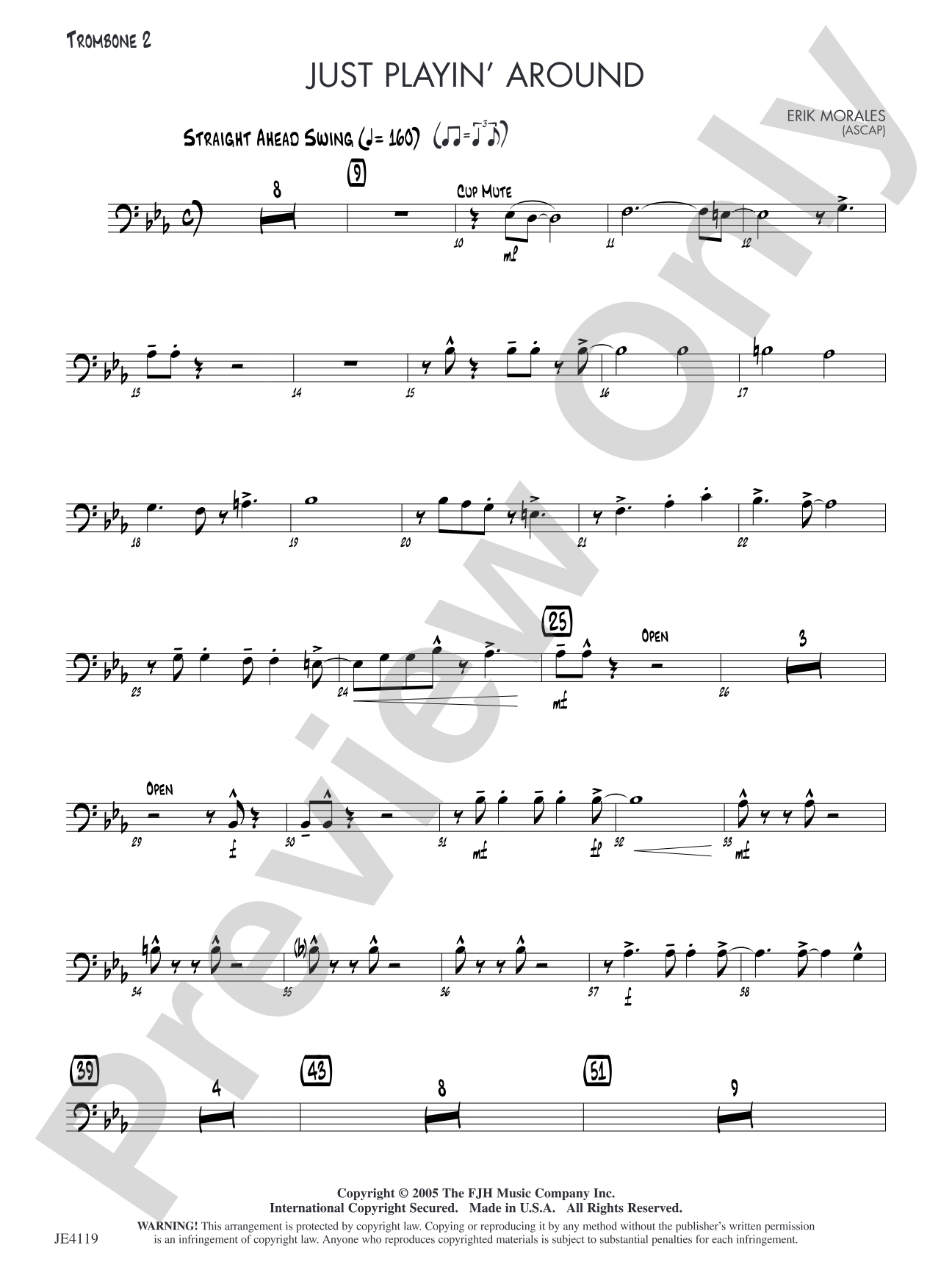
This piece was inspired by a photograph of jazz clubs on New York's 52nd Street in the late 1940s. It has the sound and feel of some of the great standards of that era, and incorporates elements of the classic big band style with bebop. Tenor sax has a written solo and changes. Along with the performance applications, there are plenty of teaching opportunities in this one.
Discover MakeMusic Cloud: thousands of interactive titles your students can play along with today.
Erik Morales has spent his career threading together classical rigor, jazz sophistication, and genuine pedagogical purpose. A New York native born in 1966, he studied composition at Florida International University and completed his degree at the University of Louisiana, Lafayette in 1989. His arranging work began shortly after high school when a south Florida band director commissioned him to create marching band charts, a pivotal moment that launched decades of collaboration with schools and ensembles nationwide.
With over 150 published works spanning wind, orchestral, jazz, and chamber settings, Morales has earned recognition for balancing artistic integrity with classroom accessibility. His trumpet writing is particularly acclaimed, with ensemble works that have placed at the National Trumpet Competitions and a Concerto for Trumpet premiering at the 2009 International Trumpet Guild conference. In 2016, the Louisiana Association for Jazz Education inducted him into their Hall of Fame, recognizing his sustained contributions to jazz education and composition.
Why we love this
This piece captures the authentic swing vernacular without requiring your ensemble to fake it. The bebop vocabulary and big band textures feel historically grounded rather than simplified, so your students are learning from writing that respects the idiom while remaining accessible at Grade 2.5. A written tenor solo with changes gives your lead voice a genuine jazz moment, and the teaching moments woven throughout the score make this more than just a performance vehicle.
What to expect
Stepping into a 52nd Street club on a humid summer night in 1947. The melody floats with period charm, the harmonies hint at bebop sophistication, and the whole arrangement moves with the easy confidence of musicians who know exactly what they're doing. It's nostalgic without being quaint, playful without losing focus.
Who it's for
Developing jazz ensembles ready to engage authentic swing language with real compositional substance. Teachers seeking repertoire that offers both solid performance opportunities and legitimate teaching moments will find this particularly valuable.
How to get the most out of it
Isolate the tenor solo in sectionals early. Whether your player reads changes or takes a pre-written line, getting comfortable with the jazz phrasing and articulation style will anchor the ensemble's feel.
Push past metronomic swing. The 1940s big band sound lives in forward momentum and relaxed pocket playing, not precision counting. Let the rhythm section breathe slightly.
Balance the horn sections by ear during rehearsal. Jazz ensemble voicings can disappear quickly if saxes or bones aren't projected with intention.
How to use it
Pair this with a jazz standards concert or a 20th-century American music program exploring the bebop era. The accessible Grade 2.5 level makes it realistic for mixed-ability ensembles early in their jazz journey, while the idiomatic writing and solo space ensure your more experienced players stay engaged.
Skills your students will build
swing eighth-note interpretation and phrasing
reading and performing jazz chord changes (tenor solo)
big band and bebop ensemble voicing balance
jazz rhythmic articulation and stylistic interpretation
listening to sectional color and blend across horn families
You May Also Like
Scan to Complete Your Purchase
Use your phone's camera to scan the code below
You'll log in on your phone and the order will be added to your account