
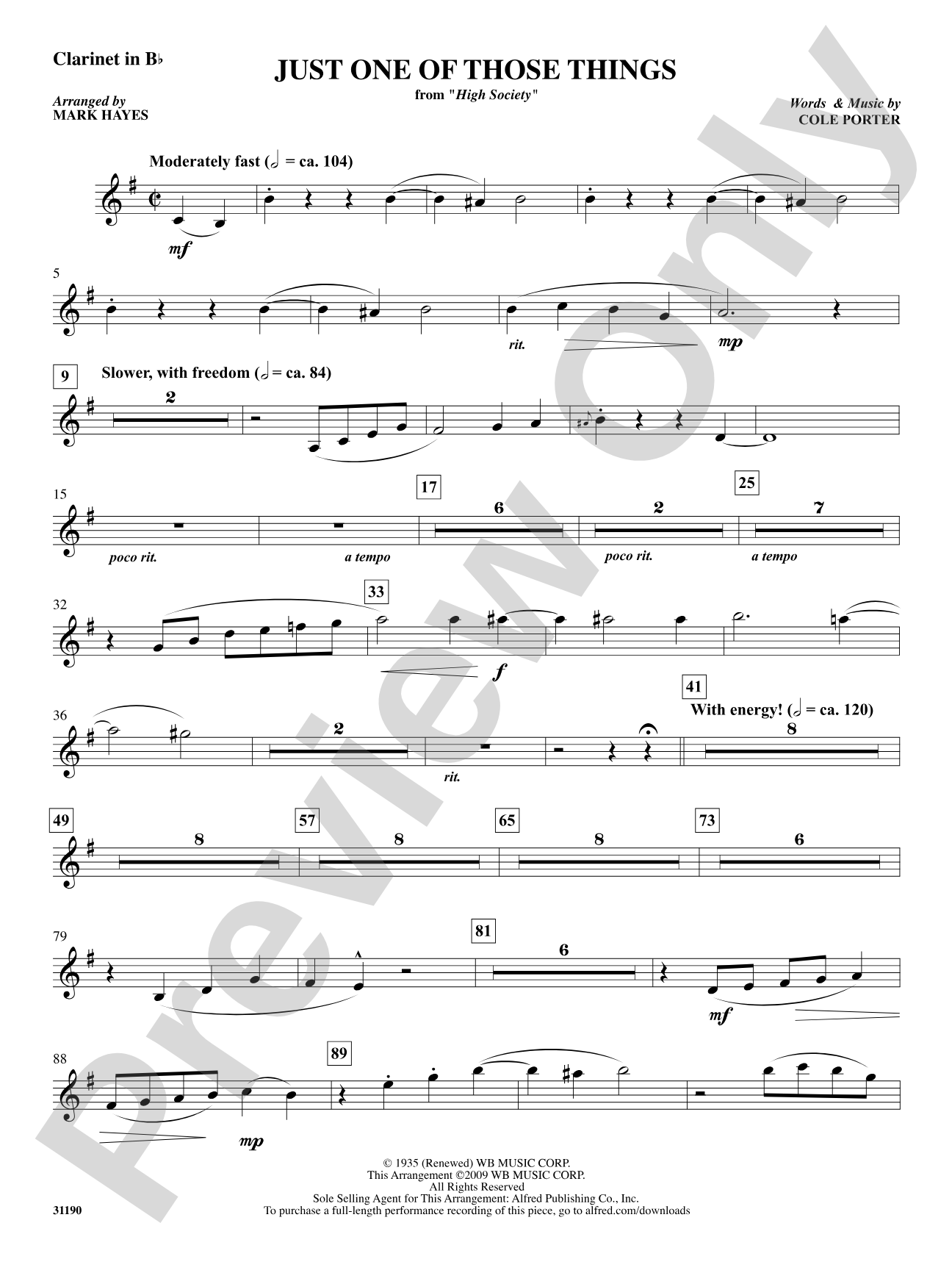

Just One of Those Things: 1st B-flat Clarinet: Choral SoundPax
Words and music by Cole Porter / arr. Mark Hayes
Item: 00-PC-0014837_C1
$3.00
Pickup currently not available
Description
This Cole Porter classic has been given a fresh and unique musical treatment by award-winning arranger Mark Hayes. It opens with the verse up front, then moves from a slick 2-beat with a walking bass line into a jazzy and kickin' swing tempo. Great for groups of all sizes and ages.


Don't just read it, hear it, play along with it, and watch your students grow with it. In MakeMusic Cloud, Just One of Those Things: 1st B-flat Clarinet: Choral SoundPax comes alive with professional accompaniment, adjustable tempo, and built-in practice tools that turn solo practice into real progress.
Open in the Player
Jump straight in and assign it today.
Start Your Free Trial
Open this title and explore the full library in minutes.
Sample Audio
1
Audio File
--:--
0:00
0:00
Sample Video
No sample videos found.
Additional Details
Series:
Alfred Pop Choral Series
Publisher:
Alfred Music
Page Count:
56
SKU:
00-PC-0014837_C1
Instrumentation:
SoundPax
More about this title
About the Composer: Cole Porter
Cole Porter (1891-1964) stands among America's most sophisticated songwriters, crafting music and lyrics that captured the wit, glamour, and emotional depth of the Great American Songbook. His melodies are instantly recognizable; his harmonies reward close listening with unexpected turns and jazz inflections. Porter wrote for stage and film with equal brilliance, producing standards that remain central to jazz, pop, and choral repertoires worldwide.
Porter's influence on music education runs deep. His songs teach harmonic complexity, lyrical elegance, and the art of storytelling through song. Directors who program Porter give their singers access to some of the most enduring melodies in American music, pieces that connect to professional jazz standards while remaining accessible to developing musicians.
Why we love this
Mark Hayes has crafted an arrangement that honors Porter's sophisticated harmonies while making the piece breathe with contemporary energy. The structural choice to open with the verse before shifting into the swing section gives your singers a moment of lyrical warmth before the groove takes over, making it feel like an actual jazz performance rather than a concert arrangement of a jazz standard. It's the kind of piece that sounds effortless but gives every section of your choir something meaningful to do.
What to expect
The piece captures the urbane charm Porter intended while adding modern swing vitality through Hayes's arranging choices. There's an ease and confidence in the groove, a sense of musicians who know this song deeply and are inviting an audience into their world. The contrast between the intimate verse and the energized swing section creates emotional shape and musical interest.
Who it's for
Any choir looking to program a sophisticated jazz standard that works for mixed voices of all sizes. This arrangement serves intermediate to advanced singers who are ready to navigate jazz phrasing and ensemble blend, as well as younger singers in quality programs who benefit from hearing and singing genuine American songbook material.
How to get the most out of it
- Shape the opening verse with genuine legit tone and clear diction; let the lyrical content land before the band kicks in with the walking bass.
- Lock the rhythm section's pocket during the swing section by having your singers listen closely to the recorded accompaniment and feeling the backbeat rather than fighting it.
- Balance the ensemble parts carefully in the jazzy sections so individual voice lines don't muddy the harmonic sophistication Porter built into this tune.
- Treat the ensemble jazz chords as living, breathing sonorities rather than static block chords; small dynamic shadings and attention to blend will reveal Hayes's voicing choices.
How to use it
This works beautifully on a concert featuring American standards or pop choral repertoire, especially alongside other swing-era classics. It also pairs well with other Mark Hayes arrangements or mixed jazz-inflected pieces. The piece has enough musical substance to anchor a secular concert programming while remaining approachable enough for spring pops concerts or community performances.
Skills your students will build
- Jazz phrasing and lyrical interpretation in a swing style
- Ensemble blend within complex jazz harmonies
- Rhythmic precision in 2-beat and swing tempos
- Listening to and responding to recorded accompaniment
- Understanding sectional contrast and form through verse-chorus structure