
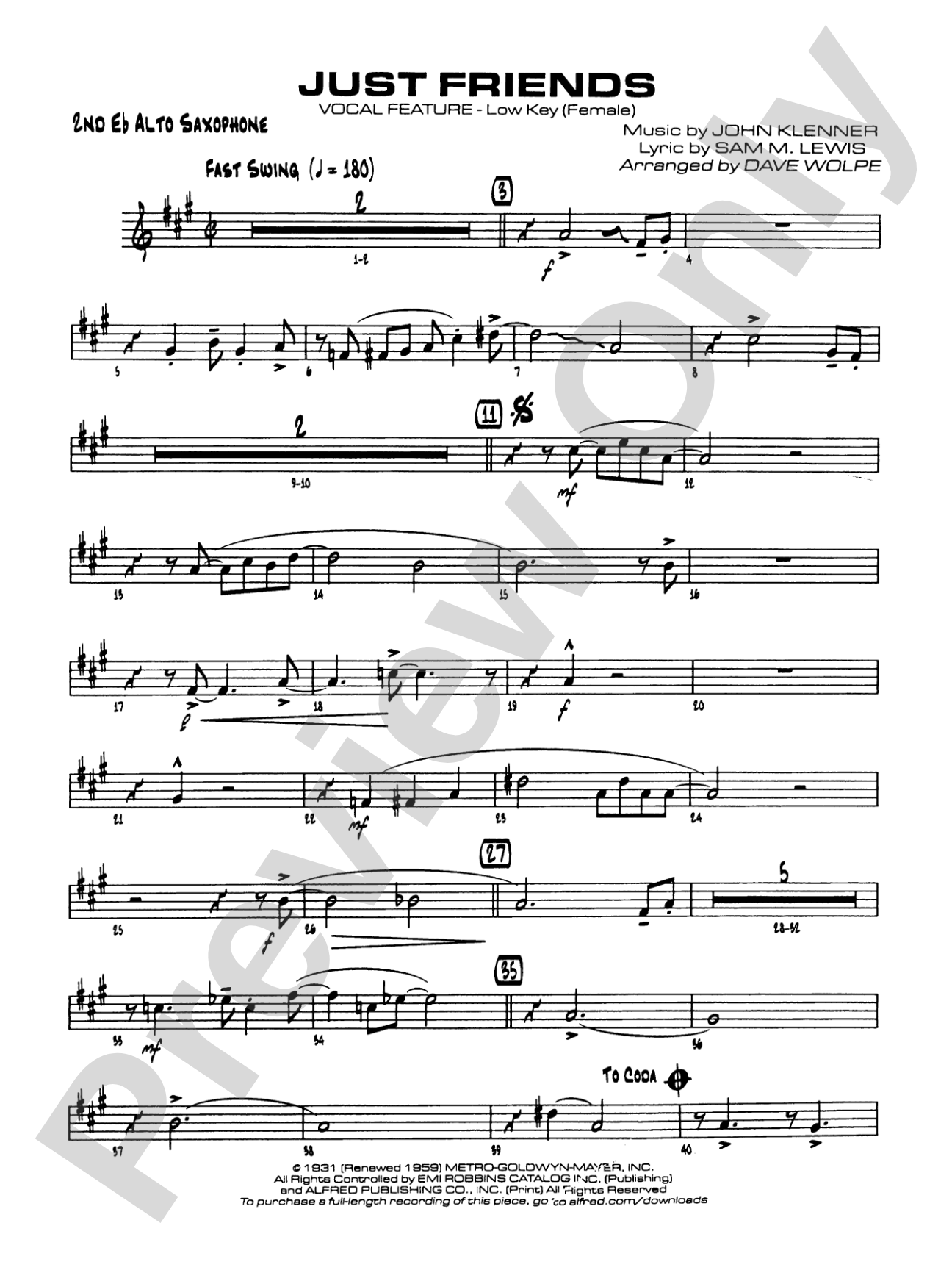

Just Friends: 2nd E-flat Alto Saxophone
Music by John Klenner, lyric by Sam M. Lewis / arr. Dave Wolpe
Grade: 3 (Medium)
Item: 00-PC-0017127_AX2
$3.00
Pickup currently not available
Description
Dave Wolpe's superb chart for vocalist and jazz ensemble is arranged in two keys for flexibility: low key of C and high key is F---just flip the page for the preferred key! In addition, an optional part is provided for tenor sax as an alternative to the vocal. A terrific stop-time sax soli and a jazz solo for trumpet 2 are highlights of this swinger. Low key vocal range is G-flat below middle C to second space A. High key range is B below middle to fourth line D treble clef. Another outstanding Wolpe chart! This title is available in MakeMusic Cloud.


Don't just read it, hear it, play along with it, and watch your students grow with it. In MakeMusic Cloud, Just Friends: 2nd E-flat Alto Saxophone comes alive with professional accompaniment, adjustable tempo, and built-in practice tools that turn solo practice into real progress.
Open in the Player
Jump straight in and assign it today.
Start Your Free Trial
Open this title and explore the full library in minutes.
Sample Audio
1
Audio File
--:--
0:00
0:00
Sample Video
Additional Details
Series:
Jazz Vocal Series
Publisher:
Alfred Music
Page Count:
80
SKU:
00-PC-0017127_AX2
More about this title
About the Composer: John Klenner
John Klenner was a prolific songwriter and composer active in the early-to-mid 20th century, contributing substantially to the Great American Songbook. His compositions have become standards in jazz and popular music, recorded by countless artists across multiple generations.
Klenner's melodic sensibility and harmonic sophistication made his work particularly appealing to jazz arrangers and vocalists. "Just Friends" exemplifies his gift for writing memorable, singable melodies that sit naturally in the voice while offering rich harmonic possibilities for ensemble interpretation.
Why we love this
Dave Wolpe's arrangement strikes the rare balance of being both accessible and musically sophisticated. The built-in flexibility of two keys on facing pages means you can feature multiple singers across different performances without rearranging, and the optional tenor sax part gives you a genuine alternative if your vocalist needs to share the spotlight or if your band composition shifts mid-season.
What to expect
A confident, swinging standard that lets the melody breathe over walking rhythms and warm horn colors. The stop-time sax soli inject character and fun while giving the rhythm section a moment of precision, and the overall feel is polished enough for a concert but relaxed enough to genuinely swing.
Who it's for
This is built for jazz ensembles that regularly feature vocals and want a Grade 3 chart that doesn't require the vocalist to be a trained soprano. If your program rotates singers or includes more than one vocalist, the two-key format gives you genuine flexibility without forced transposition.
How to get the most out of it
- Collaborate with your vocalist during the stop-time sax solo to ensure they understand when to re-enter; this moment plays best when the ensemble's deliberate rhythm feels like it's clearing space for the singer's return.
- Balance the trumpet 2 solo carefully in the context of the full ensemble so it reads as a feature moment rather than getting buried in the mix.
- Experiment with both keys in rehearsal before the final assignment. Singers often discover they prefer one key over the other based on where the melody sits in their passaggio.
- Lock the rhythm section (piano, bass, drums) into the swing feel first, then layer in the horns. This chart's success depends on a relaxed, confident rhythmic foundation.
How to use it
Program this as a mid-set feature on a jazz concert or as part of a vocal showcase that mixes standards with contemporary material. It's substantial enough (80 pages of score and parts) to anchor a jazz band performance and flexible enough to fit singers with different ranges without the awkwardness of transposition on the fly.
Skills your students will build
- Singing swing phrasing and jazz articulation over ensemble accompaniment
- Reading stop-time rhythms and re-entry cues in ensemble context
- Balancing vocal projection with accompaniment textures
- Understanding chord changes through improvisation or interpretation of melody