Just Friends: 1st B-flat Trumpet Sheet Music Preview

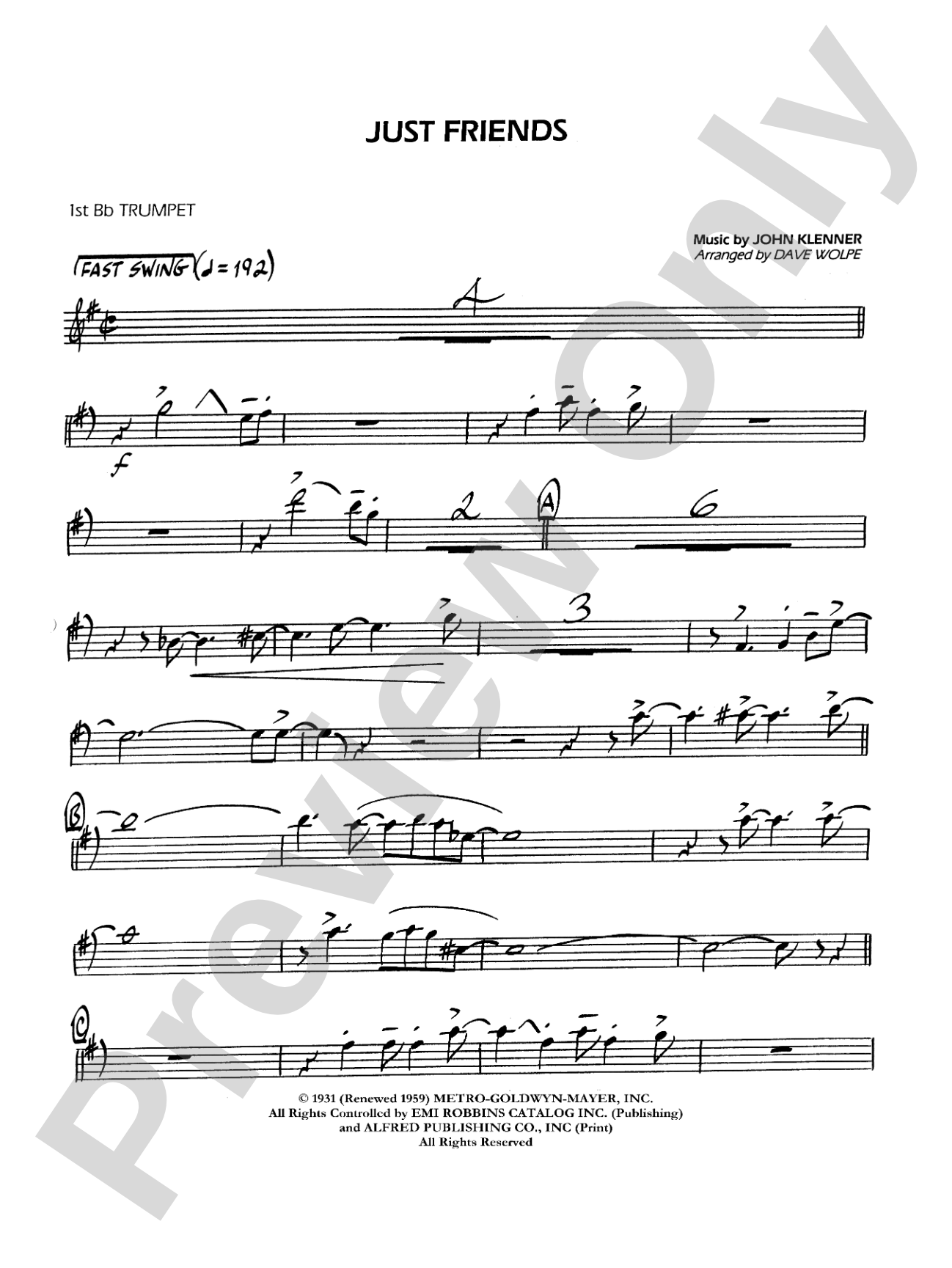
Just Friends: 1st B-flat Trumpet

By John Klenner / arr. Dave Wolpe

Grade: 4 (Medium Advanced / Difficult)

Item: 00-PC-0002589_T1

Digital Download
$3.00
Description
This title is a staple of jazz buffs the world over. Now comes a first-class arrangement from the pen of Dave Wolpe, one of America's finest writers of big band music. You're gonna like this one.

Don't just read it, hear it, play along with it, and watch your students grow with it. In MakeMusic Cloud, Just Friends: 1st B-flat Trumpet comes alive with professional accompaniment, adjustable tempo, and built-in practice tools that turn solo practice into real progress.

Sample Audio
No sample audio found.
Sample Video
Additional Details
Series: Dave Wolpe Jazz Ensemble
Publisher: Alfred Music
Page Count: 69
SKU: 00-PC-0002589_T1

More about this title

About the Composer: John Klenner

John Klenner was an American composer and songwriter active in the early-to-mid twentieth century, contributing significantly to the Great American Songbook. He crafted melodies and compositions that became standards in jazz repertoire, with "Just Friends" standing as one of his most enduring works. His ability to write singable, memorable lines has ensured his music remains a cornerstone of jazz education and performance.

Why we love this

Dave Wolpe's arrangement sits at that perfect intersection of authenticity and playability. The writing respects the standard's harmonic richness while giving your ensemble clear section roles and genuinely engaging countermelody lines. At Grade 4, this lands exactly where you need a piece that challenges without overwhelming, and it's the kind of title that sounds like a proper jazz recording in the hands of committed students.

What to expect

"Just Friends" carries the warm sophistication of mid-century jazz standards, with the kind of elegant harmonic movement that invites both straightforward statement and creative interpretation. Wolpe's arrangement preserves the tune's inherent lyricism while adding the textural depth and voiced independence that makes big band writing so rewarding to play. It's introspective without being precious, and classy without ever feeling stuffy.

Who it's for

High school and college jazz ensembles ready for Grade 4 medium-advanced repertoire, and any program seeking a standard that offers genuine musicianship without excessive technical demands. This works equally well for directors looking to build students' knowledge of the jazz canon and for groups preparing a concert that mixes standards with more contemporary material.

How to get the most out of it

  • Balance the melodic line against the walking bass and comping sections. The tune's sophistication lives in how cleanly those layers sit together, so lock the rhythm section first before layering melody and harmony.
  • Shape the phrasing in eight-bar arcs rather than beat-by-beat. This standard rewards singers and players who think in longer musical sentences.
  • Let the ensemble breathe at the turnarounds. Wolpe's voicings create natural moments for space, and respecting those silences makes the ensemble sound more mature and intentional.
  • Attend to the balance between saxes and brass in the ensemble sections. The arrangement likely features both colors, so rehearse them separately before blend.

How to use it

Program this as a centerpiece for a jazz standards set on a concert featuring repertoire from different eras. It pairs naturally with swing-era literature on one side and with contemporary jazz charts on the other, making it an ideal anchor for a thematic program. The 69-page score and parts also make it substantial enough to justify a dedicated rehearsal block earlier in the season.

Skills your students will build

  • Reading and executing jazz swing style articulation across an ensemble
  • Listening to and balancing sectional voicings (saxophone and brass blend)
  • Interpreting jazz chord changes and harmonic substitutions
  • Phrasing in longer musical arcs within a standard song form
  • Coordinating rhythm section (bass, drums, comping instruments) with ensemble melody and countermelody

You May Also Like