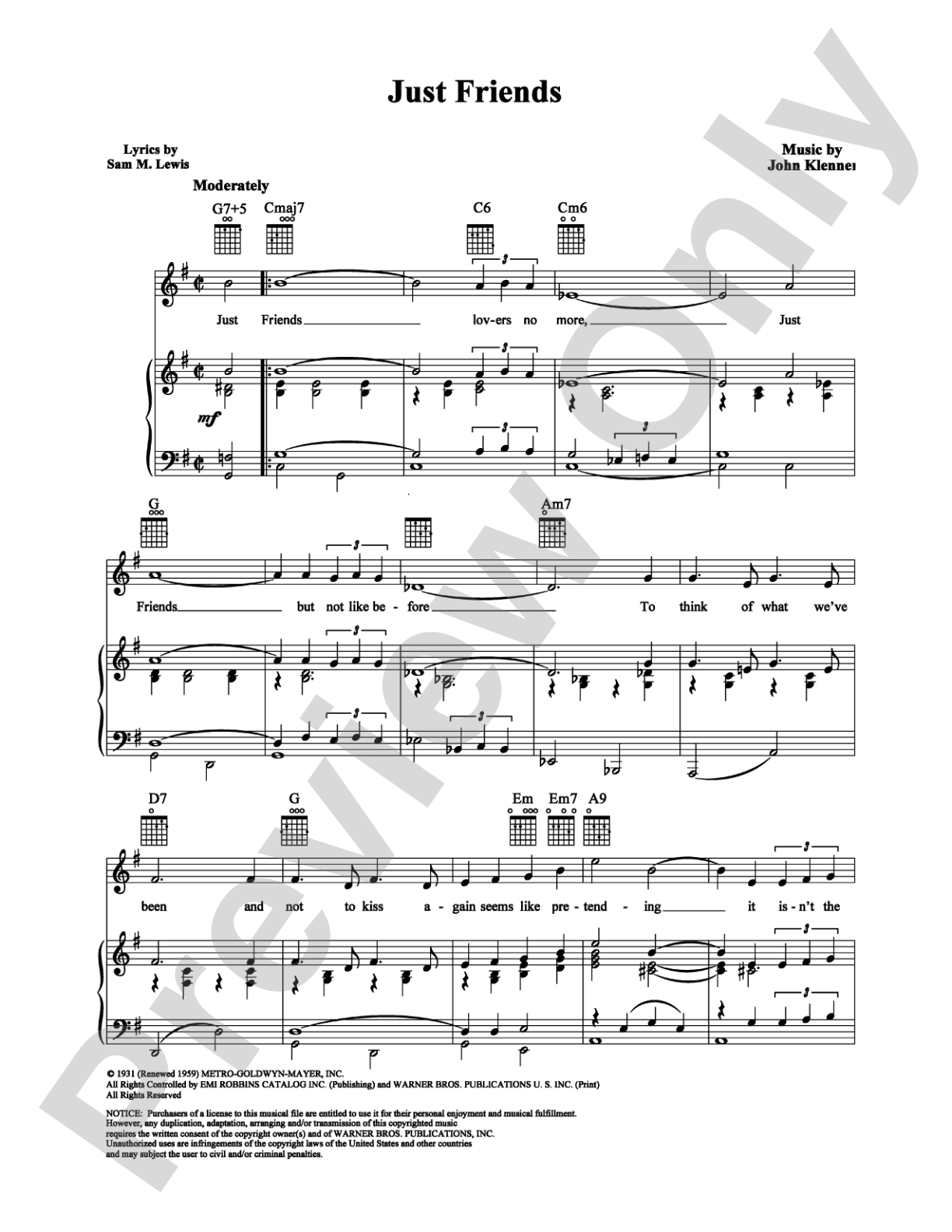
Just Friends: Piano/Vocal/Chords Digital Sheet Music

Just Friends: Piano/Vocal/Chords Digital Sheet Music

John Klenner, Red McKenzie

Item: 00-PS-0007364

Digital Download
$3.99
Description

Just Friends: Piano/Vocal/Chords Digital Sheet Music isn't in MakeMusic Cloud just yet...but it could be. Let us know you'd like to see it, and you'll help shape what comes next. In the meantime, start a free trial and dive into thousands of interactive titles your students can play along with today.

Sample Audio
No sample audio found.
Sample Video
Additional Details
SKU: 00-PS-0007364

More about this title

About the Artist: Red McKenzie

Red McKenzie (1900, 1948) was a pioneering jazz vocalist and harmonica player who helped define the sound of early swing. As a founding member of the Mound City Blue Blowers, McKenzie brought a distinctive vocal style to jazz standards of the 1920s and 1930s, blending wit and musicality in ways that influenced generations of singers after him.

His interpretations of songs like "Just Friends" showcase the conversational phrasing and rhythmic flexibility that made him essential to the jazz vocal tradition. For educators, McKenzie's work demonstrates how to navigate a standard with personality while respecting its harmonic and melodic structure.

Why we love this

This standard appears in thousands of jazz fake books, but having McKenzie's own interpretation in piano/vocal/chords format anchors students to a historically informed reading. The chord voicings reflect how jazz musicians of his era actually approached this tune, making it a valuable reference point for understanding swing-era jazz practice.

What to expect

Warm and conversational, with the easy sophistication of 1920s swing. The melody sits comfortably in the voice, and the chord progression unfolds with natural harmonic logic that rewards both singing and playing with understanding rather than technical flashiness.

Who it's for

Jazz singers and jazz pianists preparing a standard for performance or study; instrumentalists (saxophonists, trombonists) who want to reference the melody and changes in the context of McKenzie's era. This works equally well for advanced students exploring jazz history through primary material.

How to get the most out of it

  • Study the chord symbols carefully; jazz comping requires understanding the harmonic function of each chord, not just playing block chords throughout.
  • Balance the vocal melody against the piano part so the lyric remains the priority while the accompaniment provides sophisticated harmonic context.
  • Approach the tempo as a conversation between voice and piano rather than a rigid tempo; early jazz treatments of standards often rubato the phrasing.

How to use it

Pair this with other standards from the swing era when programming a jazz vocal recital or small ensemble concert. It also serves as excellent study material for jazz history classes or as a reference point when teaching jazz standards and the importance of knowing how the masters approached familiar material.

Skills your students will build

  • Reading and interpreting jazz chord symbols and voicings
  • Balancing vocal melody with jazz piano accompaniment
  • Understanding swing-era phrasing and rhythmic interpretation
  • Analyzing harmonic progression in early jazz standards

You May Also Like