Just a Closer Walk with Thee: Bass Sheet Music Preview

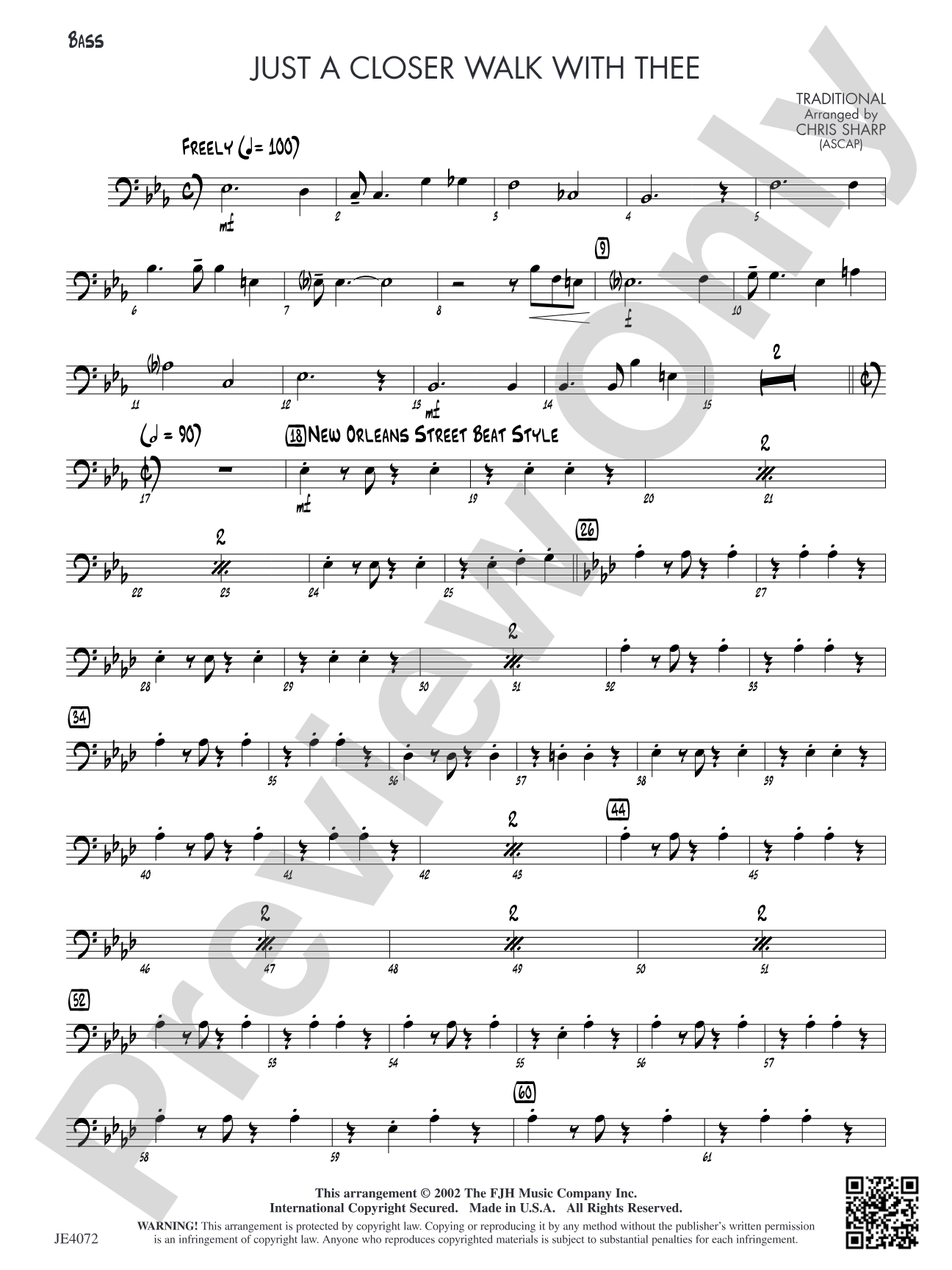
Just a Closer Walk with Thee: Bass

Arranged by Chris Sharp

Grade: 3

Item: 98-PC-DJE4072_BSS

Digital Download
$7.00
Description
This timeless spiritual classic gets the front burner treatment from Disney writer Chris Sharp. A lush opening chorale gives way to a driving New Orleans street beat with tenor solo (as written or with changes) and an easy shout chorus. A real cooker!

Just a Closer Walk with Thee: Bass isn't in MakeMusic Cloud just yet...but it could be. Let us know you'd like to see it, and you'll help shape what comes next. In the meantime, start a free trial and dive into thousands of interactive titles your students can play along with today.

Sample Audio
0:00
0:00
Sample Video
Additional Details
Series: FJH Intermediate Jazz Ensemble
Publisher: The FJH Music Company, Inc.
SKU: 98-PC-DJE4072_BSS

More about this title

About the Arranger: Chris Sharp

Chris Sharp

Chris Sharp brings decades of professional arranging experience to every score he writes. A trombonist who spent eleven years as a performing musician and band leader at Walt Disney World, he has orchestrated music for Disney parks worldwide since 1984, working on everything from live shows to national television broadcasts. His work has also extended to Universal Studios, the Boston Pops, and the USAF Airmen of Note, earning him multiple ASCAPlus awards and regular performances at the Midwest Clinic.

Beyond his commercial work, Sharp is deeply invested in music education. He has taught at middle school, high school, and college levels, and currently serves as Director of Bands at Polk State College in Winter Haven, Florida, where he also teaches music theory, music technology, and arranging. His experience as a clinician, guest conductor, and adjudicator for organizations like Bands of America and Drum Corps International reflects his commitment to developing the next generation of musicians.

Why we love this

Sharp's arrangement respects the spiritual's dignity while giving it genuine swing personality. The structure builds beautifully from that opening chorale into groove territory, and the tenor solo (written out with optional changes) gives soloists a clear entry point without overwhelming Grade 3 players. Most importantly, it swings without pretension.

What to expect

This arrangement channels genuine New Orleans spirit without resorting to cartoonish clichés. You get the lush, reverent opening of a spiritual, then the street parade energy hits and won't let go. It's soulful, rhythmically infectious, and genuinely fun to play.

Who it's for

Jazz ensembles at the Grade 3 level will find an accessible yet musically substantial arrangement here. Directors looking for repertoire that respects students' intelligence while remaining playable will appreciate Sharp's balance of sophistication and practicality.

How to get the most out of it

  • Balance the opening chorale carefully so the ensemble sounds unified but warm, not stiff. The lush texture is what hooks listeners before the rhythm kicks in.
  • Let the tenor soloist own the New Orleans beat section. The rhythm section should lock tight behind them, but the solo is the story.
  • Keep the shout chorus energetic without rushing. The "easy" designation means the voicing is accessible, but that doesn't mean it should sound tentative.
  • Use the optional changes in the tenor solo as a teaching tool. Even if your soloist sticks with the written melody at first, knowing that flexibility exists builds confidence.

How to use it

Program this alongside other spirituals or American roots material to build a thematic concert set. It also pairs well in a jazz concert where you're mixing ballad-tempo pieces with harder-swinging material, giving audiences the full range of the ensemble's ability. The straightforward arrangement makes it an excellent vehicle for introducing jazz idioms to younger players without the complexity that often comes with Grade 3 jazz writing.

Skills your students will build

  • Swing articulation and phrasing in a jazz context
  • Accompanying and supporting a tenor solo
  • Playing with New Orleans rhythmic feels and syncopation
  • Blend and balance in both chorale and ensemble settings
  • Responding to dynamic contrast between intimate and energetic sections

You May Also Like