Jupiter Rising (Adapted from <i>The Planets</i>): Violin 1 Sheet Music Preview

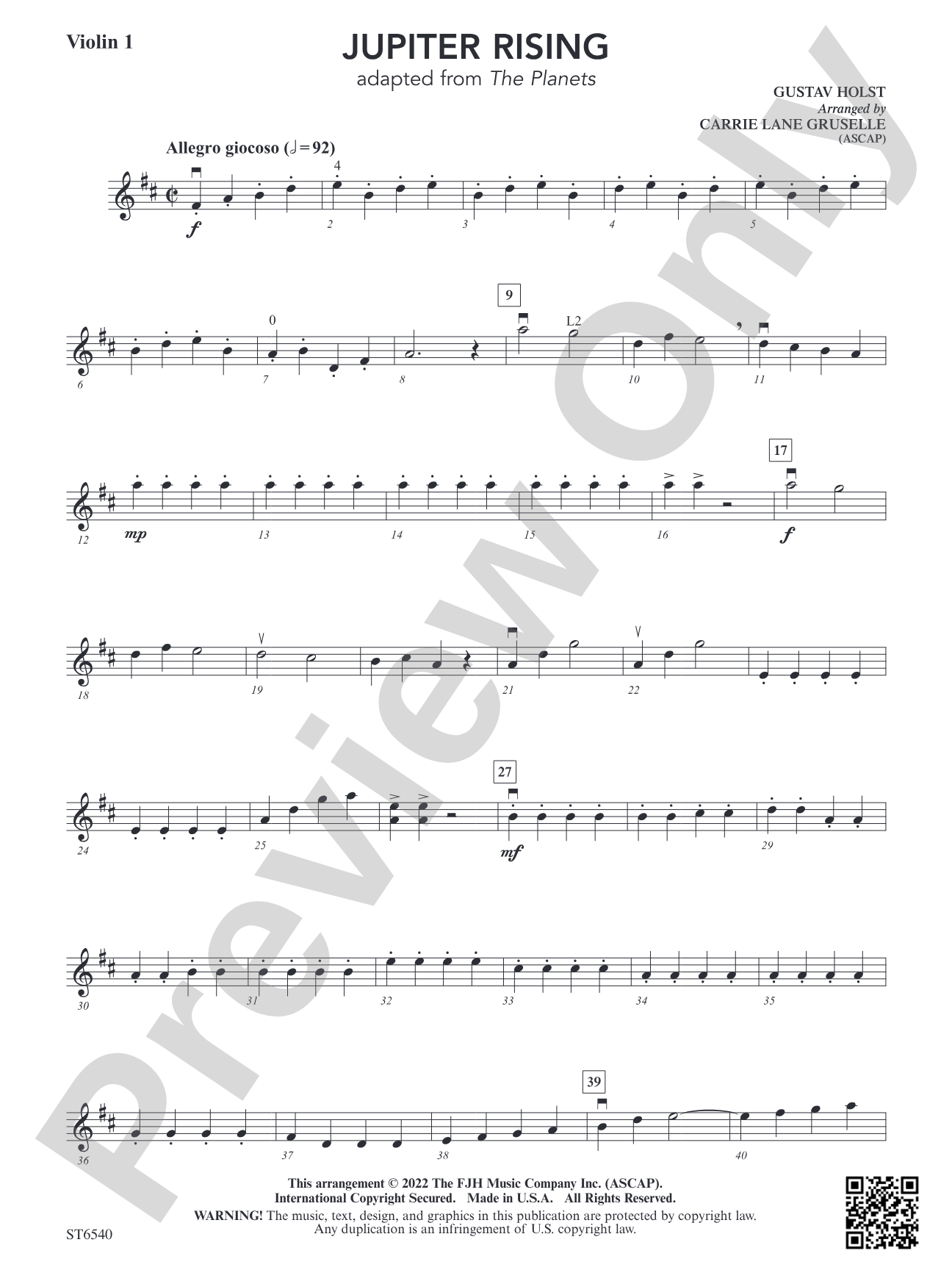
Jupiter Rising (Adapted from The Planets): Violin 1

Adapted from The Planets

By Gustav Holst / arr. Carrie Lane Gruselle

Grade: 1

Item: 98-PC-DST6540_VN1

Digital Download
$7.00
Description
This incredibly clever adaptation reflects the joyful, yet dignified character of Holst's Jupiter from "The Planets." While directly quoting Holst's masterpiece, this arrangement effectively balances musical nuances with approachable technique for very young players. Quite unlike anything out there at this level, and certain to be a student and audience favorite! (1:45)

Don't just read it, hear it, play along with it, and watch your students grow with it. In MakeMusic Cloud, Jupiter Rising (Adapted from The Planets): Violin 1 comes alive with professional accompaniment, adjustable tempo, and built-in practice tools that turn solo practice into real progress.

Sample Audio
0:00
0:00
Sample Video
Additional Details
Series: FJH Beginning Strings
Publisher: The FJH Music Company, Inc.
SKU: 98-PC-DST6540_VN1

More about this title

About the Composer: Gustav Holst

Gustav Holst (1874-1934) was an English composer whose orchestral suite "The Planets" remains one of the most performed and beloved works in classical music. A devoted music educator, Holst spent decades teaching at St. Paul's Girls' School in London and championed music education as essential to a complete life, not merely an ornament to it.

Holst's approach to composition was deeply thoughtful and unpretentious. He valued clarity of line and harmonic innovation without sacrificing accessibility, principles that made his work resonate across concert halls and classrooms alike. For young musicians, his music offers an entry point into sophisticated orchestration and genuine artistic expression.

Why we love this

Carrie Lane Gruselle's adaptation honors the unmistakable nobility of Holst's Jupiter while stripping away the technical barriers that would otherwise keep this piece out of reach for beginning orchestras. The arrangement preserves the melody and character that audiences recognize instantly, yet the string writing sits comfortably for players still developing their technique. Young musicians get to perform a genuine masterwork, not a simplified substitute.

What to expect

Joyful and stately at once, this arrangement captures the hymn-like grandeur Holst intended. There's dignity in the melody and warmth in the supporting harmonies, creating music that feels both celebratory and calm. Young players will experience what it means to sound like a real orchestra.

Who it's for

Beginning string orchestras at the Grade 1 level will find this piece achievable without losing musical substance. It works beautifully for directors introducing young players to famous classical repertoire and for those seeking material that feels like a genuine performance accomplishment rather than an exercise.

How to get the most out of it

  • Shape the main theme with gentle dynamic swells rather than strict note-to-note articulation; the melody should sing even at this approachable level.
  • Balance the violas and cellos carefully so that harmonic support remains warm and full without overpowering the violins' melodic line.
  • Keep the overall tempo steady and unhurried; Jupiter is stately and dignified, not rushed or urgent.
  • Watch for intonation challenges in the lower strings during sustained harmonic passages; mark any trouble spots in rehearsal and give players confidence through repetition.

How to use it

Program this as an opening or closing piece for a school concert where you want to showcase the orchestra's musicality and introduce audiences to a familiar classic. It pairs well with other accessible arrangements or original Grade 1 works, and the modest performance time (1:45) makes it flexible for various concert formats.

Skills your students will build

  • Sustained tone production across longer phrases
  • Dynamic control and shaping within a lyrical melodic line
  • Listening to and balancing multiple string parts
  • Intonation awareness in harmonic contexts
  • Recognition and performance of classical masterwork repertoire

You May Also Like