
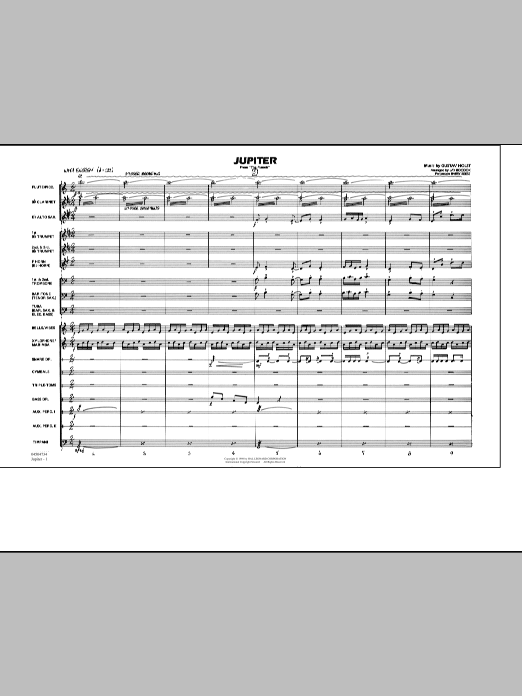

Jupiter (from "The Planets"): Marching Band Conductor Score & Parts
By Gustav Holst / Arranged by Jay Bocook / Arranged by Barry Reese
Grade: 4
Item: 35-PK00123166
$75.00
Pickup currently not available
Buy Extra Parts (Digital PDF Download)
Parts Added to Cart!
Description
Here is the classic 1986 Jay Bocook arrangement of the powerful Holst masterpiece from "The Planets." Exquisite writing for maximum impact on the competition field!


Jupiter (from "The Planets"): Marching Band Conductor Score & Parts isn't in MakeMusic Cloud just yet...but it could be. Let us know you'd like to see it, and you'll help shape what comes next. In the meantime, start a free trial and dive into thousands of interactive titles your students can play along with today.
Request This Title
Tell us you want it.
Start Your Free Trial
Explore everything that's ready to play right now.
Sample Audio
No sample audio found.
Sample Video
No sample videos found.
Additional Details
Publisher:
Hal Leonard
SKU:
35-PK00123166
More about this title
About the Composer: Gustav Holst
Gustav Holst (1874-1934) was a British composer whose orchestral suite "The Planets" stands as one of the most performed classical works worldwide. His gift for orchestration and ability to craft sweeping, memorable melodies made him a natural choice for band arrangers seeking accessible yet substantial repertoire. Holst's music education philosophy emphasized clarity and emotional directness, principles that shine through in every arrangement of his work.
Why we love this
Bocook's arrangement preserves every ounce of Holst's majestic writing while making it viable for the marching field. The part writing stays clean enough for developing sections to execute musically, yet the overall effect remains undeniably powerful. When this hits the judges' box, they hear sophistication, not compromise.
What to expect
Jupiter radiates majesty and confidence from the opening moment. The writing swells with unmistakable grandeur, carrying the listener through lyrical passages and triumphant climaxes. There's an elegant restraint in the orchestration that prevents bombast, instead building toward moments of genuine power that feel earned.
Who it's for
Grade 4 bands with solid technical foundation and maturity in sound will thrive with this arrangement. You need reliable section leaders and players who understand phrasing, but the part writing remains accessible to engaged student musicians. This works equally well for competitive programs and concert bands seeking a signature showpiece.
How to get the most out of it
- Build the dynamic arc gradually through the first statement. Resist the urge to rush early peaks; save the true fortissimo for the second half where Holst's original orchestration demands it.
- Attend closely to the transition between sections. The shift in harmonic rhythm can blur if brass players race ahead, so lock the tempo through every modulation.
- Balance the melody across your front ensemble and pit. This isn't a piece where one section carries the tune; the orchestration asks for blended, unified sound.
- Shape the final cadence with discipline. The ending should feel inevitable and massive, not abrupt. Give yourself time in rehearsal to refine this moment.
How to use it
Position this as a climactic closer or the centerpiece of a program built around classical themes. It pairs well with other Holst selections or with contemporary pieces that demand similar technical control and musical maturity. Spring competition season or festival appearances are ideal contexts where judges and audiences expect polished, substantial repertoire.
Skills your students will build
- Sustained dynamic control across multi-phrase sections
- Balance and blend in thick harmonic textures
- Executing clean harmonic transitions and key changes
- Phrasing and shape in classical-style melodic material
- Precision with rhythmic profiles across all sections simultaneously