
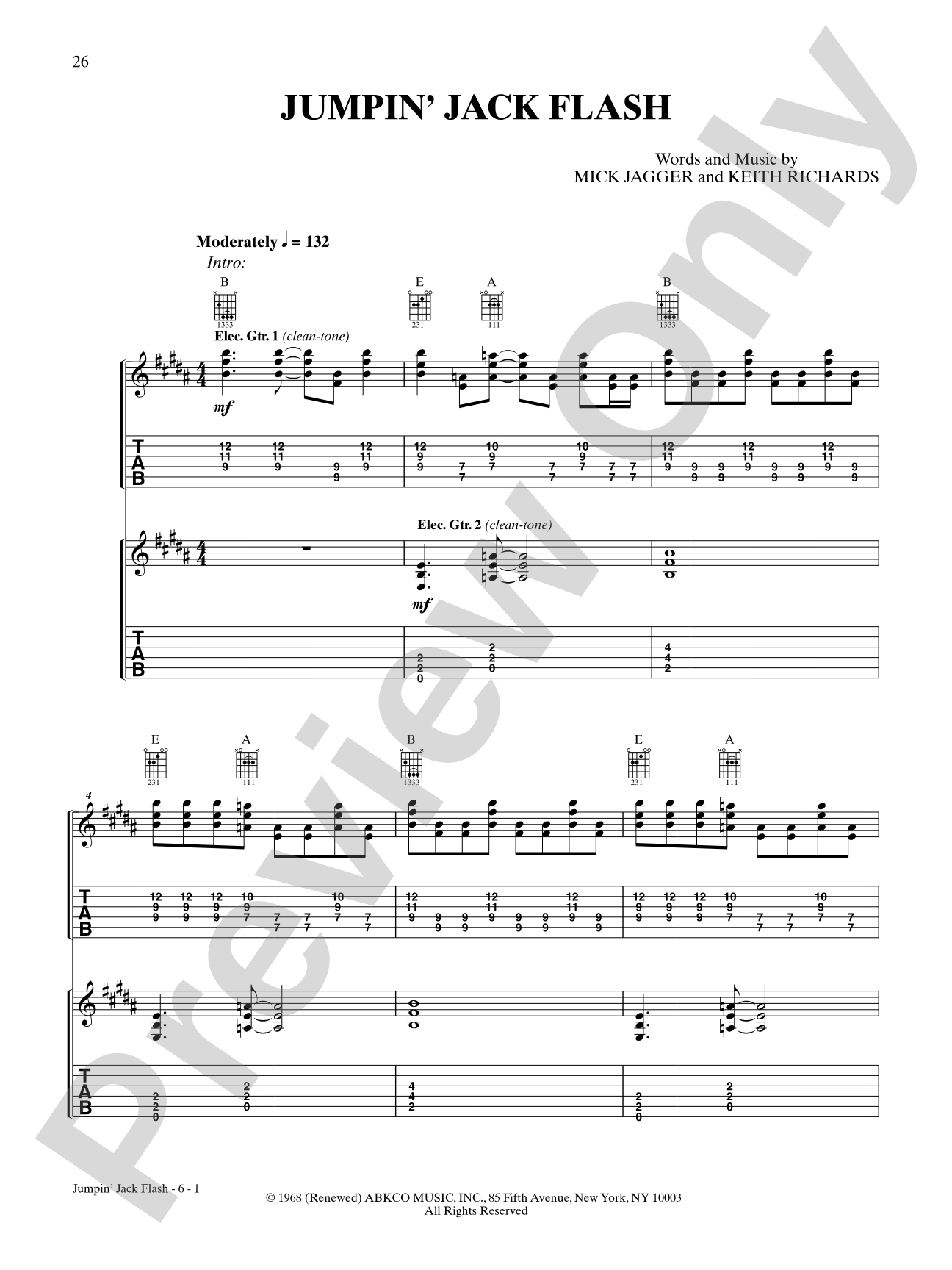
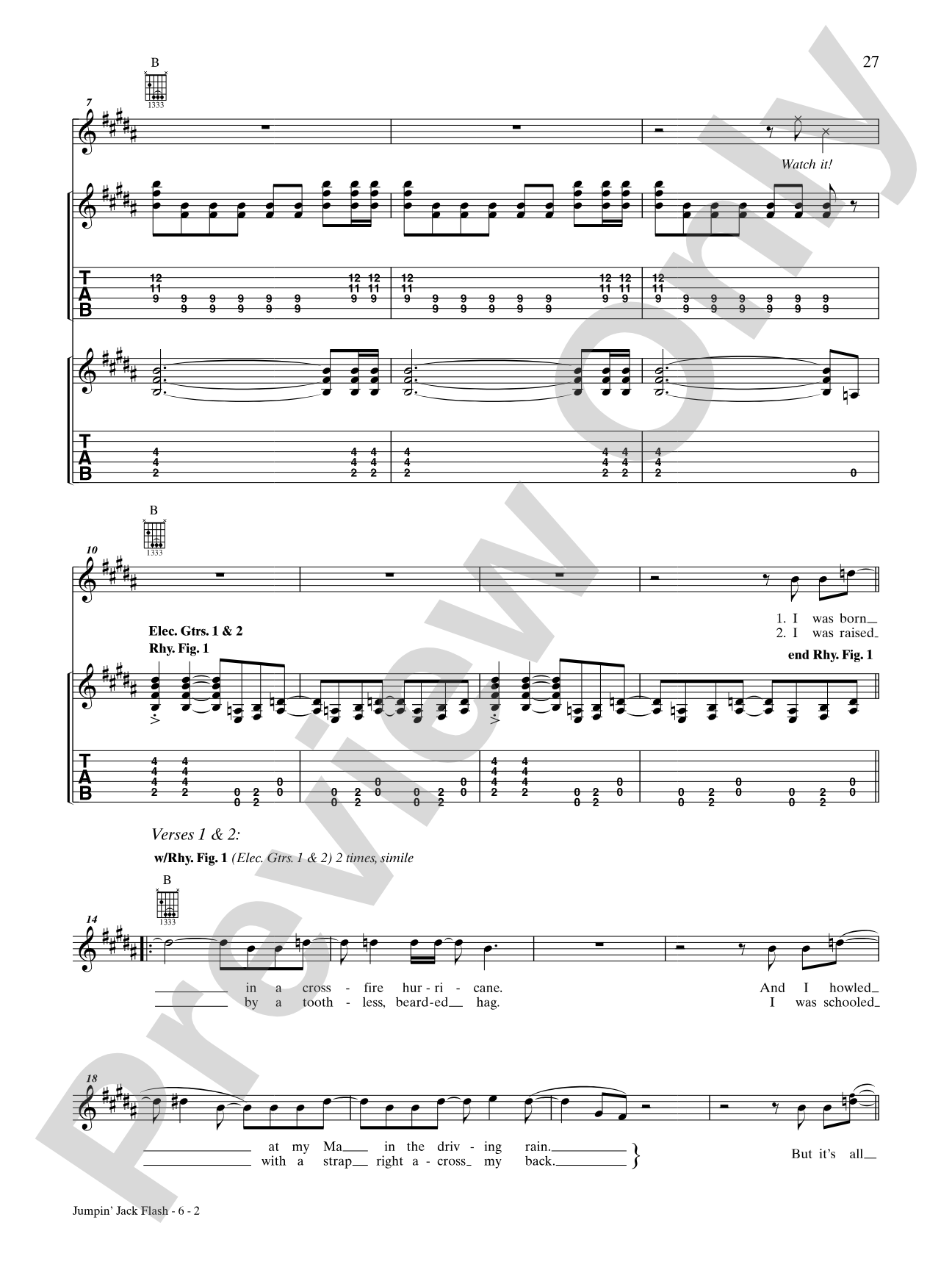

Jumpin' Jack Flash: Interm./Easy Guitar TAB
12 Great Songs from Classic to Modern Rock
Item: 00-PS-0011971
$5.99
Pickup currently not available
Description
Rock and Pop Guitar is designed for your total enjoyment. Each song's arrangement includes the guitar parts played on the original recording, simplified just enough to keep it fun and musically satisfying. Titles: Beat It (Michael Jackson) * China Grove (The Doobie Brothers) * Do You Want to Know a Secret (The Beatles) * Don't Stop Believin' (Journey) * How You Remind Me (Nickelback) * Jumpin' Jack Flash (The Rolling Stones) * Layla (Unplugged version) (Eric Clapton) * Lyin' Eyes (Eagles) * Panama (Van Halen) * Running on Empty (Jackson Browne) * Stayin' Alive (Bee Gees) * Wild Night (Van Morrison).


Jumpin' Jack Flash: Interm./Easy Guitar TAB isn't in MakeMusic Cloud just yet...but it could be. Let us know you'd like to see it, and you'll help shape what comes next. In the meantime, start a free trial and dive into thousands of interactive titles your students can play along with today.
Request This Title
Tell us you want it.
Start Your Free Trial
Explore everything that's ready to play right now.
Sample Audio
No sample audio found.
Sample Video
No sample videos found.
Additional Details
Series:
Just for Fun
Publisher:
Alfred Music
Page Count:
72
SKU:
00-PS-0011971
More about this title
About the Composer: Mick Jagger
Mick Jagger co-wrote 'Jumpin' Jack Flash' with Keith Richards, one of rock music's most prolific and influential songwriting partnerships. The song, released in 1968, became a defining moment in The Rolling Stones' catalog and established Jagger as a frontman capable of delivering raw, energetic performances that captivated generations of musicians and listeners.
Jagger's songwriting approach prioritizes memorable hooks, driving rhythms, and lyrics that speak to universal themes of resilience and attitude. His work has shaped rock music education and remains a touchstone for understanding how strong melodic ideas and instrumental grooves work together to create enduring popular music.
Why we love this
This collection pairs iconic songs that students actually want to play with arrangements that respect the original recordings while remaining genuinely playable at the intermediate level. The mix of artists and styles means every student finds something that speaks to them, whether they're drawn to classic rock, pop hooks, or funk grooves. Building repertoire from real songs keeps motivation high and demonstrates that guitar skills directly unlock the music students love.
What to expect
Opening these arrangements feels like getting the keys to the actual recordings. You're not playing simplified versions that sound like covers of covers; instead, you're learning the real guitar lines with just enough adaptation to make them manageable. Each song carries its original energy and attitude while building your technique through authentic, satisfying playing.
Who it's for
Intermediate and early-intermediate guitarists who know basic open chords and simple progressions and are ready to tackle songs with more rhythmic variety and technique demands. Students who learn better when working toward songs they recognize will find this collection especially motivating. This folio serves both private lesson students working on contemporary repertoire and ensemble guitarists building skills across multiple styles.
How to get the most out of it
- Focus on locking the rhythm with steady eighth-note or sixteenth-note patterns before adding dynamics. These songs live or die by their groove, so nail the pocket first and embellish later.
- Listen closely to the original recordings and identify which guitar lines anchor the song versus which add texture. This distinction between primary parts and fills becomes clear when you know what you're aiming for.
- Work through TAB sections slowly to internalize the fretboard geography before building tempo. Many of these songs sit in comfortable positions once you map them, but rushing the learning curve creates sloppy execution.
- Pay attention to muting and articulation marks in the TAB. The difference between a crisp, percussive attack and a sustained note often determines whether your performance sounds polished or muddy.
How to use it
Assign individual songs from this collection as lesson repertoire that keeps students engaged between technical exercises and more formal study pieces. Use the variety in styles to teach different rhythmic feels and song structures across a semester. For ensemble programs, select 2-3 pieces to build a student guitar ensemble concert that celebrates recognizable, high-energy arrangements.
Skills your students will build
- Reading guitar TAB with attention to timing, dynamics, and articulation marks
- Executing consistent eighth-note and sixteenth-note rhythmic patterns in rock and pop contexts
- Translating fretboard positions for power chords, barre chords, and open chord variations
- Balancing rhythmic precision with musical phrasing and feel
- Identifying and executing percussive muting techniques in funk and rock grooves
- Adapting picking patterns and stroke direction to match original recordings