
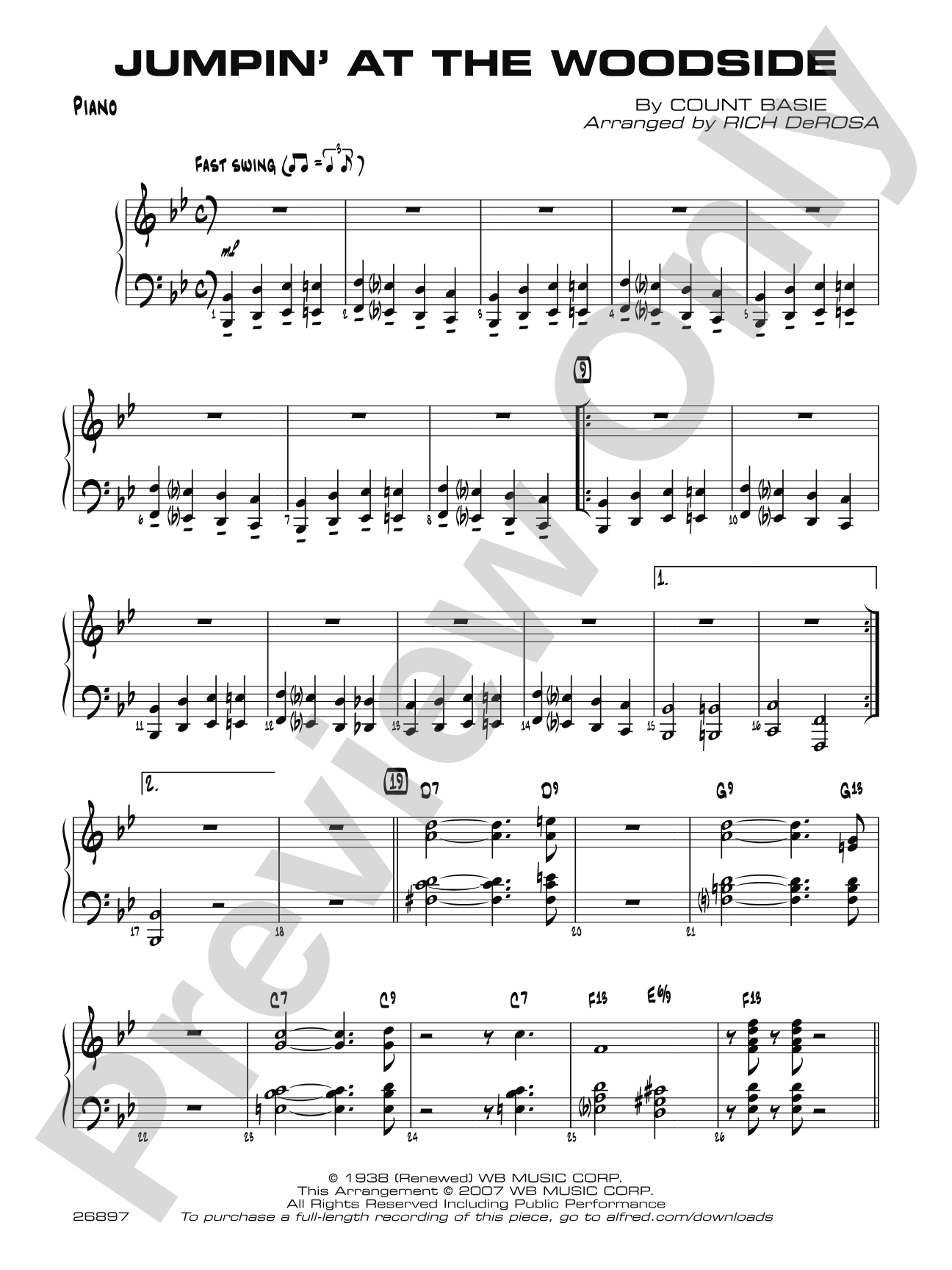
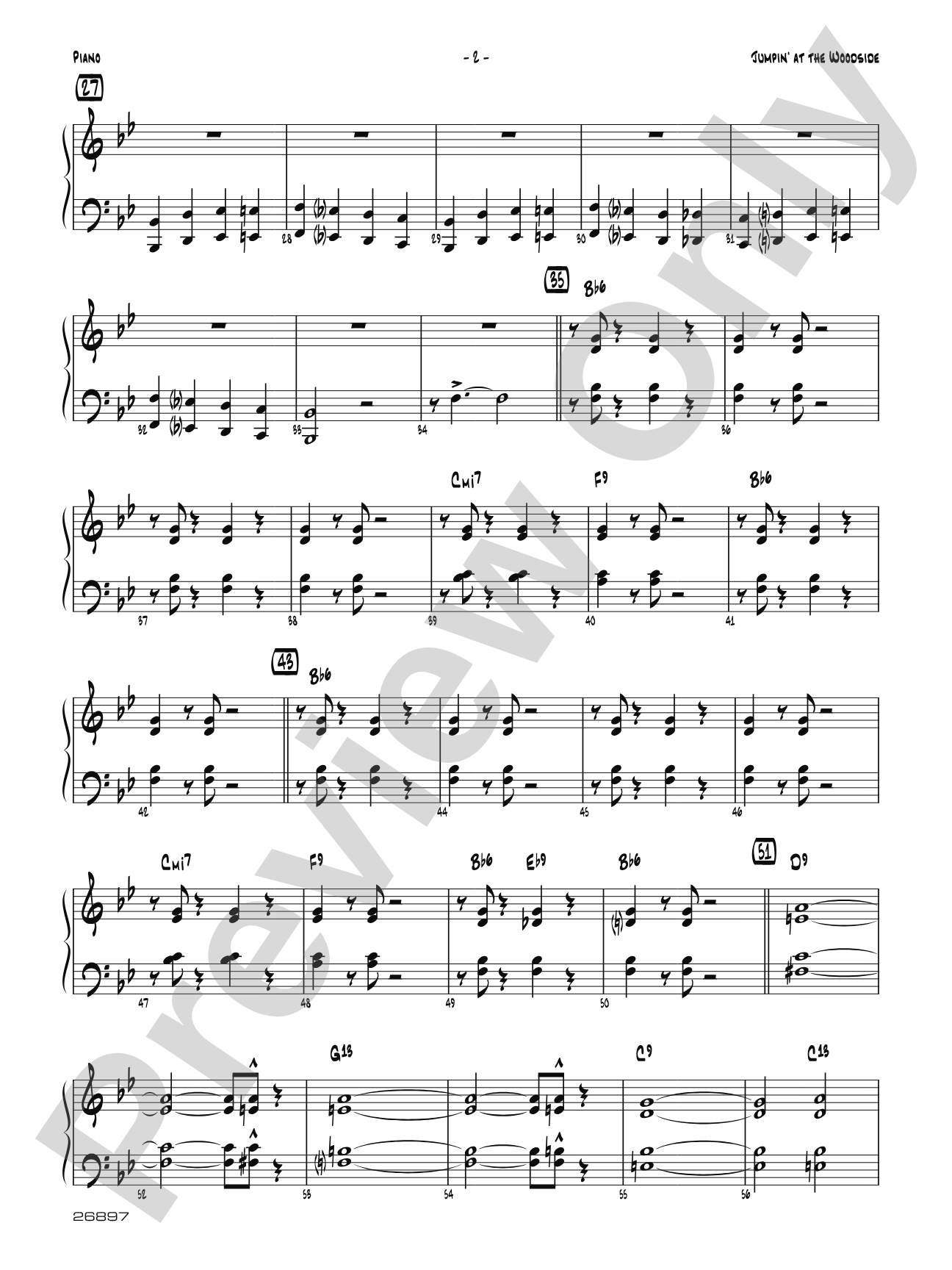

Jumpin' at the Woodside: Piano Accompaniment
By Count Basie / arr. Rich DeRosa
Grade: 2 (Medium Easy)
Item: 00-PC-0017124_K
$3.00
Pickup currently not available
Description
One of Count Basie's finest! Rich DeRosa keeps this one swinging all the way and included two optional tag endings to keep the Basie style intact. Solos are written out for piano, tenor sax, trumpet and trombone. Lead trumpet range is to written G on top of the staff with an A on the optional tag ending. It builds and builds! This title is available in MakeMusic Cloud.


Don't just read it, hear it, play along with it, and watch your students grow with it. In MakeMusic Cloud, Jumpin' at the Woodside: Piano Accompaniment comes alive with professional accompaniment, adjustable tempo, and built-in practice tools that turn solo practice into real progress.
Open in the Player
Jump straight in and assign it today.
Start Your Free Trial
Open this title and explore the full library in minutes.
Sample Audio
1
Audio File
--:--
0:00
0:00
Sample Video
Additional Details
Series:
Jazz for Young People Series
Publisher:
Alfred Music
Page Count:
108
SKU:
00-PC-0017124_K
More about this title
About the Composer: Count Basie
Count Basie (1904-1984) was a pianist and bandleader whose orchestra became one of the most influential forces in American jazz. His economical approach to the piano and his gift for orchestration created a sound that was instantly recognizable: propulsive, blues-rooted, and built on the interaction between rhythm section and horn sections. Basie's band became a training ground for generations of musicians and a model for how an ensemble could swing with precision and joy.
For music educators, Basie's legacy offers something essential: proof that sophistication and accessibility go hand in hand. His compositions and arrangements are built on clear musical ideas, strong grooves, and the kind of musicality that speaks across skill levels. Teaching young musicians through Basie's music means teaching them how to listen to each other, how to serve the groove, and how to find their voice within an ensemble.
Why we love this
This arrangement captures everything that made the Basie sound irresistible: momentum, humor, and the kind of swinging energy that makes young musicians sit up straighter. Mike Kamuf's setting respects the original while making it singable for developing players, and those two tag endings give you the flexibility to shape the ending to match your ensemble's energy on any given day.
What to expect
Propulsive and built to move. From the opening groove through the mounting intensity of the ensemble sections to those optional tag endings, this feels like a band that knows where it's going and invites the audience along for the ride. There's swagger here, but it's earned through musicianship, not attitude.
Who it's for
Grade 2 jazz ensembles with mixed experience levels. This title works for groups building their first jazz vocabulary, groups preparing for contest or festival, and groups who want to play repertoire that feels genuinely musical rather than just functional.
How to get the most out of it
- Establish the groove in the rhythm section first. The drums and bass set the pocket that everything else rides on; once that's solid, the horns will fall into place naturally.
- Balance the dynamics as the piece builds. Each section adds texture and intensity, but avoid early crescendos that leave nowhere to go later.
- Bring out the written solo lines (piano, tenor sax, trumpet, trombone) so listeners hear the conversation happening within the ensemble, not just the tutti passages.
- Choose your tag ending in rehearsal and commit to it. Consistency matters more than perfection; the ensemble needs to trust where the ending is going.
How to use it
Program this as a concert opener or mid-set energy booster. It's substantial enough to anchor a jazz concert set and accessible enough to work as part of a mixed ensemble concert. The optional tag endings also make it a natural choice for a festival appearance where you might want two different takes on the same piece.
Skills your students will build
- Reading jazz notation and slash chord symbols
- Playing in a swing feel with appropriate rhythmic subdivision
- Listening and responding to what other sections are playing in real time
- Balancing individual lines with ensemble blend
- Understanding how an ensemble builds intensity through texture and dynamics
- Playing written-out solos with phrasing and musicality