Jumpin' at the Woodside: Lead Sheet Digital Sheet Music

Jumpin' at the Woodside: Lead Sheet Digital Sheet Music

Count Basie

Item: 00-PS-0000326

Digital Download
$1.99
Description

Jumpin' at the Woodside: Lead Sheet Digital Sheet Music isn't in MakeMusic Cloud just yet...but it could be. Let us know you'd like to see it, and you'll help shape what comes next. In the meantime, start a free trial and dive into thousands of interactive titles your students can play along with today.

Sample Audio
No sample audio found.
Sample Video
Additional Details
SKU: 00-PS-0000326

More about this title

About the Artist: Count Basie

Count Basie led one of the most influential big bands of the swing era, earning his place as a cornerstone of American jazz history. His piano style, economical, swinging, and deeply rooted in the blues, shaped how generations of musicians approached rhythm section playing and ensemble cohesion.

Basie's orchestra became a laboratory for democratic big band arranging, where soloists thrived within tight ensemble writing. His approach to comping and his instinct for letting space do the work made him an essential reference point for understanding how rhythm sections drive jazz ensembles.

Why we love this

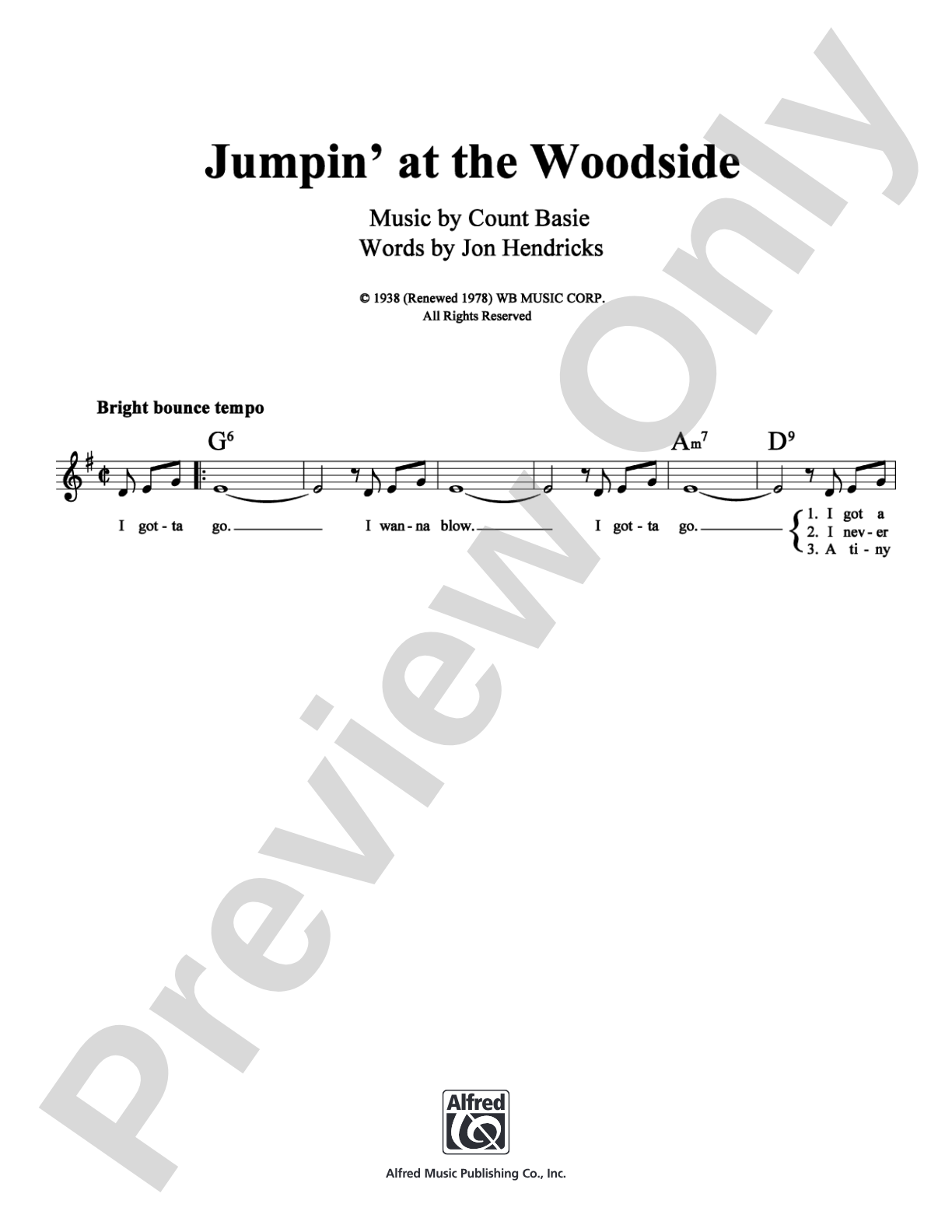
This lead sheet captures an essential piece of swing repertoire that players of all levels want to tackle. The melody is memorable and singable, the changes are clear without being oversimplified, and the groove is instantly recognizable. It's the kind of tune that gets students excited about jazz language while teaching them how strong melodic writing and solid harmonic foundation work together.

What to expect

A swinging, optimistic groove that invites you to settle in and stretch out. The changes move with confident clarity, never overstaying their welcome, while the melody lands with effortless elegance. There's joy in the air and room to explore, making every chorus feel like a conversation rather than a solo flight.

Who it's for

Jazz soloists (saxophone, trumpet, trombone, vibraphone) and pianists working on comping and improvisation, as well as singers developing their jazz vocabulary. Small ensemble directors can use this to teach ensemble listening and section cohesion. It works equally well for upper-level high school jazz programs and college jazz courses.

How to get the most out of it

  • Anchor the rhythm section groove in the back half of the beat rather than on top of it; this is where the Basie swing lives.
  • Keep ensemble stabs tight and crisp, especially in the head arrangement, precision here makes the soloists sound even looser.
  • Balance solo space generously; the arrangement works best when players know exactly how many choruses they have and commit fully to their section.
  • Let the melody breathe in the A section; this tune doesn't need rushing, and the bluesy phrasing matters more than perfect alignment.

How to use it

Program this in a jazz concert as a small group feature or as a teaching piece in a sectional where you can focus on comping and solo trading. It pairs well with other Basie standards and works as a bridge between beginner and intermediate jazz literature, helping students understand the difference between reading a tune and internalizing its feel.

Skills your students will build

  • Swing eighth-note subdivision and rhythmic phrasing
  • Chord-scale relationships in a ii-V-I framework
  • Improvisation over clear, repeating harmonic progressions
  • Listening and responding to ensemble partners while soloing
  • Building narrative arc across multiple choruses
  • Distinguishing melody from accompaniment roles in ensemble playing

You May Also Like