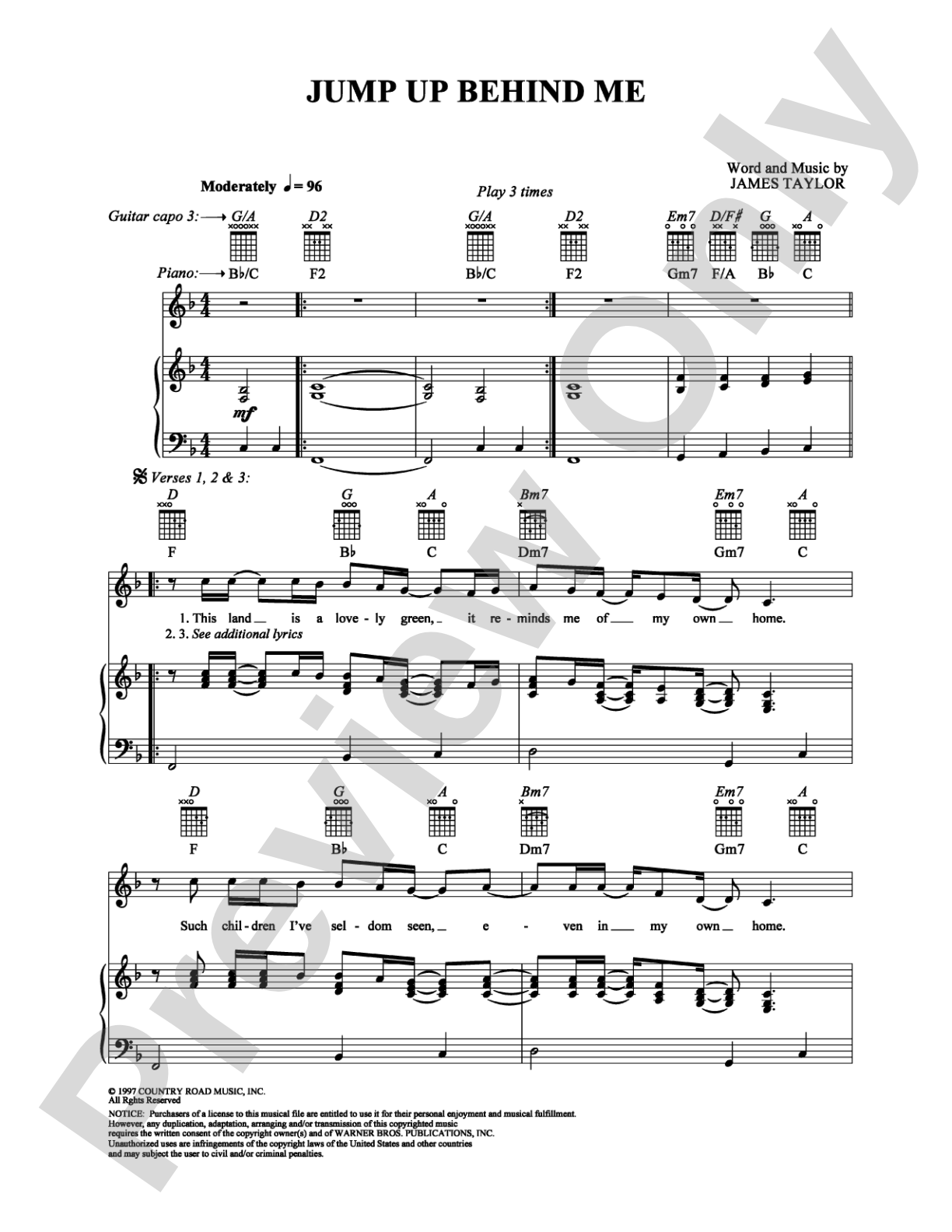
Jump Up Behind Me: Piano/Vocal/Chords Digital Sheet Music

Jump Up Behind Me: Piano/Vocal/Chords Digital Sheet Music

James Taylor

Item: 00-PS-0004693

Digital Download
$3.99
Description

Jump Up Behind Me: Piano/Vocal/Chords Digital Sheet Music isn't in MakeMusic Cloud just yet...but it could be. Let us know you'd like to see it, and you'll help shape what comes next. In the meantime, start a free trial and dive into thousands of interactive titles your students can play along with today.

Sample Audio
No sample audio found.
Sample Video
Additional Details
SKU: 00-PS-0004693

More about this title

About the Artist: James Taylor

James Taylor stands as one of the most influential singer-songwriters of the past five decades, known for his intimate vocal delivery and sophisticated acoustic arrangements. His career spans from the early 1970s to the present, marked by Grammy Awards, induction into the Rock and Roll Hall of Fame, and a catalog that has shaped how generations of musicians approach melody, lyrical storytelling, and arrangement.

Why we love this

This song gives your singers and pianists a chance to work with genuine adult contemporary repertoire that respects both the vocal line and the harmonic language underneath it. The piano/vocal/chords format makes it accessible whether you're preparing students for recital, working in a jazz or contemporary ensemble, or building confidence in sight-reading jazz voicings alongside a melody.

What to expect

Warm and inviting, with an easy stride that feels both personal and sophisticated. The song sits in that sweet spot between pop accessibility and the harmonic complexity that keeps musicians engaged.

Who it's for

Pianists and vocalists preparing contemporary recital material, singers in jazz or pop ensembles, and advanced high school or college students building facility with jazz-influenced harmonies and adult contemporary repertoire.

How to get the most out of it

  • Balance the vocal line so it sits naturally above the chord changes rather than fighting against them; Taylor's phrasing tends to be conversational, not operatic.
  • Pay attention to the relationship between the pianist's comping patterns and the singer's rhythmic placement; small shifts in when the vocal enters against the harmonic rhythm can shift the whole feel.
  • Explore the dynamic arc across the form; this song rewards subtle shaping rather than dramatic volume swings.

How to use it

Ideal for spring or end-of-year recitals where you want to include contemporary material alongside classical repertoire. Works well as a showcase piece for a jazz or contemporary ensemble, or as part of a singer-pianist recital that spans multiple genres and eras.

Skills your students will build

  • Reading jazz voicings and extended chord symbols
  • Balancing melody and accompaniment in contemporary arrangements
  • Interpreting vocal phrasing in a rhythmically sophisticated harmonic context
  • Accompanying singers with sensitivity to their interpretive choices

You May Also Like