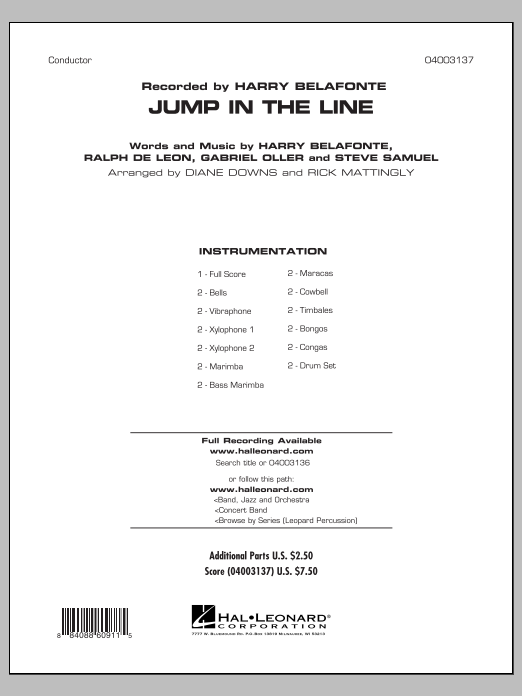
Harry Belafonte emerged in the 1950s as a transformative figure in American popular music, bringing Caribbean and folk traditions into the mainstream through his distinctive baritone and sophisticated arrangements. His work transcended entertainment; he used music as a vehicle for social consciousness and civil rights advocacy, proving that commercially successful music could carry meaningful cultural weight.
Why we love this
Diane Downs has crafted an arrangement that captures the infectious energy and syncopated swagger of this classic without losing its character in the concert band texture. It's the kind of piece that sounds effortless on the stand but generates genuine excitement in performance, giving your students an opportunity to swing and groove with genuine style rather than manufactured enthusiasm.
What to expect
Bright, propulsive, and irresistibly danceable. The piece has that Caribbean sun-on-your-face quality that makes students want to move, paired with the snappy punch of big band energy that keeps everything crisp and articulate.
Who it's for
Any director seeking a Grade 3 piece with genuine infectious joy and cross-cultural musical content. It works for concert settings where you want the audience to leave smiling, or as a teaching tool for understanding calypso rhythm and swing in a contemporary context.
How to get the most out of it
Lock the clave rhythm into your rhythm section from the first rehearsal. This song lives and dies by the steadiness of that foundational pattern.
Shape the phrasing with a light touch. The calypso origins demand rhythmic precision, but the Cherry Poppin' Daddies' big band arrangements remind us that swing and space matter too.
Bring out the countermelodies in the lower woodwinds and brass; they're what give this arrangement its textural interest and keep it from sounding thin.
Keep the tempo energetic but controlledConsider 120 bpm as your minimum; below that, the piece loses its buoyancy.
How to use it
This is your spring concert opener or closer depending on your mood. It pairs beautifully with other folk-based or world music arrangements, and it's compact enough (2:30) to anchor a thematic program about cultural crossroads in American music without consuming your rehearsal time.
Skills your students will build
Syncopated rhythm reading in a pop/calypso idiom
Swing articulation and phrasing
Clave rhythm recognition and internalization
Balancing ensemble texture with clear melodic lines
Maintaining groove under tempo pressure
You May Also Like
Scan to Complete Your Purchase
Use your phone's camera to scan the code below
You'll log in on your phone and the order will be added to your account