Jubilee Fanfare: Violoncello Sheet Music Preview

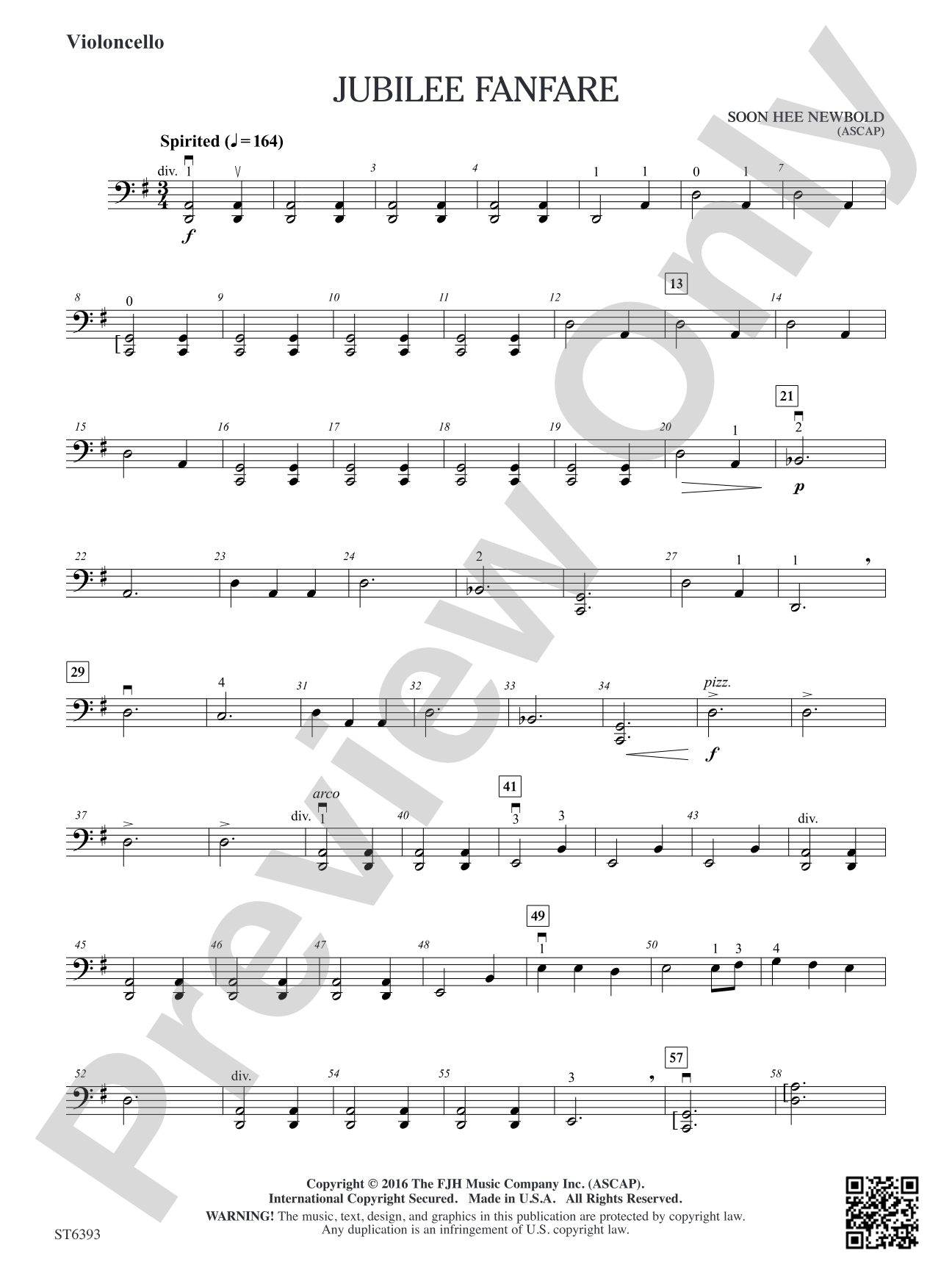
Jubilee Fanfare: Violoncello

By Soon Hee Newbold

Grade: 1.5

Item: 98-PC-DST6393_VC1

Digital Download
$7.00
Description
Experience the sounds and celebrations of an ancient festival in this fantastic concert opener. Inspired by Celtic dances and the drones of an ancient stringed instrument called the hurdy-gurdy, this energetic work will be a huge hit with your students and audience.

Don't just read it, hear it, play along with it, and watch your students grow with it. In MakeMusic Cloud, Jubilee Fanfare: Violoncello comes alive with professional accompaniment, adjustable tempo, and built-in practice tools that turn solo practice into real progress.

Sample Audio
0:00
0:00
Sample Video
Additional Details
Series: FJH Beginning Strings
Publisher: The FJH Music Company, Inc.
SKU: 98-PC-DST6393_VC1

More about this title

About the Composer: Soon Hee Newbold

Soon Hee Newbold

Soon Hee Newbold draws on a lifetime of musical experience across continents to craft works that speak to ensembles at every level. Beginning her training at age five on piano and violin at seven, she performed as a concert artist internationally before establishing herself as a composer whose music now reaches stages from Carnegie Hall to classrooms worldwide, including the Kennedy Center, Lincoln Center, and venues across The Netherlands, Belgium, Australia, Indonesia, Singapore, and China.

Newbold's compositional voice is shaped by her deep engagement with world music traditions and cultural diversity. Her film and recording work in Hollywood complements her concert compositions, while her frequent appearances as a guest clinician and keynote speaker reflect her commitment to music education at all levels. Her pieces have been performed by professional symphonies down to beginning elementary ensembles, each arrangement thoughtfully crafted for its ensemble.

Why we love this

Newbold delivers exactly what a beginning string orchestra needs for a concert opener: infectious energy, clear textural interest, and authentic musical character without technical overwhelm. The Celtic and hurdy-gurdy influences give the piece distinctive color that feels fresh and engaging rather than generic, and the Grade 1.5 scoring respects what young players can accomplish while never insulting their musicality.

What to expect

Jubilee Fanfare captures the spirited abandon of festive celebration, with driving rhythms and soaring melodic lines that echo Celtic traditions. The foundation of the hurdy-gurdy drone grounds the piece in something ancient and resonant, while the dance rhythms overhead create a sense of joy and vitality that builds throughout.

Who it's for

Beginning to early intermediate string orchestras and youth ensembles seeking a concert opener with real personality and immediate audience appeal. The Grade 1.5 level makes it accessible for first-year students while remaining engaging for mixed-ability groups.

How to get the most out of it

  • Lean into the drone sections to establish the hurdy-gurdy character; ask lower strings to shape these passages as if they are sustaining a single, breathing instrument rather than playing isolated notes.
  • Balance the Celtic melodic material so it cuts through clearly over the accompaniment without forcing; the melody line should feel naturally prominent, not artificially pushed.
  • Mark the ensemble entry points clearly in rehearsal and use those moments to reset intonation and rhythmic alignment, especially as the energy builds.

How to use it

Use this as an energizing first piece on a concert to set an immediate tone of celebration and engagement with your audience. It pairs well with contrasting repertoire later in the program and works equally effectively for festivals, contests, and community performances where you want to showcase your ensemble's musicality without requiring advanced technical demands.

Skills your students will build

  • Playing sustained drone accompaniment with rhythmic precision and tonal consistency
  • Balancing melody and accompaniment within a single section
  • Responding to dynamic and stylistic cues inspired by non-Western musical traditions
  • Building ensemble awareness across string voices at faster tempos

You May Also Like