

Jubilate Deo: SATB Choral Octavo
By Jay Althouse
Item: 00-PO-0001769
$1.85
Minimum order quantity: 20 copies
Pickup currently not available
Description
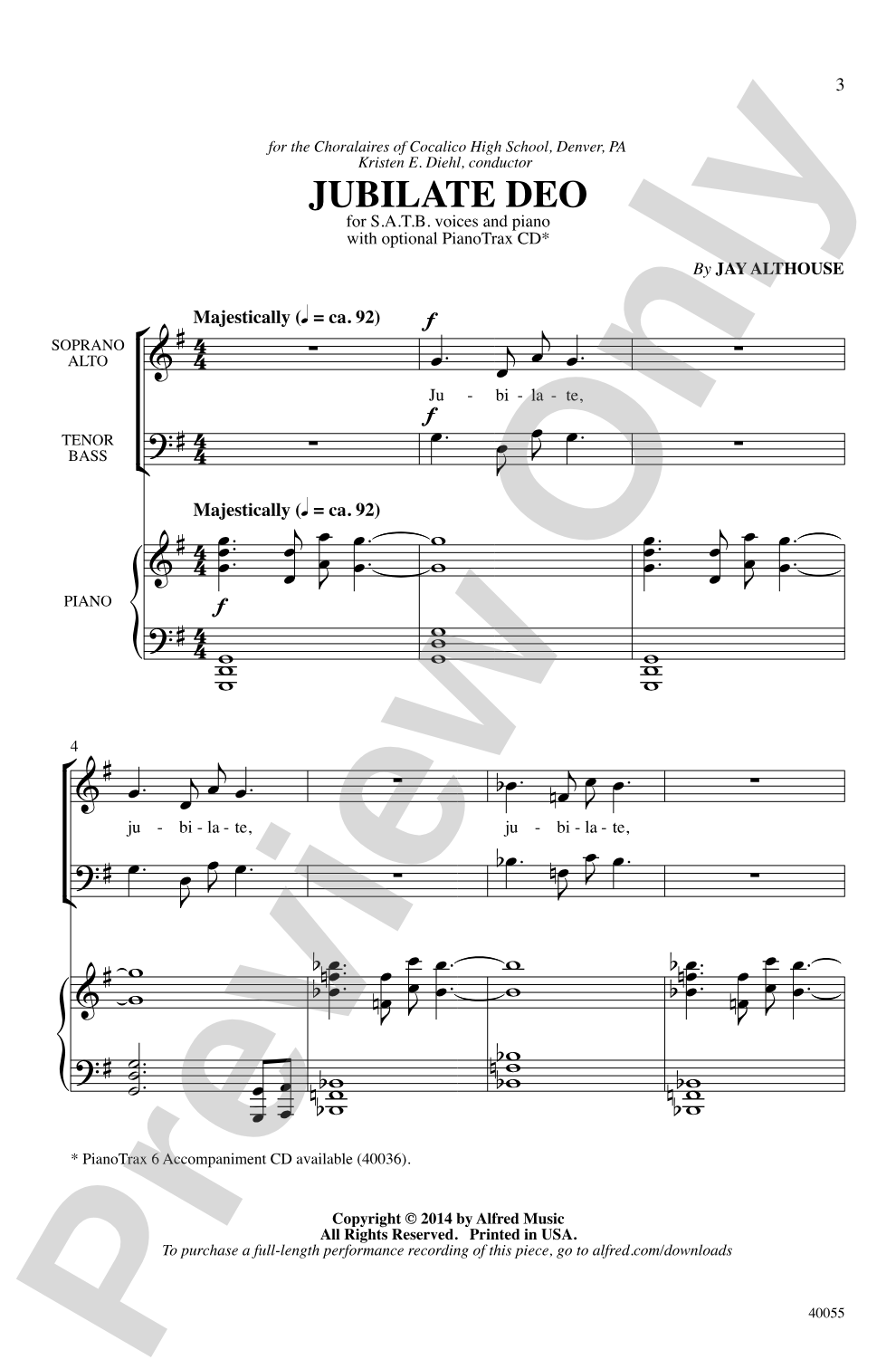
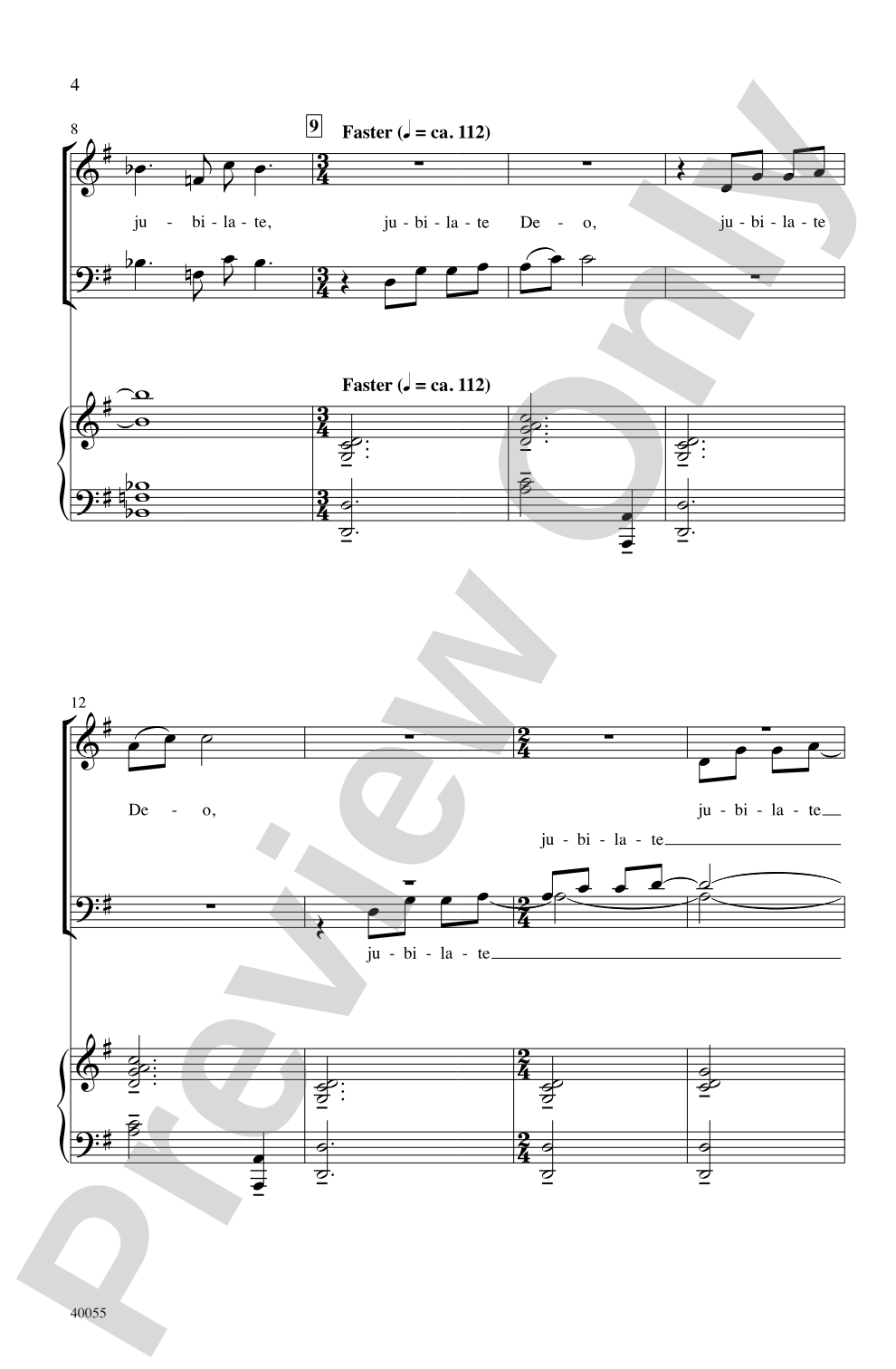
A majestic fanfare provides the glorious introduction and triumphant conclusion to this exciting concert work. At the heart of the piece, buoyant vocal phrases glide over a percussive piano accompaniment. A joyful Latin setting.


Jubilate Deo: SATB Choral Octavo isn't in MakeMusic Cloud just yet...but it could be. Let us know you'd like to see it, and you'll help shape what comes next. In the meantime, start a free trial and dive into thousands of interactive titles your students can play along with today.
Request This Title
Tell us you want it.
Start Your Free Trial
Explore everything that's ready to play right now.
Sample Audio
1
Audio File
--:--
0:00
0:00
Sample Video
No sample videos found.
Additional Details
Series:
Alfred Choral Designs
Publisher:
Alfred Music
Page Count:
12
SKU:
00-PO-0001769
More about this title
About the Composer: Jay Althouse

Jay Althouse holds degrees in Music Education and Music from Indiana University of Pennsylvania, where he earned the Distinguished Alumni award. Early in his career, he spent eight years managing rights and licensing for a major educational music publisher and served on the Executive Board of the Music Publishers Association of America.
Althouse has established himself as a prolific composer with more than 800 choral works in print across all levels. His compositions are performed regularly throughout the English-speaking world, and he receives consistent recognition from ASCAP for his contributions to standard choral repertoire. Beyond composition, he has co-written children's musicals with Sally K. Albrecht, compiled influential vocal solo collections, and authored numerous educational resources including The Complete Choral Warm-up Book and Accent on Composers. His work I Hear America Singing, co-written with Albrecht, was performed by the San Francisco Girls and Boys Choirs at President Barack Obama's inauguration in 2009.
Why we love this
Althouse writes choral music that sounds effortless to perform. The Latin text grounds this piece in accessible sacred tradition, while the fanfare bookends give it real concert presence without requiring elaborate staging or extended rehearsal time. Directors consistently choose his work because the musicality comes through immediately, and singers enjoy the buoyant character of the middle section.
What to expect
Jubilate Deo opens with brass-like brilliance and settles into a celebratory Latin text that feels both solemn and joyful. The piano accompaniment has a rhythmic vitality that keeps the piece moving forward, and the vocal lines float over it with ease. The closing fanfare returns you to that moment of triumph, leaving the audience with a sense of genuine jubilation.
Who it's for
This octavo works beautifully for intermediate to advanced SATB choirs seeking a sacred work with genuine fanfare and energy. It suits both concert settings and liturgical contexts, and the straightforward vocal writing makes it accessible even for choirs with limited soprano or alto depth.
How to get the most out of it
- Balance the choir's engagement with the piano accompaniment. The percussive quality of the keyboard part should punch through without overwhelming the vocal line. Rehearse sections with the piano playing forte to ensure singers commit to their phrases with confidence.
- Shape the opening fanfare as a single architectural moment. Even though it returns at the conclusion, treat the introduction with intention and clarity so the return feels earned and triumphant rather than merely repeated.
- Keep the Latin text clean and precise. Althouse's phrasing sits naturally over the accompaniment, but sloppy diction will undercut the joyful character. Spend rehearsal time on vowel consistency across the SATB parts.
- Bring out the buoyant quality of the vocal writing by resisting the urge to slow down during the middle section. The lightness of the accompaniment suggests a brisk, energetic tempo that serves the festive mood.
How to use it
Open a concert with this piece to establish energy and joy from the first moment, or use it as a closer to send the audience out on a high note. It pairs well with other sacred works in a Lenten or Easter program, or stands alone as a vibrant concert opener that doesn't require extensive programming context. The 12-page length and straightforward voicing make it realistic to learn quickly alongside your core repertoire.
Skills your students will build
- Singing Latin text with accurate pronunciation and clear vowel production
- Balancing ensemble sound while maintaining individual phrase articulation over accompaniment
- Responding to rhythmic precision in the piano part to lock in ensemble unity
- Building confidence in fanfare-style vocal writing and sustained singing