Jubilant Fanfare: Mallets Sheet Music Preview

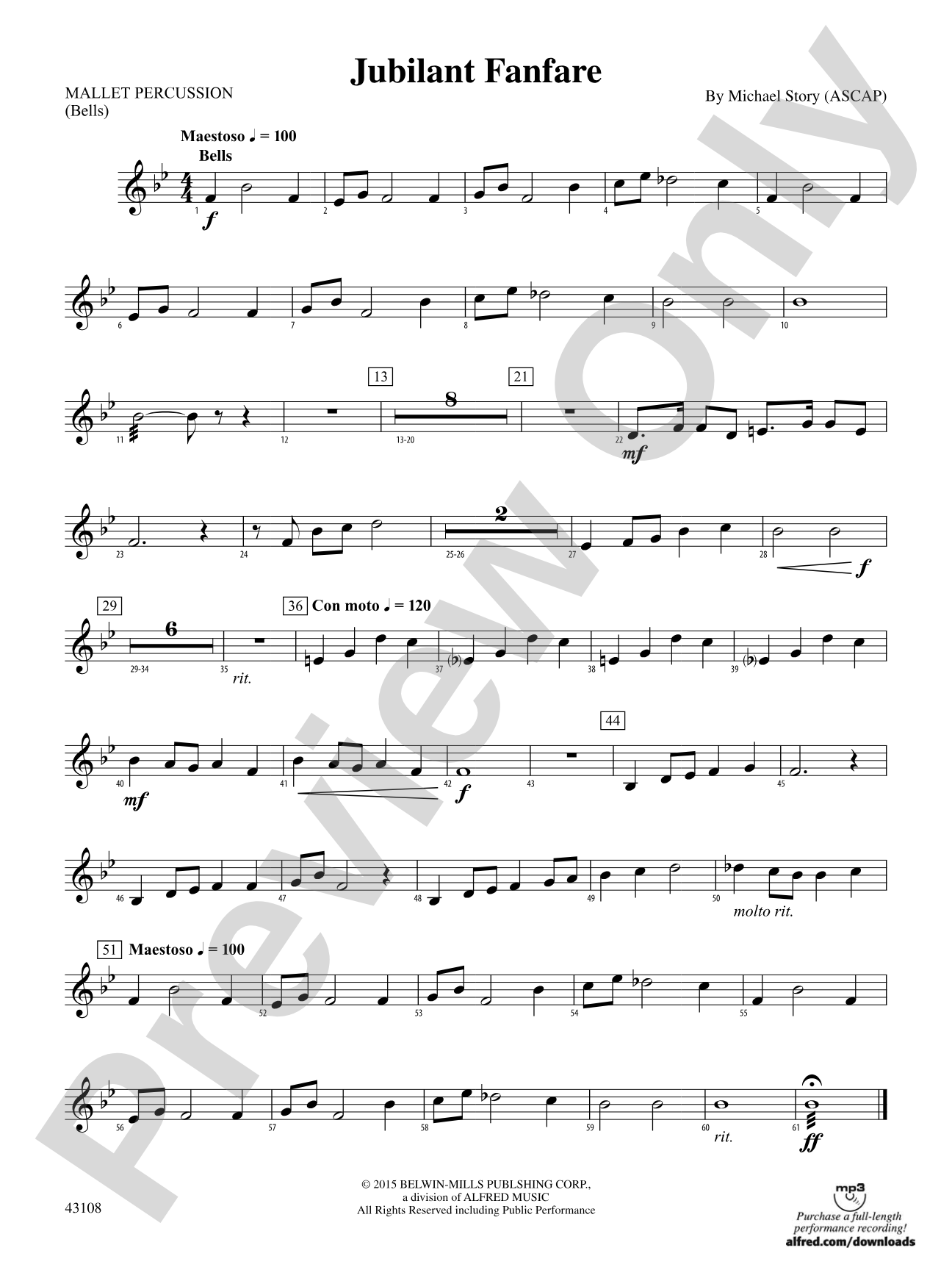
Jubilant Fanfare: Mallets

By Michael Story

Grade: 2 (Easy)

Item: 00-PC-0016759_M1

Digital Download
$3.00
Description
Bold and gallant, this original composition opens with a heralding noble tutti statement and is followed by a hero's theme that builds to a glorious conclusion. Carefully scored to insure success for the developing band, your audience will take note of this striking contemporary work. (2:30)

Don't just read it, hear it, play along with it, and watch your students grow with it. In MakeMusic Cloud, Jubilant Fanfare: Mallets comes alive with professional accompaniment, adjustable tempo, and built-in practice tools that turn solo practice into real progress.

Sample Audio
0:00
0:00
Sample Video
Additional Details
Series: Belwin Young Band
Publisher: Alfred Music
Page Count: 124
SKU: 00-PC-0016759_M1

More about this title

About the Composer: Michael Story

Michael Story has established himself as one of the most prolific and respected composers for young and developing bands. His catalog spans hundreds of works, from accessible Grade 1 pieces to advanced concert literature, all written with a keen understanding of the pedagogical needs and technical limitations of student ensembles. Story's gift lies in crafting music that sounds ambitious and polished while remaining genuinely playable for musicians still building their fundamental skills.

Beyond composition, Story has been deeply involved in music education through publishing, consultation, and direct work with school music programs. His pieces are standards in school band rooms across North America, prized by directors for their musical integrity and their ability to keep young players engaged and motivated.

Why we love this

Story delivers exactly what developing bands need in a concert opener: a piece that sounds impressive and confident without requiring virtuosic technique. The noble tutti opening and hero's theme give your ensemble immediate musical payoff, which builds player enthusiasm and convinces audiences that your band is worth listening to. At Grade 2, the scoring demands are realistic, yet the result feels genuinely professional.

What to expect

The piece radiates confidence from its first bold chord. A sense of pageantry and celebration runs through the writing, with the hero's theme carrying a lyrical warmth that contrasts beautifully against the fanfare-like opening. The trajectory builds to a conclusion that feels genuinely triumphant without overreaching beyond what the band can deliver.

Who it's for

Directors programming Grade 2 concert bands who need a substantial, musically satisfying opener or closer with genuine concert appeal. This work suits developing ensembles that have solid fundamentals in place and are ready to tackle scoring with multiple independent lines and dynamic contrast.

How to get the most out of it

  • Shape the opening heralding statement with clear dynamic contrast and unified articulation across all sections. This moment sets the tone for the entire piece, so invest in ensemble precision here.
  • Balance the hero's theme so the melody voice projects over accompaniment figures without asking other sections to retreat entirely. The theme should soar, but the harmonic support keeps it grounded.
  • Build momentum gradually through the developmental section toward the glorious conclusion. Avoid the temptation to rush; let the architecture of the music drive the forward motion.
  • Use the recorded accompaniment to lock ensemble cohesion, particularly during rhythmic unison passages where precision matters most to the overall effect.

How to use it

Perfect as a concert opener to establish energy and musicality right away, or as a closing statement that sends the audience home satisfied. It works equally well as a festival or contest selection where Grade 2 bands compete, offering the kind of well-crafted, contemporary work that adjudicators recognize as substantive rather than mere filler.

Skills your students will build

  • Unified articulation across full ensemble
  • Balancing melody against harmonic accompaniment
  • Building and sustaining dynamic control through longer phrases
  • Reading multiple independent melodic lines with rhythmic precision
  • Responding to conductor direction for tempo and style changes

You May Also Like