
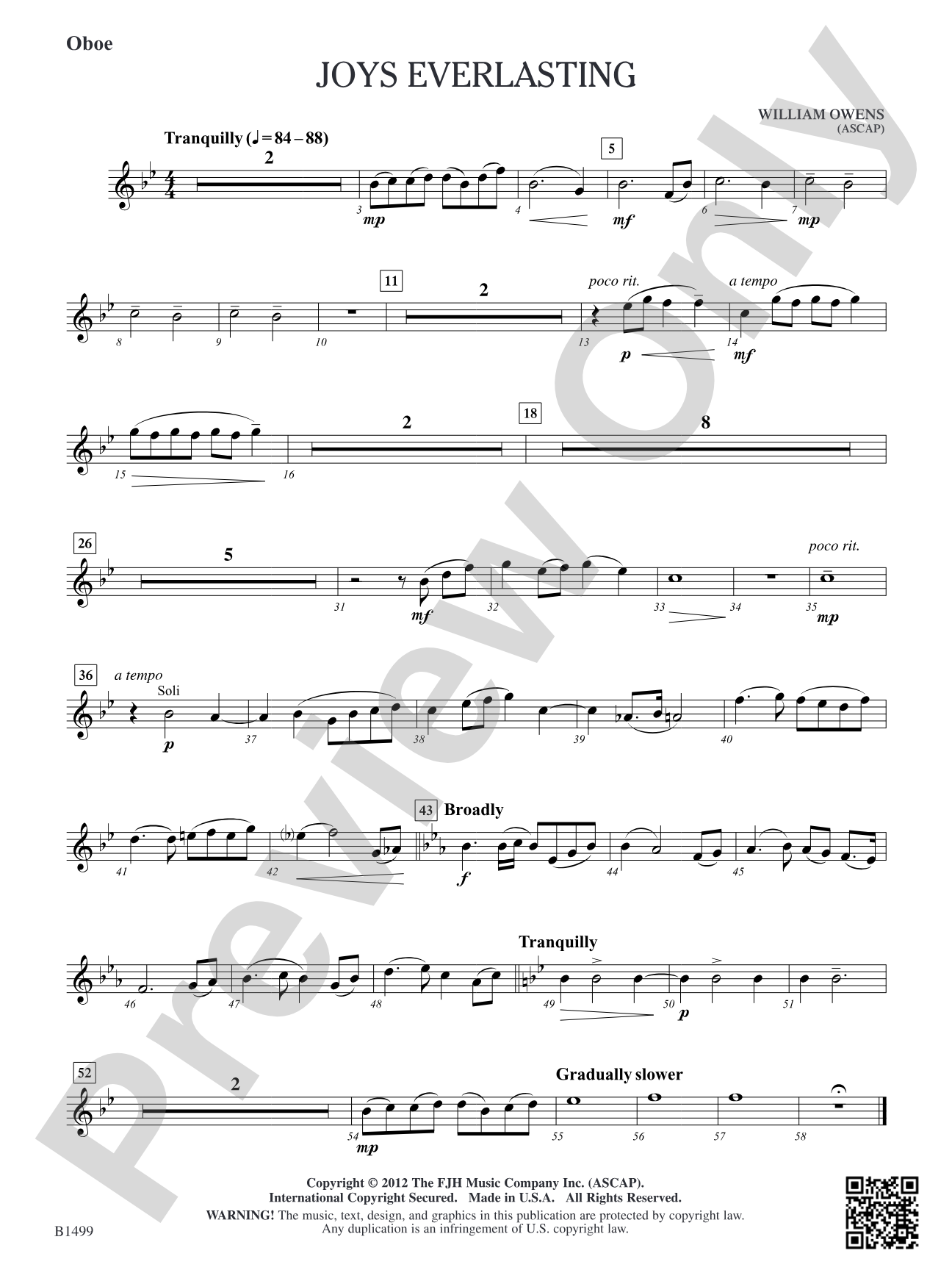

Joys Everlasting: Oboe
By William Owens
Grade: 2
Item: 98-PC-DB1499_O1
$7.00
Pickup currently not available
Description
Inspired by the sadness and tragedy of loss, this emotional work is calm and ever flowing. Beautiful melodies seamlessly meld into each other as the work moves toward a significant, yet unassuming climax that balances the delicate nature of the entire work. Absolutely beautiful and breathtaking.


Joys Everlasting: Oboe isn't in MakeMusic Cloud just yet...but it could be. Let us know you'd like to see it, and you'll help shape what comes next. In the meantime, start a free trial and dive into thousands of interactive titles your students can play along with today.
Request This Title
Tell us you want it.
Start Your Free Trial
Explore everything that's ready to play right now.
Sample Audio
1
Audio File
--:--
0:00
0:00
Sample Video
No sample videos found.
Additional Details
Series:
FJH Young Band
Publisher:
The FJH Music Company, Inc.
SKU:
98-PC-DB1499_O1
More about this title
About the Composer: William Owens
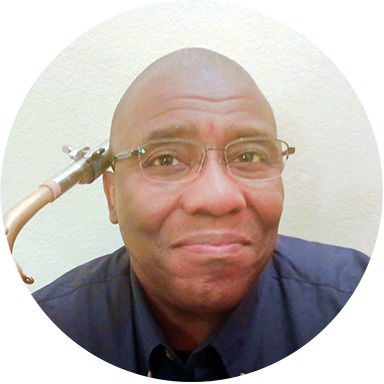
William Owens has built a distinctive career composing for young ensembles while maintaining a teaching and conducting presence across North America. A 1985 graduate of VanderCook College of Music, he spent three decades as a band director in Texas before retiring in 2014 to focus on composition and clinician work. His catalog now exceeds 300 published titles for concert band, string orchestra, and chamber ensembles.
Owens' music appears on festival and contest lists nationwide and has been featured in music education texts as exemplary young band literature. His practical compositional approach reflects deep classroom experience, earning him recognition from ASCAP, the American Bandmasters Association, and the Texas Bandmasters Association. He maintains professional engagement through Phi Beta Mu International and the Texas Music Educators Association.
Why we love this
Owens crafts Grade 2 band music that doesn't rely on technical complexity to convey emotional depth. Joys Everlasting demonstrates his gift for creating seamless melodic lines that players at this level can execute with genuine musicality, making it equally valuable for concert programs and festival play. The restrained climax respects the developmental stage of young musicians while delivering a moment of real artistic impact.
What to expect
The music unfolds with quiet reflection and gentle momentum, inviting players to engage deeply despite the Grade 2 technical level. As melodic ideas flow and interweave, a sense of understated significance builds toward a restrained but meaningful peak. The overall effect is meditative yet purposeful, breathing with the natural rhythms of contemplation.
Who it's for
Grade 2 concert bands seeking repertoire that balances accessibility with genuine emotional expression. Ensembles preparing for festivals, contests, or concert programs will find this work programs well alongside lighter fare while demonstrating their musicians' capacity for lyrical playing.
How to get the most out of it
- Balance the flowing melodic lines by listening across sections rather than playing to dynamic markings alone. Slight dynamic shaping within phrases creates the sense of continuous motion the score intends.
- Allow breath pauses to feel organic rather than strictly metered. Guide the ensemble to breathe together at phrase endings without losing the work's contemplative forward momentum.
- Shape the approach to the climax with patience. Resist the urge to add weight; instead, let clarity and ensemble unity convey the significance of this moment.
- Encourage woodwind players to sustain beautiful tone quality during longer passages. The emotional core of this work rests on sustained, singing lines rather than articulation.
How to use it
Position this work as the centerpiece of a concert that explores emotional range at the Grade 2 level. It pairs effectively with one uplifting or energetic piece before or after, creating a program that showcases ensemble maturity. Consider it for a spring concert finale that leaves the audience in a thoughtful frame of mind.
Skills your students will build
- Sustaining lyrical tone across longer melodic phrases
- Listening for balance and blend within flowing textures
- Shaping dynamic contours that follow musical meaning rather than extreme contrasts
- Executing ensemble unity during moments of emotional climax without technical compromise
- Responding to expressive conducting that prioritizes line and continuity over sectional precision