

Joyful Songs We Sing in Celebration: SAB Choral Octavo
By Wolfgang Amadeus Mozart / ed. and arr. Patrick M. Liebergen
Level: Easy
Item: 00-PO-0005252
$2.25
Minimum order quantity: 20 copies
Pickup currently not available
Related Items
Joyful Songs We Sing in Celebration: SAB Choral Octavo |
$2.25
|
View |
Description
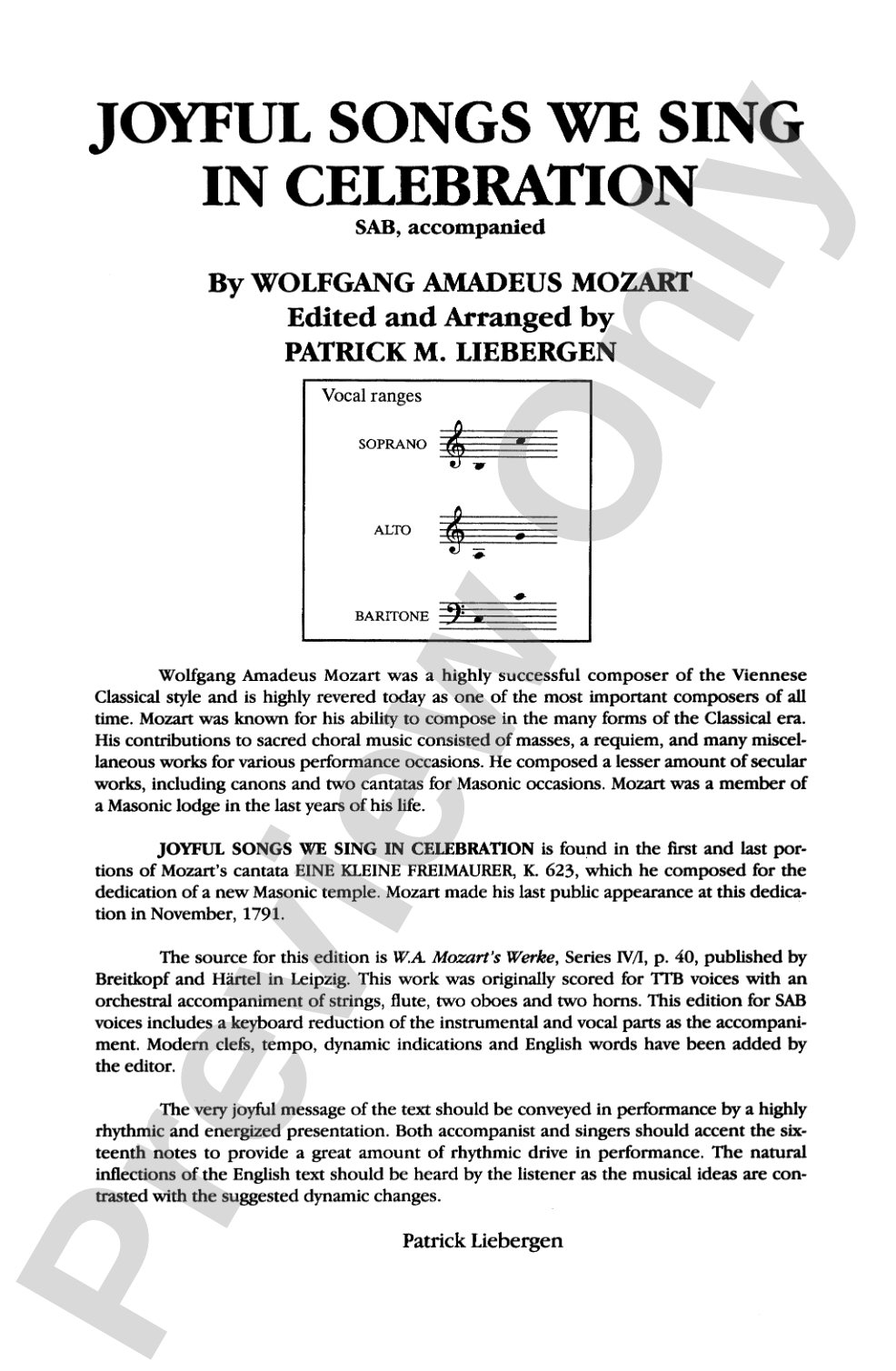
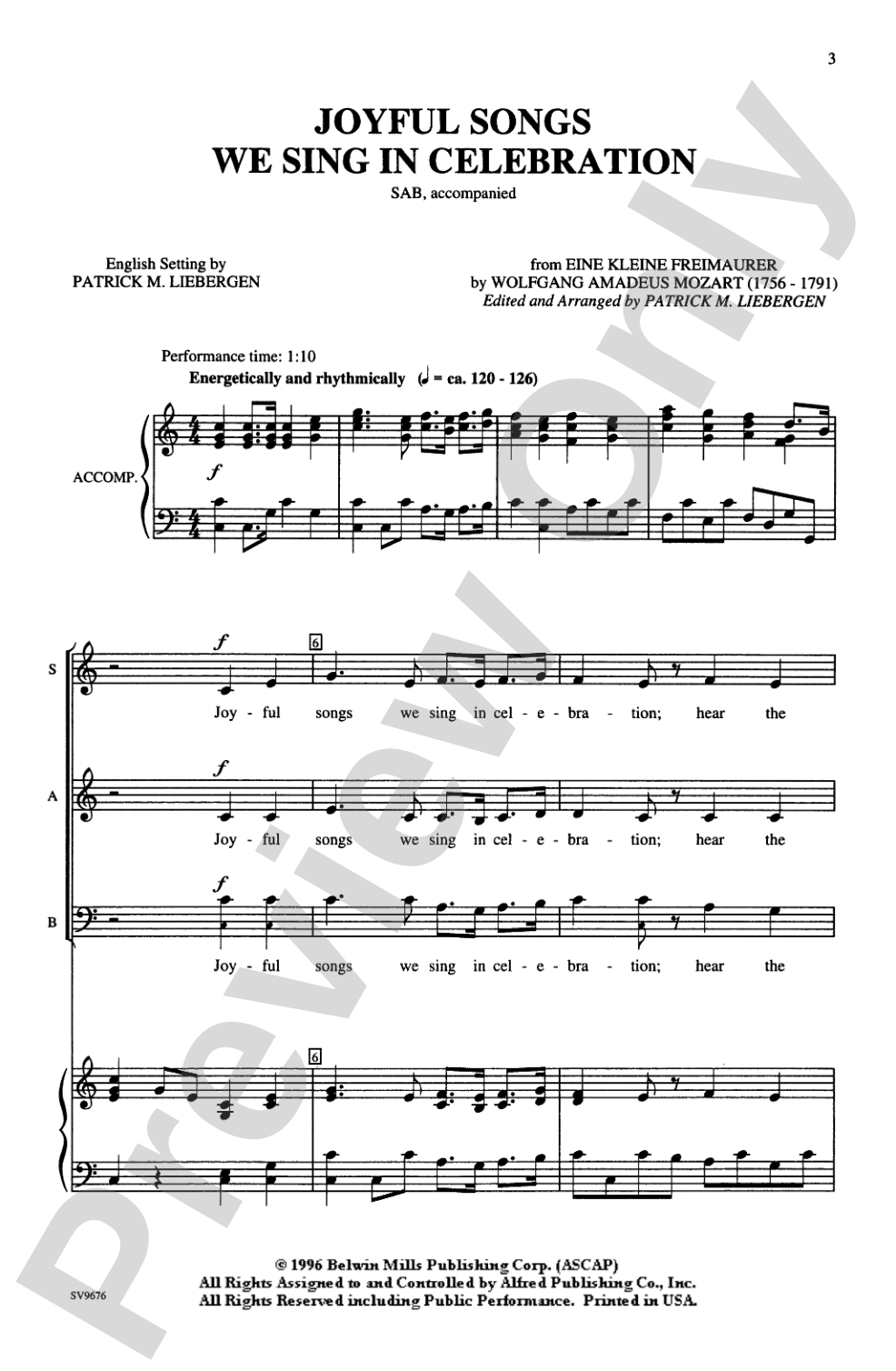
From Mozart comes this delightful choral work appropriate for contest or festival use. Patrick Liebergen's English text is appropriate for use in both church and school. The music is characterized by youthful vigor and energy. The lowest note for the male voices is C below middle C.


Joyful Songs We Sing in Celebration: SAB Choral Octavo isn't in MakeMusic Cloud just yet...but it could be. Let us know you'd like to see it, and you'll help shape what comes next. In the meantime, start a free trial and dive into thousands of interactive titles your students can play along with today.
Request This Title
Tell us you want it.
Start Your Free Trial
Explore everything that's ready to play right now.
Sample Audio
No sample audio found.
Sample Video
No sample videos found.
Additional Details
Series:
Alfred Archive Edition: Belwin Festival Series
Publisher:
Alfred Music
Page Count:
8
SKU:
00-PO-0005252
More about this title
About the Composer: Wolfgang Amadeus Mozart
Wolfgang Amadeus Mozart (1756-1791) composed over 600 works across nearly every genre, establishing himself as one of the most influential figures in Western music during his lifetime. His facility with melody, harmonic sophistication, and ability to write idiomatically for every instrument made his music immediately accessible to performers and audiences alike. For choral educators, Mozart's vocal writing remains a gold standard: his lines sit naturally in the voice, his harmonies support rather than obscure the text, and his structural clarity teaches students how musical ideas develop and resolve.
Why we love this
Liebergen's arrangement captures Mozart's characteristic clarity and melodic grace while making the work genuinely singable for developing choirs. The English text feels natural and purposeful rather than retrofitted, and the energy Mozart built into the original writing translates directly to performances that engage audiences. Programs that feature Mozart benefit from the immediate legitimacy and musical substance his name carries, while your singers gain experience with one of music's greatest melodists.
What to expect
The piece radiates the kind of infectious optimism that flows through Mozart's best vocal writing. Bright, forward-moving phrases build momentum without heaviness, and the harmonies feel both refined and genuine rather than decorative. Singers experience the pleasure of performing genuinely excellent music that sits comfortably in their voices.
Who it's for
This octavo works well for middle school through early high school choirs seeking substantial yet accessible classical repertoire. It suits groups preparing for contest or festival competition and programs that value demonstrable musicianship alongside accessible material. Church choirs wanting quality secular music for seasonal or celebratory concerts will also find it appropriate.
How to get the most out of it
- Maintain consistent articulation across the three parts to showcase the clarity of Mozart's writing. Overly legato singing will blur the harmonic movement and reduce the youthful character.
- Balance the parts carefully; the SAB voicing can mask alto lines if sopranos and basses aren't listening actively to each other. Rehearse parts separately with full voice weight before blending.
- Shape phrases through text rather than holding notes past their natural decay. Mozart's melodies breathe naturally, and respecting that rhythm will energize the piece.
- Ensure the lowest male voices can sustain the C below middle C with ease; if your bass section isn't comfortable, transpose up a half step or full step rather than forcing the range.
How to use it
This works beautifully as an uplifting opener or closer for a concert celebrating classical masterworks or seasonal themes of joy and gathering. Pair it with other arrangements of Mozart or contemporaries to create a themed set, or use it as the contrasting lighter moment in a program that balances more serious works. Its contest-ready status also makes it ideal for festival competitions where you want to represent your choir's musicality through transparent, beautifully written music.
Skills your students will build
- Reading and performing SAB voicing with independence across three parts
- Sustaining long, lyrical phrases while maintaining text clarity
- Understanding Classical-era harmonic language and voice leading
- Balancing part blend while preserving individual line quality
- Performing extended lower range (C below middle C for male voices) with security