
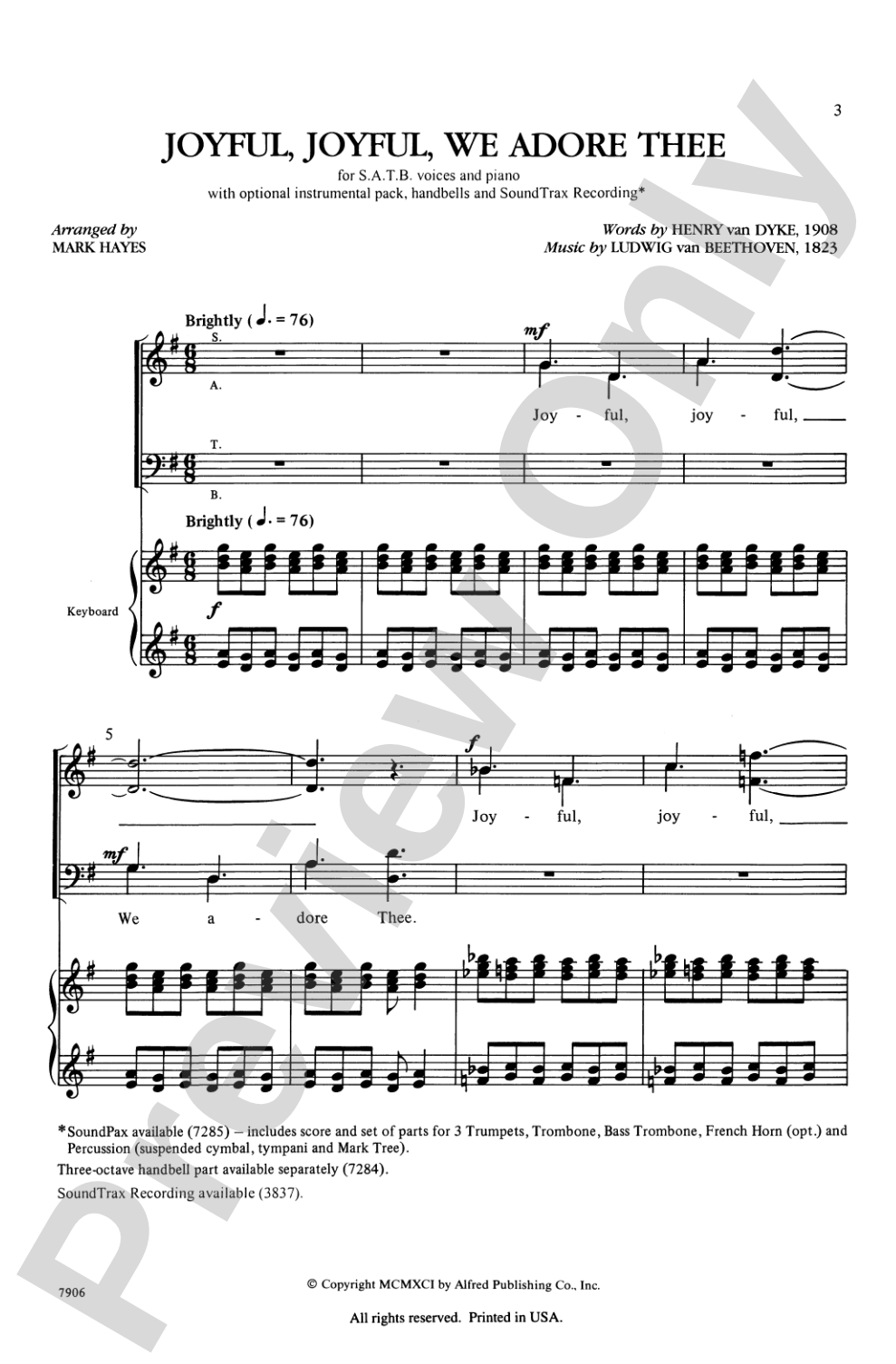
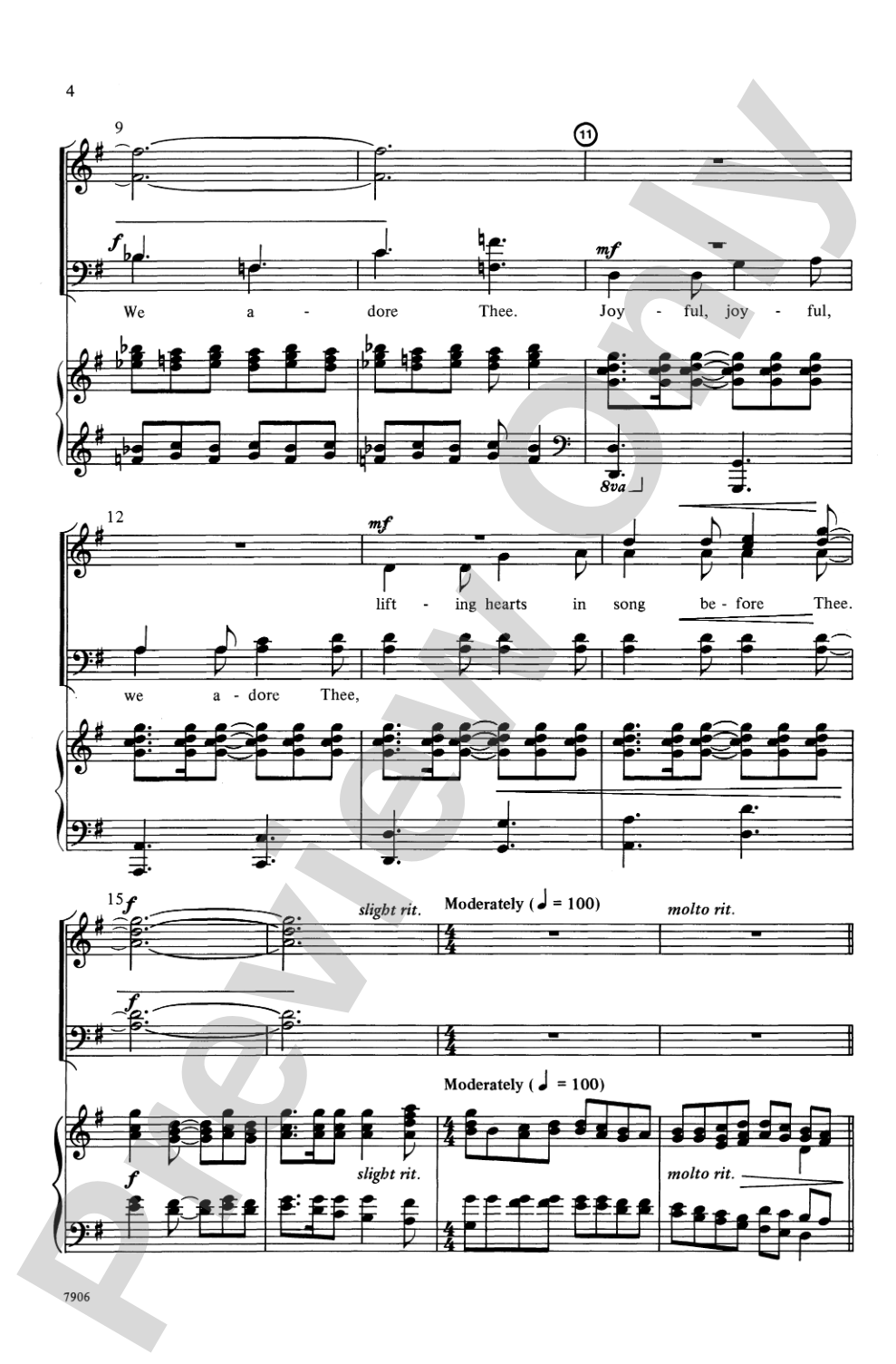
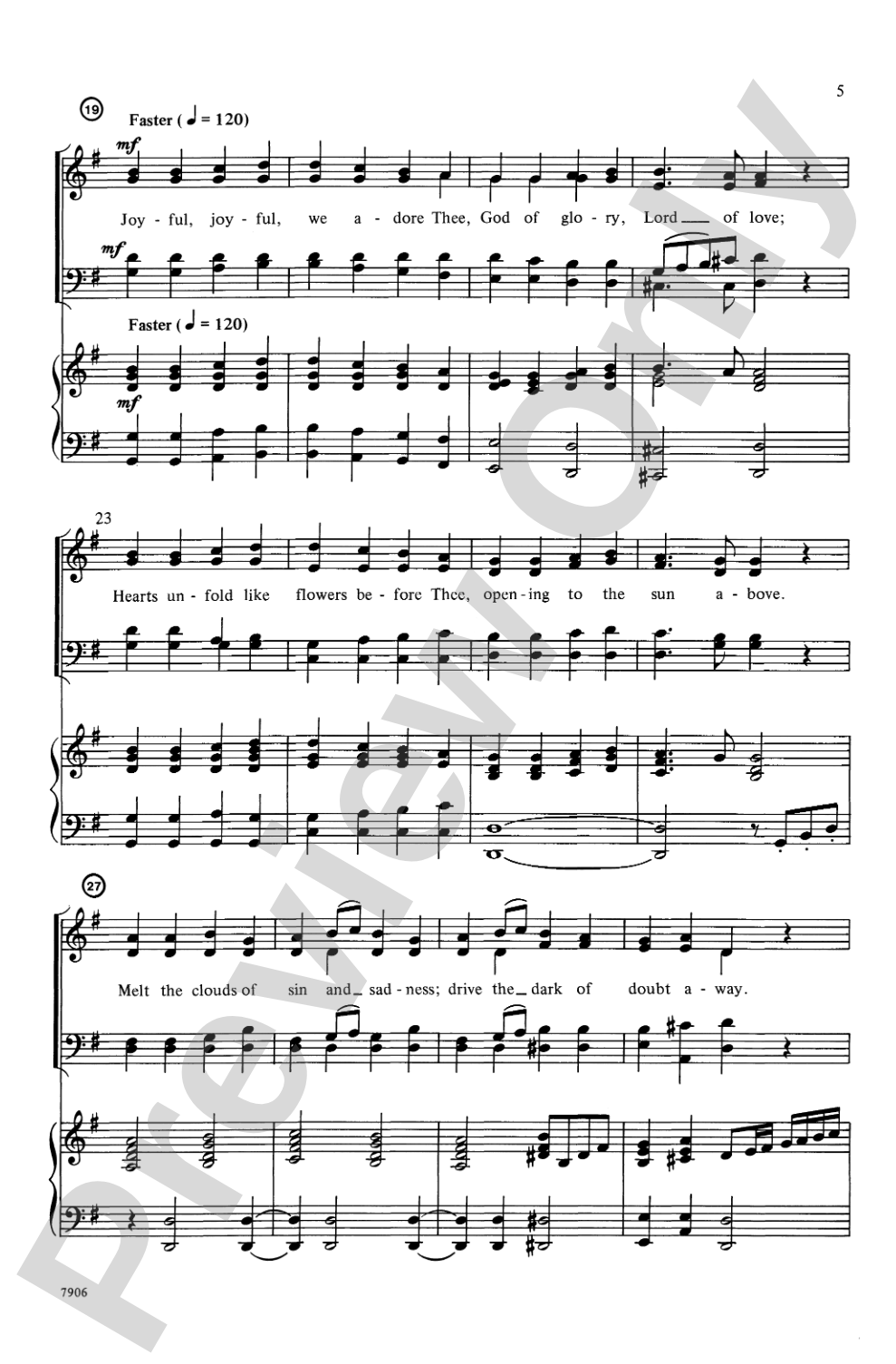

Joyful, Joyful, We Adore Thee: SATB Choral Octavo
Music by Ludwig van Beethoven / arr. Mark Hayes
Item: 00-PO-0004626
$2.95
Minimum order quantity: 20 copies
Pickup currently not available
Description
Magnificent. Thrilling. Mark Hayes at his very best. You won't believe how great your choir will sound on this majestic arrangement of Beethoven's immortal song of joy. The glorious SoundTrax cassette features powerful brass. For school or church choirs.


Joyful, Joyful, We Adore Thee: SATB Choral Octavo isn't in MakeMusic Cloud just yet...but it could be. Let us know you'd like to see it, and you'll help shape what comes next. In the meantime, start a free trial and dive into thousands of interactive titles your students can play along with today.
Request This Title
Tell us you want it.
Start Your Free Trial
Explore everything that's ready to play right now.
Sample Audio
No sample audio found.
Sample Video
No sample videos found.
Additional Details
Series:
Alfred Archive Edition: Alfred Choral Designs
Publisher:
Alfred Music
Page Count:
16
SKU:
00-PO-0004626
Instrumentation:
Opt. Handbell Part (3 Octaves)
More about this title
About the Composer: Ludwig van Beethoven
Ludwig van Beethoven (1770-1827) fundamentally transformed music from a servant art into a vehicle for human expression and freedom. His symphonies, sonatas, and choral works broke conventional boundaries and established new possibilities for what composers could achieve. Beethoven's "Ode to Joy" from his Ninth Symphony remains one of the most recognizable and celebrated melodies in Western music, adopted as the anthem of the European Union and performed at countless celebrations of human dignity and collective joy.
Why we love this
Mark Hayes captures the grandeur and spiritual power of Beethoven's melody while making it wholly accessible for school and church choirs. The arrangement respects the original's majesty without requiring virtuosic technical demands, allowing singers to focus on creating the soaring, unified sound that makes this work so moving. With optional brass parts available and an accompaniment recording featuring powerful brass, this version becomes a centerpiece moment in any concert program.
What to expect
The piece radiates triumph and spiritual affirmation. Beethoven's soaring melody, supported by Hayes' warm and spacious harmonies, creates a sense of collective uplift that audiences feel immediately. Singing this arrangement gives choristers the visceral experience of being part of something larger than themselves, a moment when personal voice dissolves into unified human expression.
Who it's for
This arrangement serves school choirs seeking a showstopping concert finale and church choirs wanting to affirm their faith through one of history's most powerful melodies. Directors with access to basic instrumental resources (or willing to feature the accompaniment recording alone) will find this a manageable yet deeply rewarding choice for mixed-voice ensembles at intermediate to advanced levels.
How to get the most out of it
- Shape the opening phrase with a gentle crescendo and diminuendo across the full four bars; resist the urge to sing it flat. Let the melody breathe and speak on its own.
- Balance the SATB voices carefully through passages where the tune moves between parts. Highlight the soprano line when it carries the primary melody, but ensure lower voices support with warmth and resonance.
- If using the optional handbell part, allow the three-octave texture to create a shimmering harmonic backdrop. Rehearse the bells separately to lock in rhythmic precision before combining with voices.
- Pair the recorded accompaniment with full choir from measure one so singers internalize the tempo and feel of the arrangement. Record a full rehearsal with accompaniment at least two weeks before performance.
How to use it
Reserve this for a concert's emotional climax, where its grandeur can unfold without competition. It works beautifully as a finale to a sacred or classical-themed program, or as the peak moment in a concert of spiritual and inspirational works. The optional handbell part adds visual and sonic richness if your ensemble has access to instrumentalists; alternatively, the recorded accompaniment stands complete on its own.
Skills your students will build
- Sustained legit tone across long phrases
- SATB balance and blend in four-part harmony
- Following a conductor through dynamic and tempo nuance
- Singing with text expression and emotional commitment in English