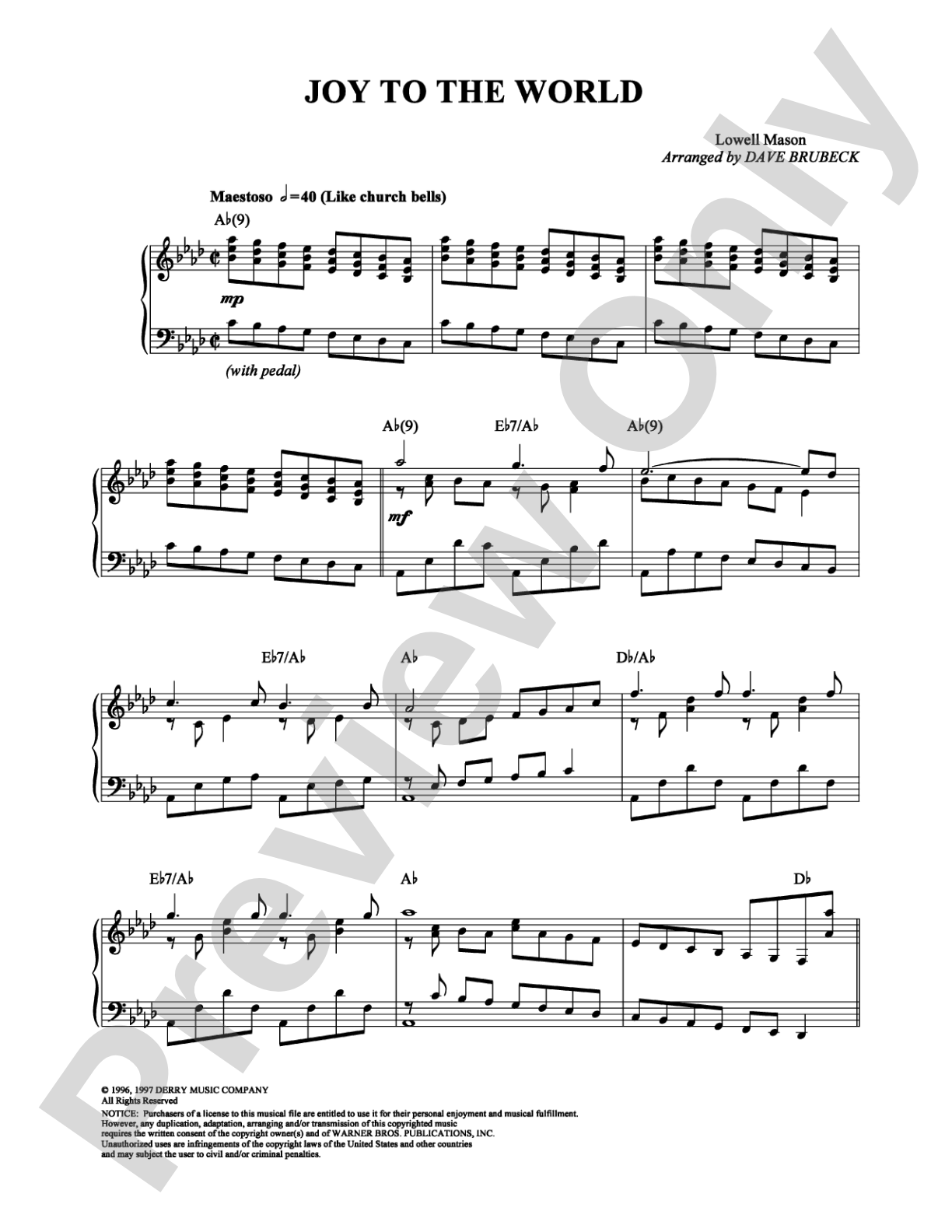
Joy to the World: Piano Digital Sheet Music

Joy to the World: Piano Digital Sheet Music

Dave Brubeck, Lowell Mason

Item: 00-PS-0006768

Digital Download
$3.99
Description

Joy to the World: Piano Digital Sheet Music isn't in MakeMusic Cloud just yet...but it could be. Let us know you'd like to see it, and you'll help shape what comes next. In the meantime, start a free trial and dive into thousands of interactive titles your students can play along with today.

Sample Audio
No sample audio found.
Sample Video
Additional Details
SKU: 00-PS-0006768

More about this title

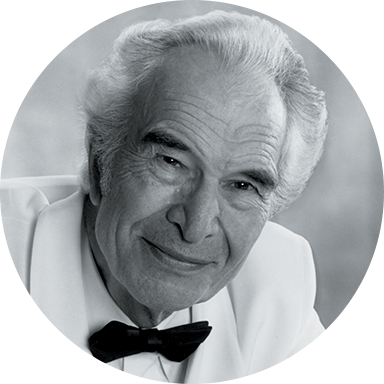
About the Artist: Dave Brubeck

Dave Brubeck

Dave Brubeck was a pianist and composer whose career spanned seven decades and fundamentally shaped modern jazz. Beyond his role as a virtuosic improviser, he wrote extensively across genres: concertos, chamber works, oratorios, ballets, and hymns that drew equally from jazz vernacular and classical tradition. His studies with Darius Milhaud at Mills College after World War II solidified his conviction that jazz and classical music could inform each other, a principle that guided everything he composed.

Brubeck's cultural impact extended far beyond the recording studio. His 1959 album Time Out became the first jazz record to sell over a million copies, introducing sophisticated rhythmic concepts to a mass audience. He actively challenged racial segregation in mid-century America, refusing to perform at venues that excluded Black musicians. Late in life, his sacred works including To Hope! and Pange Lingua Variations received performances by major orchestras and choirs worldwide, cementing his legacy as a composer for all idioms. The Grammy Lifetime Achievement Award, the Presidential Medal of the Arts, and his 2003 induction into the American Classical Music Hall of Fame reflect the breadth of his contributions.

Why we love this

Brubeck's jazz sensibility transforms this holiday standard into something that feels both reverent and swinging. The arrangement sits naturally under the hands while inviting real interpretive choices, making it rewarding for pianists who want to bring personality to a familiar tune without needing extensive jazz training.

What to expect

Warm and conversational, like a seasoned musician reflecting on something beloved. The harmony moves with quiet sophistication beneath a melody that feels both timeless and freshly heard, creating a performance space where joy and restraint exist together.

Who it's for

Pianists working toward jazz fluency will find this an approachable entry point: it teaches swing accompaniment patterns and voice leading without demanding advanced harmonic knowledge. Church musicians and recital pianists looking for a holiday piece that avoids cliché will appreciate how Brubeck honors the melody while respecting jazz conventions.

How to get the most out of it

  • Anchor the left hand groove lightly; let it breathe rather than lock into a metronomic pulse. Brubeck's jazz background values the space between beats as much as the notes themselves.
  • Shape melodic phrases with dynamic contour and subtle rubato. This arrangement rewards singers and listeners who hear singing as the foundation, even in an instrumental context.
  • Experiment with your touch on the melody line. A mix of legato and detached articulation gives the tune room to swing without sounding stiff or overly formal.

How to use it

Program this during a holiday concert to showcase a different side of Brubeck's artistry from his instrumental jazz fame. It works well alongside other spirituals or hymn arrangements, or as a bridge between traditional and contemporary holiday fare in a mixed repertoire concert.

Skills your students will build

  • Jazz comping and left-hand groove patterns
  • Swing articulation and rhythmic flexibility
  • Voice leading in jazz harmony
  • Pedal control in a tonal, lyrical context
  • Balancing accompaniment texture with melodic clarity

You May Also Like