
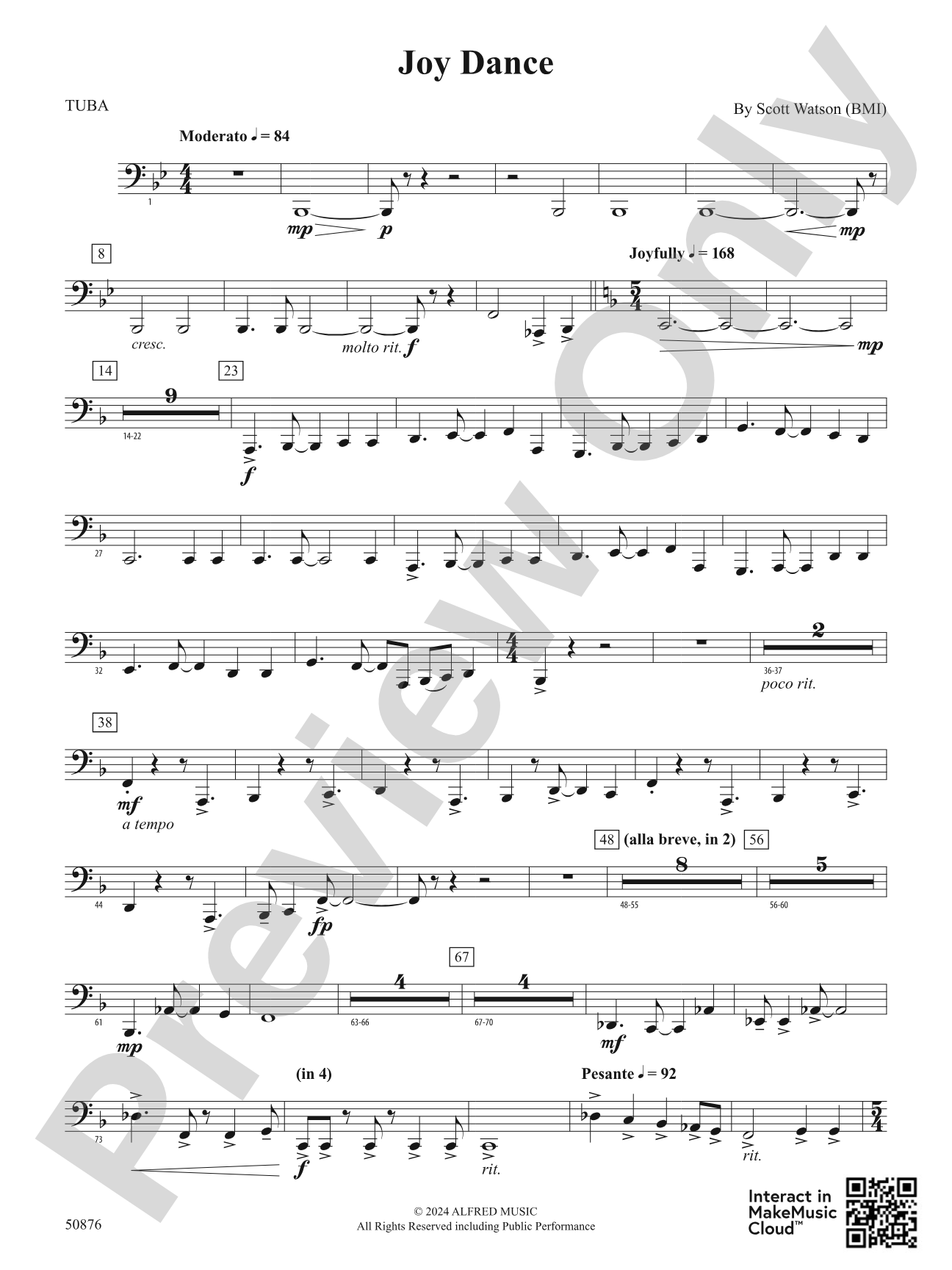

Joy Dance: Tuba
By Scott Watson
Grade: 3
Item: 00-PC-0019297_TB1
$3.00
Pickup currently not available
Description
Joy Dance, by Scott Watson, musically conveys an unrestrained expression of happiness and exhilaration. Inspired by David's ecstatic dance of praise in 2 Samuel 6:14 ("And David danced before the Lord with all his might..."), the piece combines artifacts of popular and contemporary music, including bold syncopations, a driving 5/4 meter groove, and use of contemporary and gospel harmonies. A large percussion section (7 players, including two mallet parts and timpani) adds essential color and energy. Whether it's worship, thankfulness, celebration, or blissful abandon, this composition reflects the radiant rejoicing of those who revel in all life's goodness! (4:10)


Don't just read it, hear it, play along with it, and watch your students grow with it. In MakeMusic Cloud, Joy Dance: Tuba comes alive with professional accompaniment, adjustable tempo, and built-in practice tools that turn solo practice into real progress.
Open in the Player
Jump straight in and assign it today.
Start Your Free Trial
Open this title and explore the full library in minutes.
Sample Audio
1
Audio File
--:--
0:00
0:00
Sample Video
Additional Details
Series:
Young Symphonic
Publisher:
Alfred Music
SKU:
00-PC-0019297_TB1
More about this title
About the Composer: Scott Watson

Scott Watson has shaped music education across multiple roles: first as a high school and elementary band director in Pennsylvania's Parkland School District, then as Associate Professor of Music at Cairn University. His thirty-five years in public school teaching informed a compositional voice that bridges contemporary art music and the practical realities of the ensemble room.
With over 120 published works across concert band, string orchestra, and chamber genres, Watson has earned commissions and performances at venues including the Academy of Music in Philadelphia, the Midwest Clinic, and the White House. Beyond composing, he serves as an exclusive composer-clinician for Alfred Publications, contributes to the Sound Innovations band series, and authored Using Technology to Unlock Musical Creativity (Oxford University Press, 2011). He regularly conducts honor bands and presents clinics for music educators nationwide.
Why we love this
Joy Dance captures the unbridled energy of celebration without sacrificing musical substance. The 5/4 groove and syncopated writing keep students engaged rhythmically, while the flexible seven-person percussion section allows you to scale the piece to your ensemble's resources, making it viable for multiple festival seasons without losing impact.
What to expect
Joy Dance radiates unrestrained celebration. The driving 5/4 meter and syncopated figures create a kinetic energy that feels contemporary and alive, while the gospel and contemporary harmonies add spiritual warmth and color. From the first notes, the piece conveys ecstatic rejoicing and infectious happiness.
Who it's for
Concert bands at the Grade 3 level will find Joy Dance accessible yet rewarding. The syncopated rhythms, mixed meters, and vibrant harmonic palette keep advanced middle school and developing high school ensembles engaged without requiring extreme technical demands.
How to get the most out of it
- Lock the 5/4 pulse early in rehearsal; this meter drives the piece's character, so establish its groove before layering melodic ideas.
- Balance the percussion section carefully: the mallet parts and timpani carry harmonic and rhythmic weight, not decoration.
- Use the contemporary and gospel harmonies as your rehearsal anchor; once the band recognizes the harmonic language, articulation and dynamics click into place.
- Push the tempo slightly on repetitions to build momentum—this piece thrives on infectious forward motion.
How to use it
Program Joy Dance as a festival or contest opener to energize the audience and your band. Its four-minute duration and uplifting character make it an excellent complement to more introspective or lyrical works on a concert, creating dynamic contrast while celebrating themes of gratitude or spiritual expression.
Skills your students will build
- Reading and executing 5/4 meter with syncopated rhythms
- Balancing and blending contemporary and gospel harmonic sonorities
- Coordinating multiple percussion parts to support ensemble rhythm and color
- Sustaining articulation and phrasing across repeated syncopated figures
- Building ensemble dynamics and momentum through metric and harmonic tension