

Joy!: SATB Choral Octavo
Based on Joy to the World
Music by Lowell Mason (from George Frideric Handel), lyrics by Isaac Watts / arr. Gary Fry
Item: 00-PO-0007668
$2.95
Minimum order quantity: 20 copies
Pickup currently not available
Related Items
Joy!: SATB Choral Octavo |
$2.95
|
View |
Description
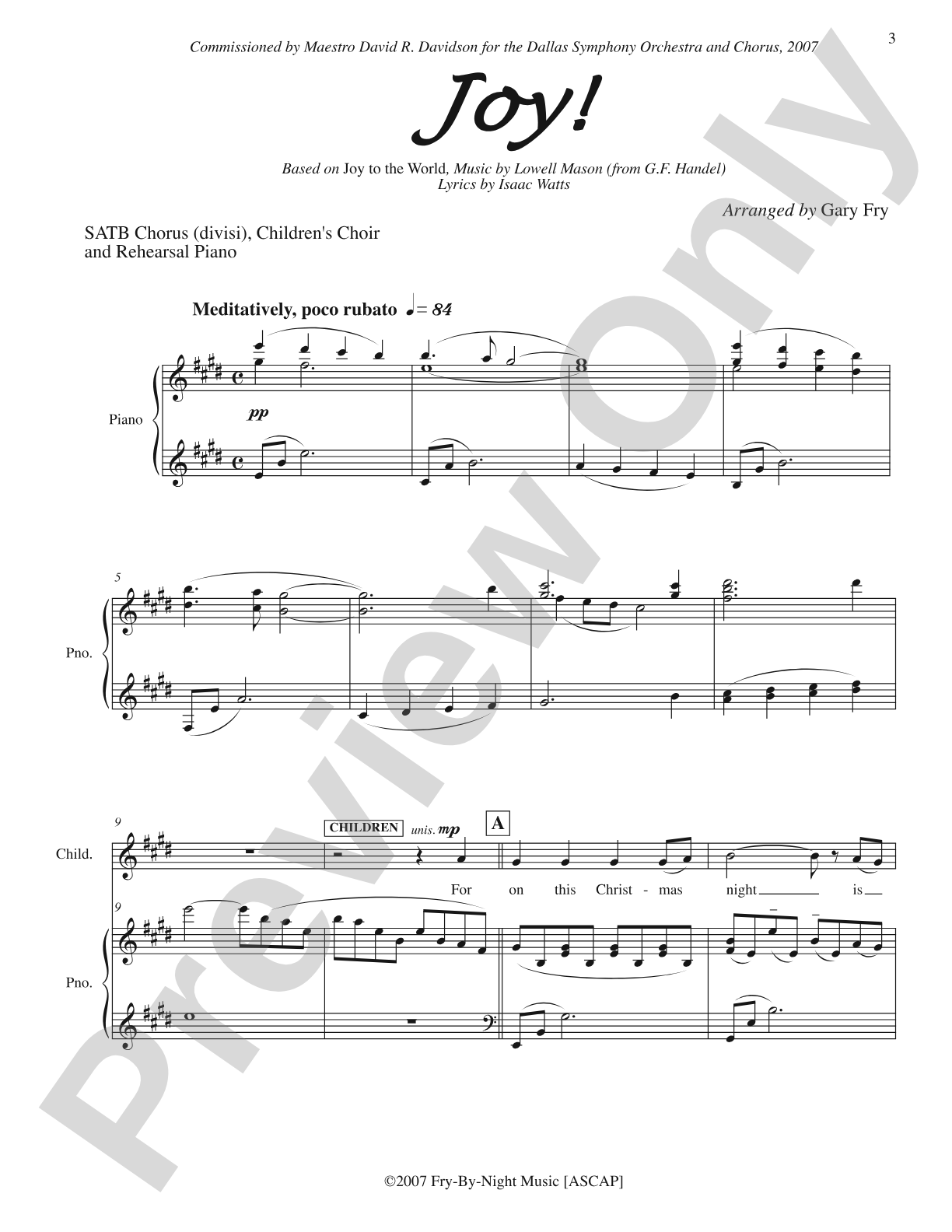
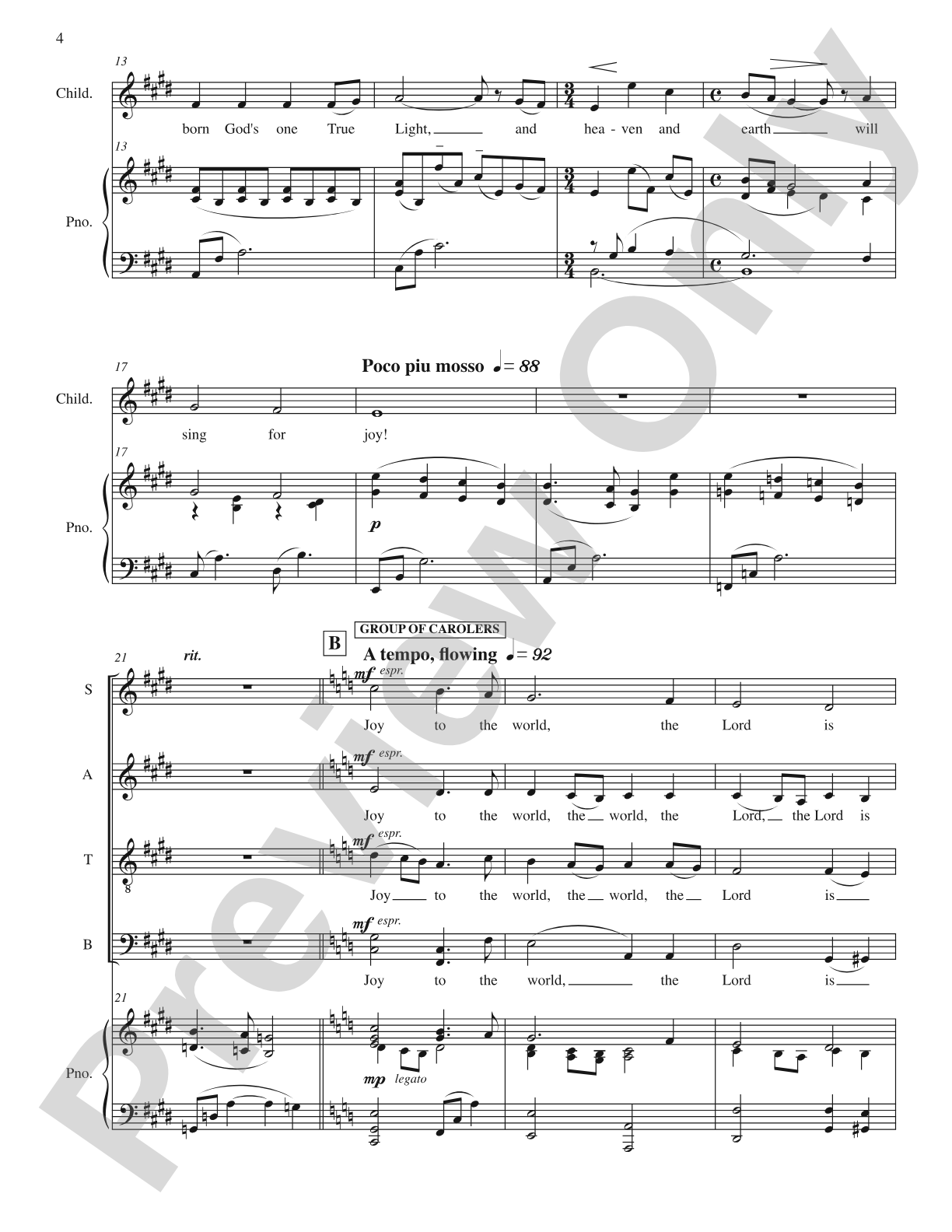
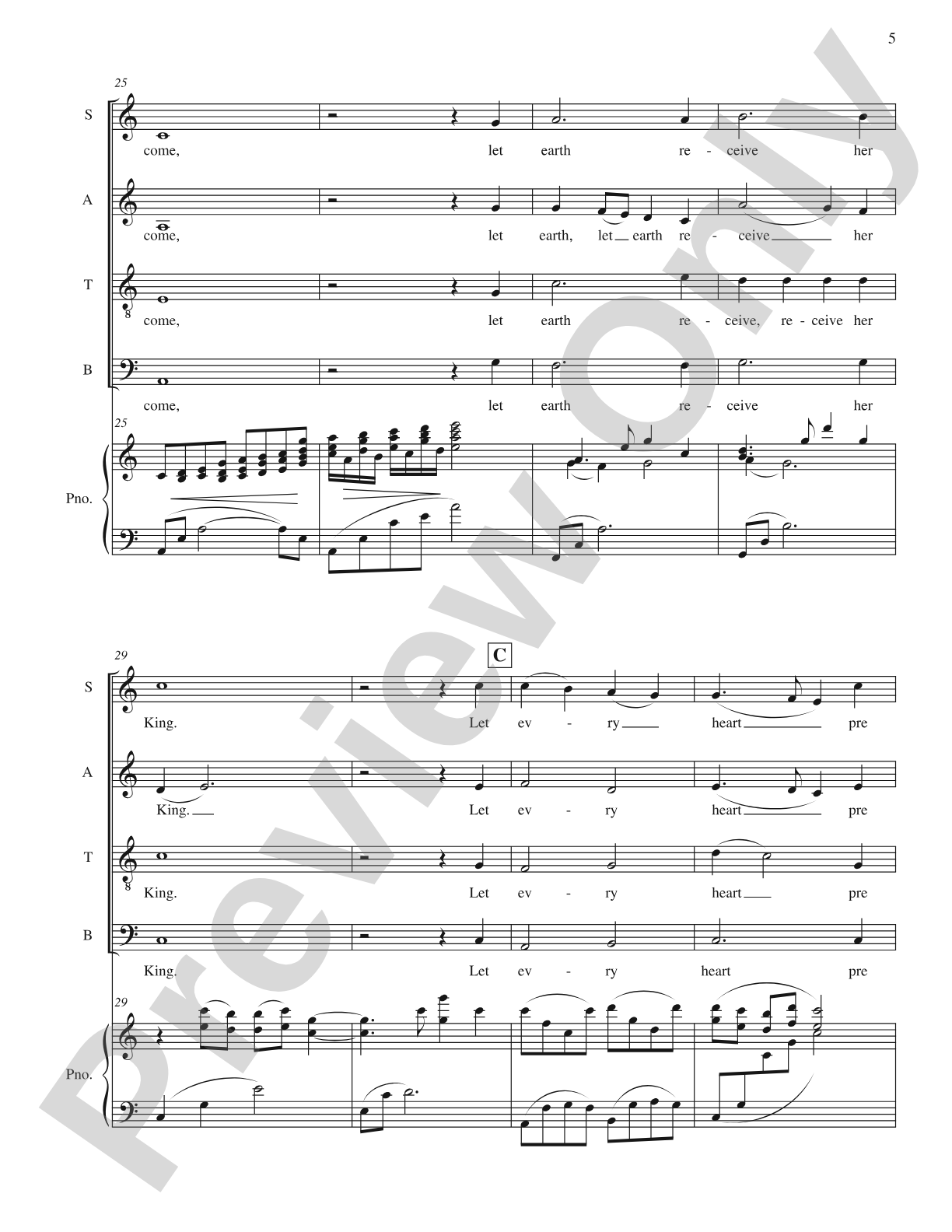
Based on "Joy to the World." Commissioned in 2007 as a concert closer by the Dallas Symphony Orchestra and Chorus. Soft, delicate introduction featuring children's choir leads to a verse by a small group of carolers (or full chorus), constantly building and after a triumphant brass and organ transition, concludes with a majestic full chorus with descant. Duration: 6:00. For SATB, children's choir, organ, and orchestra. Orchestra parts for rent. For more information visit www.garyfrymusic.com.


Discover MakeMusic Cloud: thousands of interactive titles your students can play along with today.
Sample Audio
No sample audio found.
Sample Video
No sample videos found.
Additional Details
Series:
Alfred Archive Edition: Alfred Chorus with Orchestra Series
Publisher:
Alfred Music
Page Count:
20
SKU:
00-PO-0007668
Instrumentation:
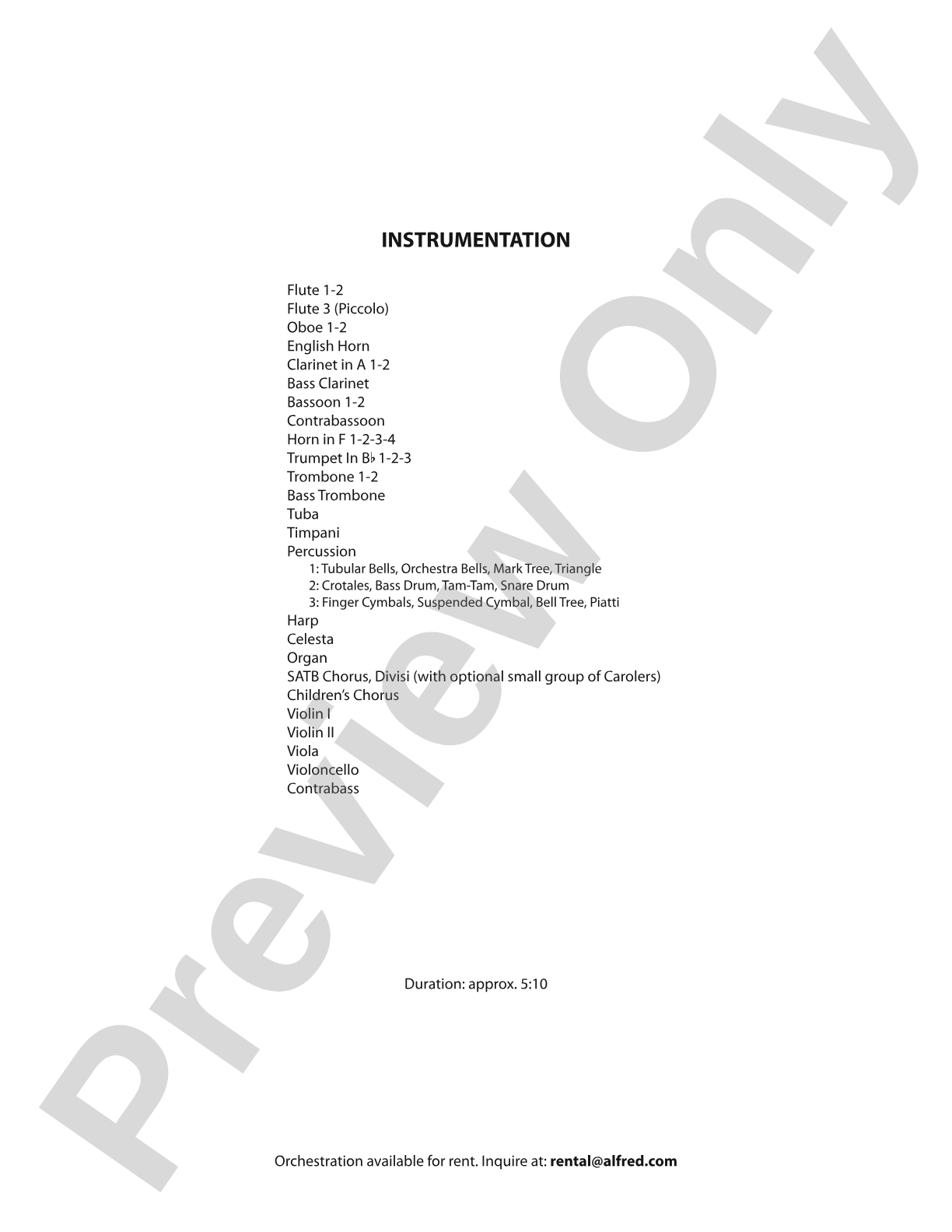
Organ & Orchestra
More about this title
About the Composer: Lowell Mason
Lowell Mason (1792, 1872) shaped American music education as much through his teaching philosophy as through his compositions. He championed the inclusion of music in public schools, developed influential methods for teaching sight-singing, and arranged countless hymns and spiritual songs for congregational use. His work established patterns for sacred music in American churches that persist today.
Mason's approach to composition was fundamentally practical: he wrote for the people who would actually sing the music, whether in church, school, or community gathering. His melodies are direct and memorable, designed to be learned quickly and sung with conviction. This democratic spirit in his music education legacy makes his works enduringly valuable for teaching ensemble singing.
Why we love this
Gary Fry's arrangement transforms a beloved hymn into a concert work with genuine architectural sweep. The scoring for SATB, children's choir, organ, and orchestra creates a natural build from intimate to jubilant, giving you multiple entry points for singers of different ages and levels within a single, cohesive piece. It functions equally well as a holiday closer or as a concert work in its own right.
What to expect
The piece opens with crystalline simplicity, almost hushed, as children's voices establish the hymn melody. As carolers and then the full chorus join, energy accumulates thoughtfully rather than rushing; there's a genuine sense of gathering and building. The triumphant final section feels earned, never forced, with the descant soaring above full harmonic texture in a way that feels genuinely majestic.
Who it's for
Directors leading choirs with access to orchestral musicians and a children's choir (or the ability to draw young singers from a school ensemble) will find this particularly rewarding. It works beautifully in sacred concert settings, holiday festivals, and community performances where you want to honor a familiar melody while offering something far richer than a simple hymn arrangement.
How to get the most out of it
- Balance the opening children's choir entrance carefully; they should be heard as a distinct voice entering a quiet landscape, not buried in the ensemble sound.
- Use the organ part to shape the harmonic foundation through the verse sections, allowing it to lead the dynamic and textural shifts without overpowering the chorus.
- Shape the transition into the final section deliberately; the brass and organ shift is your moment to establish a new energy level before the full chorus and descant enter.
- Rehearse the descant line separately with your soprano section early, as its independence from the main melody requires secure intonation and rhythmic confidence.
How to use it
Program this as your finale for a holiday concert, where its arc from quiet reflection to full celebration provides satisfying closure. It also works powerfully in mixed sacred concert settings where you want to bridge traditional hymnody with contemporary concert writing, or as an opener for a season that emphasizes joy and community.
Skills your students will build
- Singing through longer phrases while maintaining vocal clarity and blend across a full texture
- Balancing descant lines above four-part harmony
- Responding to orchestral and organ accompaniment with precision in tempo and dynamics
- Connecting hymnodic tradition with contemporary compositional techniques
- Working collaboratively with children's choir singers in a unified ensemble context