
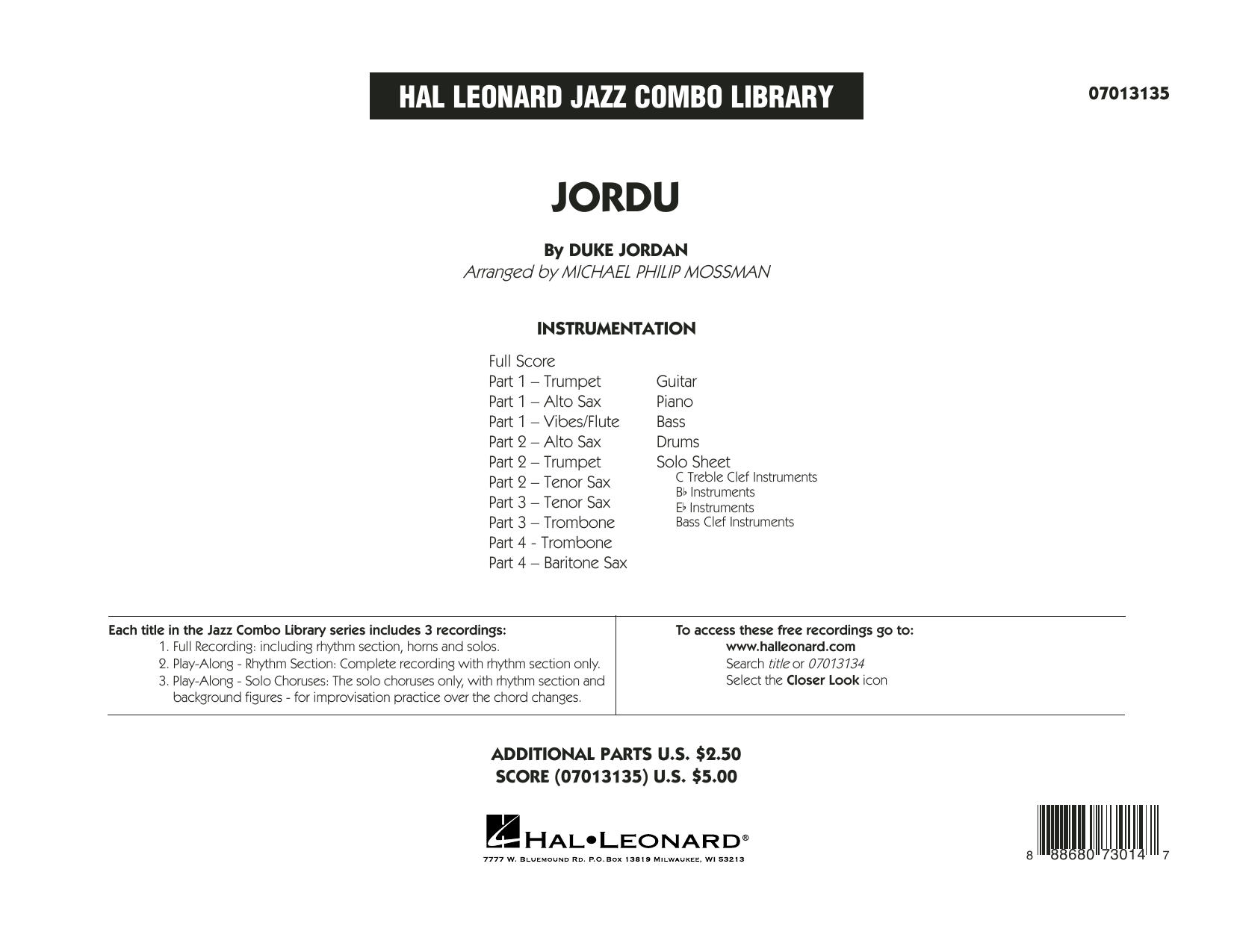

Jordu (arr. Michael Mossman): Jazz Ensemble Conductor Score & Parts
Arranged by Michael Philip Mossman
Grade: 4
Item: 35-PK00422971
$40.00
Pickup currently not available
Buy Extra Parts (Digital PDF Download)
Parts Added to Cart!
Description
Uptempo bebop swing, tutti scoring. Scored for 4 horns with flexible instrumentation, plus rhythm section
Background figures and ensemble soli section more than just "head charts"


Jordu (arr. Michael Mossman): Jazz Ensemble Conductor Score & Parts isn't in MakeMusic Cloud just yet...but it could be. Let us know you'd like to see it, and you'll help shape what comes next. In the meantime, start a free trial and dive into thousands of interactive titles your students can play along with today.
Request This Title
Tell us you want it.
Start Your Free Trial
Explore everything that's ready to play right now.
Sample Audio
No sample audio found.
Sample Video
No sample videos found.
Additional Details
Publisher:
Hal Leonard
SKU:
35-PK00422971
More about this title
About the Arranger: Michael Philip Mossman
Michael Philip Mossman is a trumpeter and arranger with deep roots in the bebop and hard bop traditions. His arrangements for jazz ensembles balance accessibility with harmonic sophistication, making them trusted choices for secondary and college programs seeking material that teaches genuine jazz language without sacrificing playability.
Why we love this
Mossman's arrangement moves beyond the typical head-and-solo formula by building substantial ensemble writing that keeps the full band engaged throughout. The flexible horn voicing lets you adapt to your instrumentation without compromising the swing, and the rhythm section gets real musical work instead than just time-keeping.
What to expect
High energy and propulsive. The uptempo swing feels perpetually on the edge of excitement, with the ensemble figures creating texture and drive while soloists carve out space for individual voice. It's the sound of a band cooking together.
Who it's for
Intermediate to advancing jazz ensembles ready to tackle authentic bebop arrangements. Your students need solid fundamental reading skills and the ability to maintain independence within a section, but they don't need extensive soloing experience.
How to get the most out of it
- Keep the rhythmic feel loose but locked. Bebop is about forward motion, not metronomic rigidity, but your rhythm section still needs to breathe as one unit.
- Balance the tutti sections so the ensemble doesn't overwhelm your soloists. Full band and solo space need to feel like genuine conversations.
- The background figures have their own melodic identity. Treat them as a counterpoint layer, not mere accompaniment filler.
- Feature your strongest readers first. This arrangement rewards clear articulation and confident phrasing, so early rehearsals should focus on establishing the pocket before adding dynamics and expression.
How to use it
Pair this with a slower ballad to show range, or use it as your closing piece on a jazz concert when you want the audience to leave energized. It works equally well as a winter or spring concert feature, and it's substantial enough to anchor a student jazz showcase.
Skills your students will build
- Maintaining steady time feel while reading complex ensemble figures
- Balancing section blend across four-part horn voicings
- Interpreting jazz articulation and phrasing conventions within an arranged context
- Reading and executing background figures that interact with solo space
- Responding to stylistic cues that define bebop swing feel