
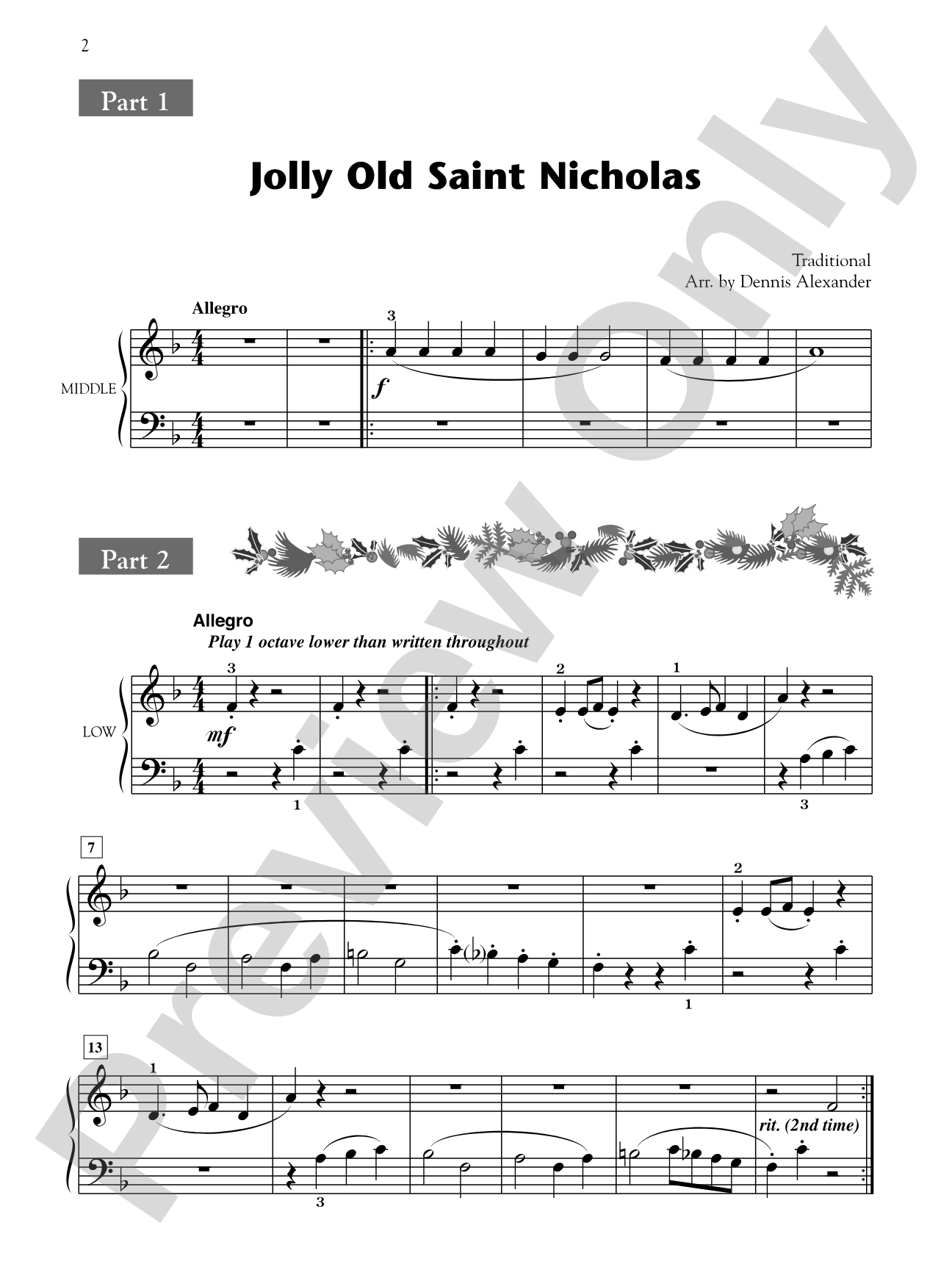

Jolly Old Saint Nicholas - Piano Trio (1 Piano, 6 Hands): Piano Trio (1 Piano, 6 Hands)
6 Late Elementary Christmas Favorites Arranged for 3 Players at 1 Piano
Arranged by Dennis Alexander
Level: Late Elementary
Item: 00-PS-0017382
$4.99
Pickup currently not available
Related Items
Angels We Have Heard on High - Piano Trio (1 Piano, 6 Hands): Piano Trio (1 Piano, 6 Hands) |
$4.99
|
View | |
It Came Upon the Midnight Clear - Piano Trio (1 Piano, 6 Hands): Piano Trio (1 Piano, 6 Hands) |
$4.99
|
View | |
Silent Night - Piano Trio (1 Piano, 6 Hands): Piano Trio (1 Piano, 6 Hands) |
$4.99
|
View | |
Up on the Housetop - Piano Trio (1 Piano, 6 Hands): Piano Trio (1 Piano, 6 Hands) |
$4.99
|
View | |
We Three Kings of Orient Are - Piano Trio (1 Piano, 6 Hands): Piano Trio (1 Piano, 6 Hands) |
$6.99
|
View |
Description
This fun and entertaining collection features pieces to be performed by three players on one piano, but can also be played by one or two players. A Federation Festivals 2024-2028 selection.


Jolly Old Saint Nicholas - Piano Trio (1 Piano, 6 Hands): Piano Trio (1 Piano, 6 Hands) isn't in MakeMusic Cloud just yet...but it could be. Let us know you'd like to see it, and you'll help shape what comes next. In the meantime, start a free trial and dive into thousands of interactive titles your students can play along with today.
Request This Title
Tell us you want it.
Start Your Free Trial
Explore everything that's ready to play right now.
Sample Audio
No sample audio found.
Sample Video
No sample videos found.
Additional Details
Publisher:
Alfred Music
Page Count:
24
SKU:
00-PS-0017382
More about this title
About the Arranger: Dennis Alexander

Dennis Alexander has shaped educational piano repertoire for nearly four decades through his work with Alfred Music Publishing, producing over 400 publications that have made him one of the most recognized voices in student piano literature. His career spans university teaching, competition adjudication, and international performance; he taught piano pedagogy for 24 years at the University of Montana, served on faculties at Cal State Fullerton and Cal State Northridge, and has conducted master classes and clinics at state and national conventions. Alexander maintains an active composing schedule from his home in Albuquerque while continuing to perform as a soloist and collaborative artist across North America and Asia.
As both a composer and pedagogue, Alexander understands what students need at each developmental stage. His works balance musical integrity with accessibility, never talking down to young players. His arrangement of this beloved holiday tune reflects that philosophy, creating an opportunity for ensemble playing without sacrificing musical substance.
Why we love this
Alexander's arrangement transforms a familiar melody into genuine ensemble music where all three players contribute meaningfully. The flexibility to perform it as a solo, duet, or trio means you can adapt it to your needs without losing the character of the piece, and its Federation Festivals selection validates what teachers already know about his writing for students.
What to expect
Warm, familiar, and genuinely festive. The arrangement captures the joyful nostalgia of the carol while giving each player a distinct role, creating a small ensemble sound that feels larger than three hands on one keyboard.
Who it's for
Late elementary pianists ready to explore ensemble playing will find this accessible and rewarding. It's equally suited for studio teachers looking to showcase collaborative learning or band/choir directors seeking a keyboard feature for their winter concert.
How to get the most out of it
- Balance the three voices carefully; the melody line should sing naturally without drowning out the harmonic support from the other hands. Listen for transparency in all registers.
- Coordinate the pedal changes across all three players if you're working with less experienced students. Mark pedal points clearly so everyone lifts and engages together.
- Keep the holiday spirit in the phrasing without overloading the tempo. This arrangement rewards a relaxed touch and natural breathing between phrases.
How to use it
Include this in a winter concert's lighter moment, pairing it with other holiday selections or as a palate cleanser between longer works. The flexibility means you can perform it with the lineup you have that week, whether you've got three pianists, two, or one. It also works beautifully as a fundraiser or community event piece where the novelty of three players on one piano engages audiences.
Skills your students will build
- Ensemble listening and blend across different keyboard registers
- Coordination of multiple hands on one instrument with other players
- Sight-reading in ensemble contexts
- Pedaling as a shared responsibility between players
- Phrasing and articulation that supports rather than competes with other voices