
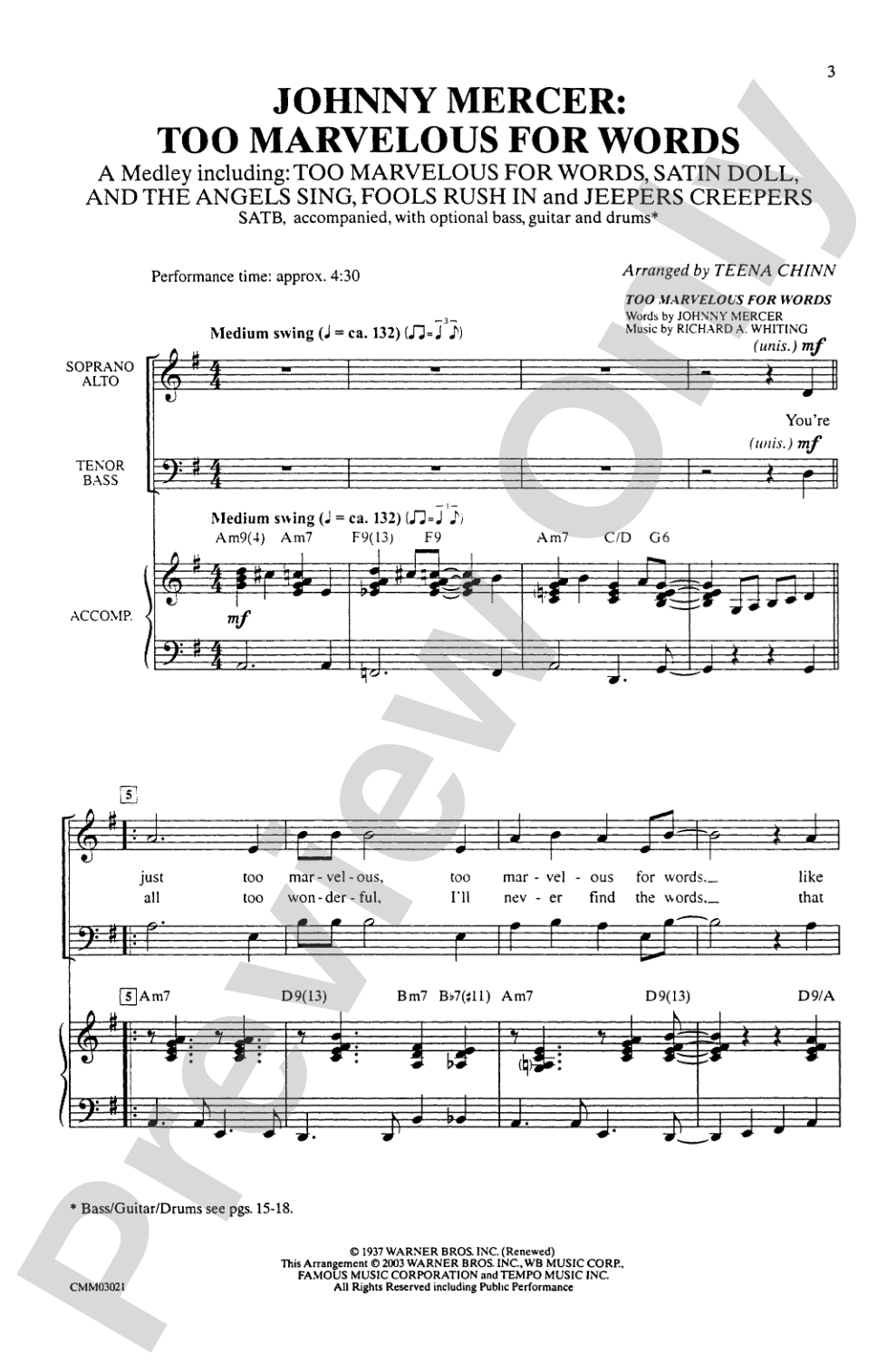

Johnny Mercer: Too Marvelous for Words (A Medley): SATB Choral Octavo
Featuring: Too Marvelous for Words / Satin Doll / And the Angels Sing / Fools Rush In / Jeepers Creepers
Arr. Teena Chinn
Level: Moderate
Item: 00-PO-0004860
$3.50
Minimum order quantity: 20 copies
One moment…
Description
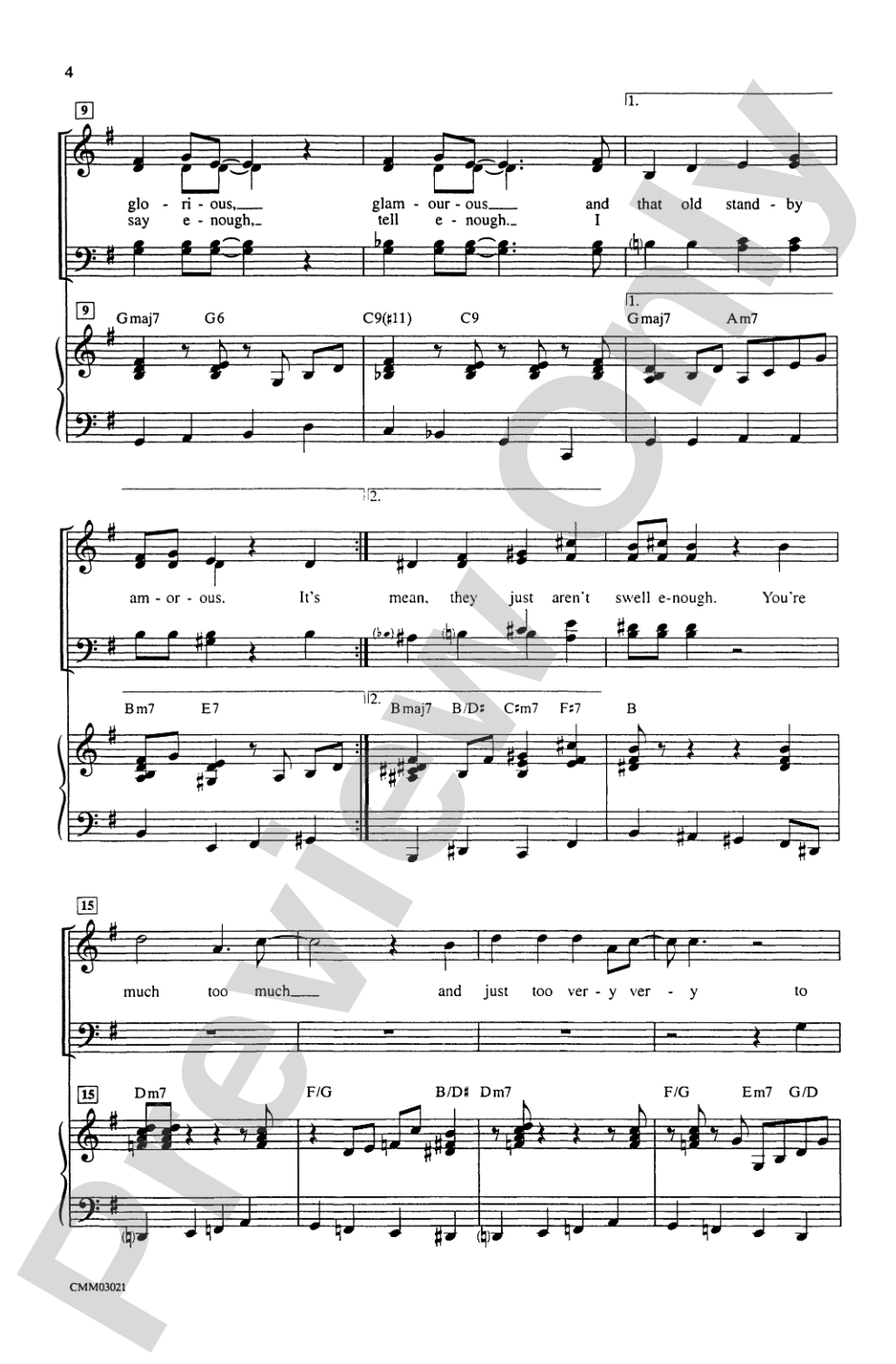
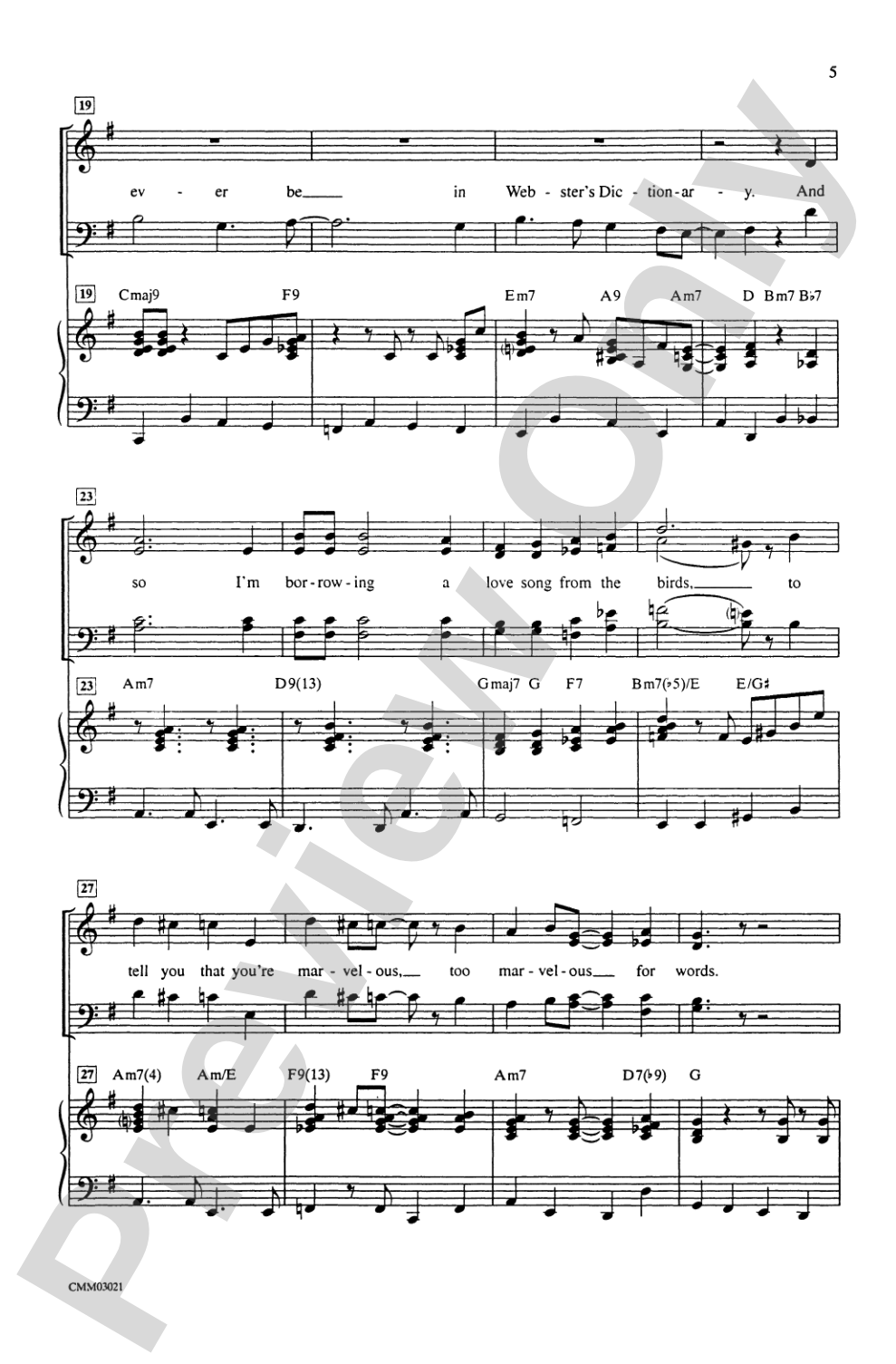
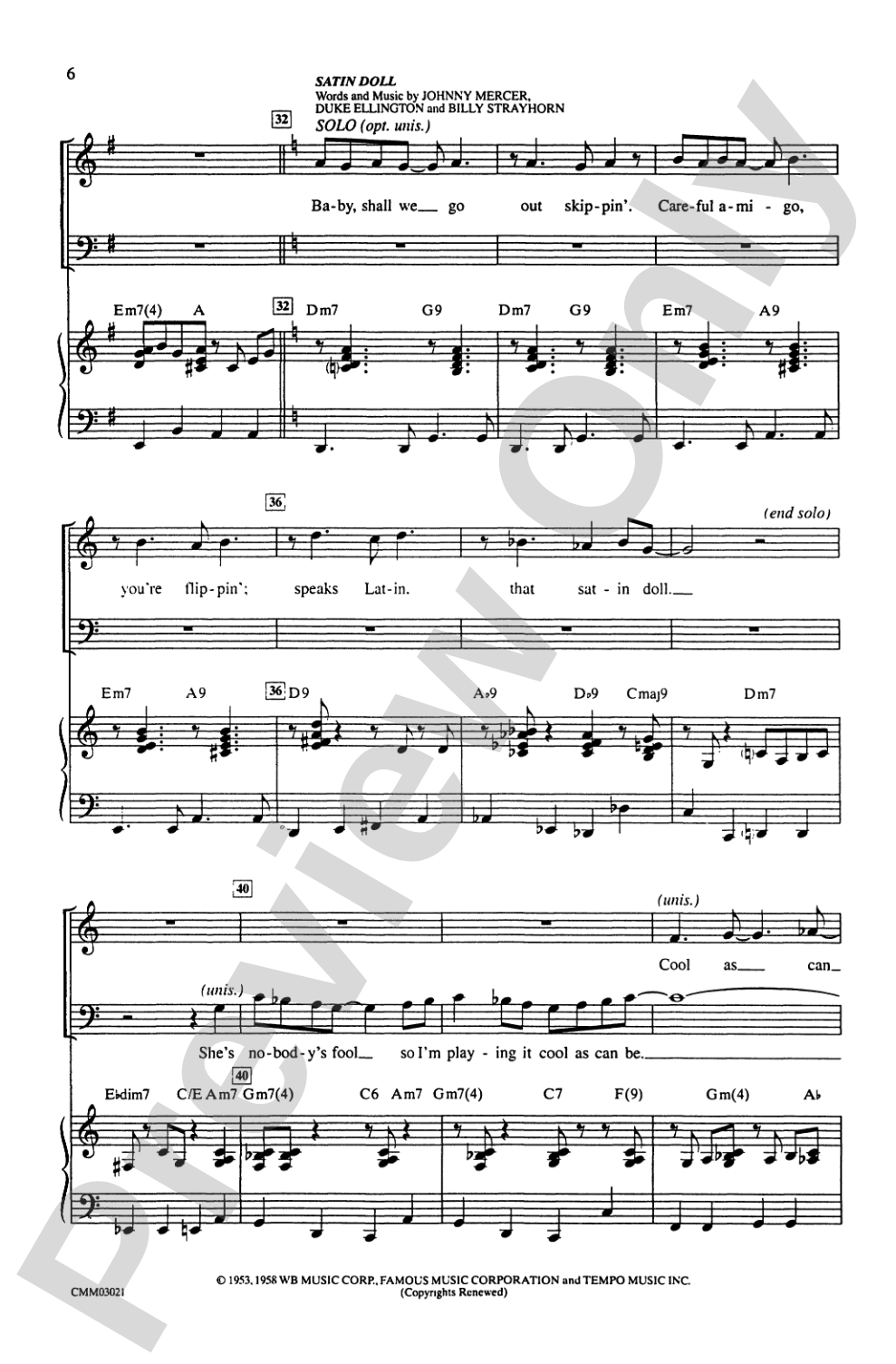
This exceptional Teena Chinn penned medley showcases five of the great songs by master songwriter Johnny Mercer. Included in this four-and-a-half minute show-piece are: "Too Marvelous For Words," "Satin Doll," "And The Angels Sing," "Fools Rush In," and "Jeepers Creepers." A real audience pleaser!


Johnny Mercer: Too Marvelous for Words (A Medley): SATB Choral Octavo isn't in MakeMusic Cloud just yet...but it could be. Let us know you'd like to see it, and you'll help shape what comes next. In the meantime, start a free trial and dive into thousands of interactive titles your students can play along with today.
Request This Title
Tell us you want it.
Start Your Free Trial
Explore everything that's ready to play right now.
Sample Audio
1
Audio File
--:--
0:00
0:00
Sample Video
No sample videos found.
Additional Details
Series:
Alfred Archive Edition: Alfred Pop Choral Series
Publisher:
Alfred Music
Page Count:
20
SKU:
00-PO-0004860
More about this title
About the Arranger: Teena Chinn
Teena Chinn is an accomplished arranger whose work spans choral, instrumental, and vocal music across multiple genres. Her arrangements are known for their accessibility without sacrificing musicality, making her a valued contributor to the Alfred Pop Choral Series and other educational catalogs.
Why we love this
This medley combines five standards that audiences recognize instantly, giving your singers the satisfaction of performing beloved songs in a thoughtfully crafted four-and-a-half-minute package. The arrangement respects the melodic integrity of each tune while maintaining variety in texture and energy, so the piece never feels like five separate songs strung together.
What to expect
Sophisticated yet accessible, this medley captures the glamour and swing of the Great American Songbook. The arrangement swings lightly between nostalgia and humor, letting singers inhabit the distinct personality of each Mercer classic while maintaining cohesion as a unified work.
Who it's for
This octavo works best for intermediate choral ensembles (treble, mixed, or tenor-bass choirs) that can handle moderate rhythmic complexity and want to connect with audiences through recognizable repertoire. It's an ideal choice for choirs building confidence and seeking pieces that generate genuine applause without demanding virtuosic technique.
How to get the most out of it
- Balance the melody between voice parts across the five songs, since different sections carry the lead in each standard. Mark these shifts clearly during rehearsal so the entire choir understands who owns the tune at each moment.
- Layer in the recorded accompaniment during the final weeks of rehearsal to build confidence and lock in ensemble blend. The harmonic foundation will strengthen intonation across all four parts.
- Emphasize the stylistic shifts between songs. 'Too Marvelous for Words' calls for a bright, jazzy feel, while 'Satin Doll' requires a cooler sophistication. These tonal changes keep the medley engaging.
- Bring out phrase contours with subtle dynamics rather than dramatic swells. The Mercer standards benefit from a conversational quality that lets the wit and elegance of the lyrics shine through.
How to use it
Position this as a standalone feature during a spring or fall concert where you want a crowd-pleasing moment that showcases your choir's ability to nail style and ensemble blend. It's also strong material for a pops concert or an evening built around American standards, and its moderate length makes it an effective companion to a more demanding classical work.
Skills your students will build
- Navigating style shifts within a single piece (swing, ballad, uptempo)
- Balancing melody and harmonic parts across changing textures
- Interpreting rhythmic syncopation in a jazz-influenced harmonic context
- Blending four-part voicing while maintaining individual vocal line clarity
- Responding to recorded accompaniment and adjusting ensemble timing accordingly