Johnny B. Goode: Choral Instrumental Pak

By Chuck Berry / Arranged by Stan Pethel

Item: 35-PK01803328

Digital Download
$21.00

One moment…

Description
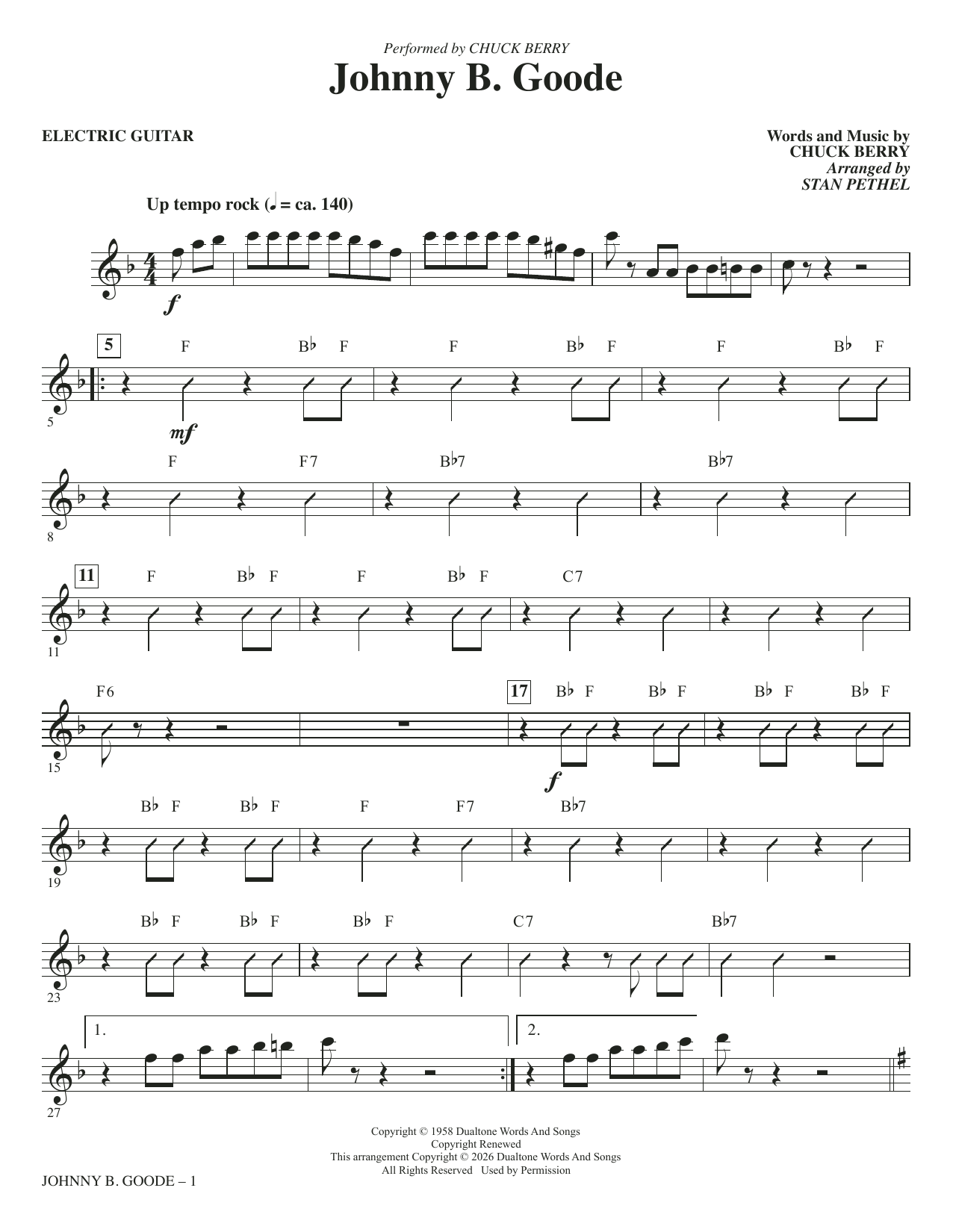
Bring the energy of Chuck Berry's 1958 hit to your singers! Unison verses and simple harmonic choruses make for easy learning, and more advanced writing with a descant after a key change adds some extra kick! Parts for guitar, bass and drums are available, making this a dynamic show choir selection, too!

Johnny B. Goode: Choral Instrumental Pak isn't in MakeMusic Cloud just yet...but it could be. Let us know you'd like to see it, and you'll help shape what comes next. In the meantime, start a free trial and dive into thousands of interactive titles your students can play along with today.

Sample Audio
No sample audio found.
Sample Video
Additional Details
Publisher: Hal Leonard
SKU: 35-PK01803328

More about this title

About the Composer: Chuck Berry

Chuck Berry stands as one of rock and roll's foundational figures, a guitarist and singer who bridged country, blues, and pop into something entirely new. His 1958 recording of 'Johnny B. Goode' became a standard that defined early rock music, featuring the guitar riff that would influence countless musicians across generations. Berry's songwriting combined storytelling with infectious grooves, making his work instantly singable and endlessly adaptable for educational settings.

Why we love this

Stan Pethel's arrangement respects the original's infectious simplicity while building in just enough complexity to keep your ensemble engaged. The unison verses mean everyone locks together immediately, then the harmonic choruses let singers feel what it's like to create texture, and the post-key-change descant gives advanced students something genuinely rewarding to sing. You get a piece that works for both rock-focused show choirs and mixed programs that need energy without sacrificing musicality.

What to expect

Pure groove and joy. The energy recalls that first moment the song hit radio in 1958: unpretentious, immediate, and impossible to resist. When the key change arrives, you feel the temperature shift in the room; the descant catches light, the harmony deepens, and singers suddenly understand why rock and roll mattered so much.

Who it's for

Show choirs that want a contemporary rock standard with genuine historical weight. Rhythm choir arrangements benefit from this piece's straightforward harmony and rhythmic drive, which allows directors to focus on style, articulation, and ensemble blend rather than complex voice leading. Any ensemble looking for a crowd-pleasing opener or closer that doubles as a solid musical teaching tool.

How to get the most out of it

  • Lock the swing feel early in rehearsal. This isn't straight eighth notes; the groove lives in how lightly you approach the rhythms, especially during the unison passages.
  • Let your rhythm section (guitar, bass, drums) establish the pocket before layering in vocals. Record a rough track and have the singers rehearse with it during sectionals.
  • Emphasize the contrast when you hit the key change. This moment should feel like a lift, not a strain. Have the descant singers enter with confidence while the rest of the ensemble maintains the harmonic foundation.
  • Keep the energy consistent through repetition. 'Johnny B. Goode' thrives on grooves that lock in, so plan for longer sectional rehearsals focused on locking rhythms rather than learning new material.

How to use it

Open a concert with this if you want the audience leaning forward from bar one. It works beautifully paired with other rock standards or as a statement piece in a program that mixes genres. Consider placing it early in the year to establish ensemble identity around groove and rhythmic precision, then revisit it later in the season once your singers have developed stronger command of swing feel.

Skills your students will build

  • Swing eighth-note rhythms and triplet-based phrasing
  • Locking rhythms with a rhythm section and responding to instrumentation
  • Singing unison passages with rhythmic precision and ensemble blend
  • Harmonic singing with functional chord changes in a rock idiom
  • Musical response to key modulation and textural contrast

You May Also Like